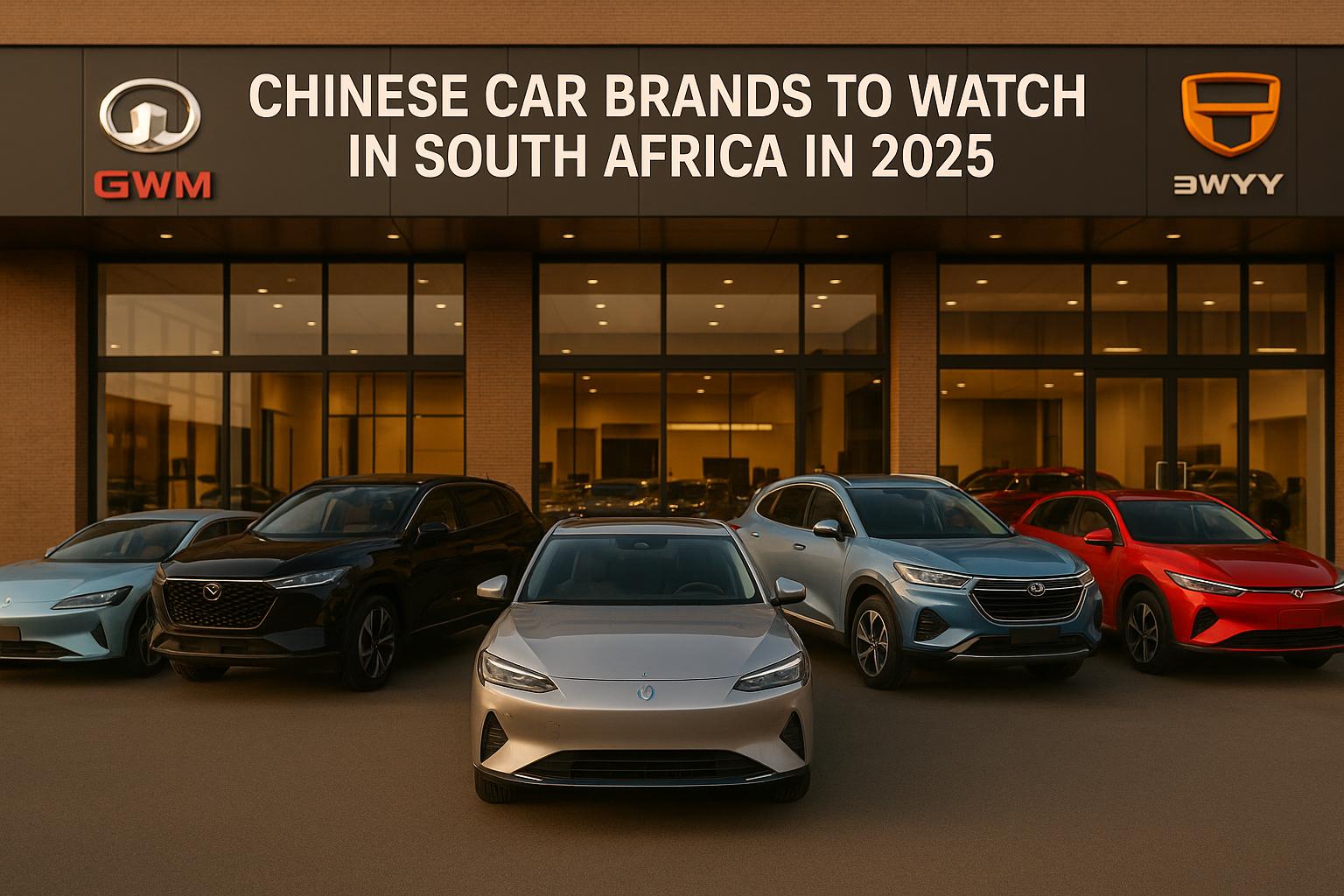
South Africa’s car market is being reshaped by Chinese automakers offering stylish designs, advanced features, and competitive prices. Here’s a quick overview of six brands making waves in 2025:
- Chery (Omoda/Jaecoo): Budget-friendly cars with modern features, targeting first-time buyers, adventurers, and trend-focused drivers.
- GWM and Haval: Reliable pickups and SUVs with a strong service network, ideal for diverse terrains.
- Jetour: Mid-size SUVs with spacious interiors and affordable pricing, perfect for families.
- BAIC: Locally assembled vehicles, keeping costs low while offering practical designs.
- GAC: Tech-forward cars with a premium feel, focusing on safety and comfort.
- MG: Affordable models packed with features, backed by solid warranties.
Quick Comparison Table:
| Brand | Strengths | Challenges |
|---|---|---|
| Chery | Affordable, feature-packed models | Service network still growing |
| GWM/Haval | Reliable SUVs, wide dealer network | Limited model variety |
| Jetour | Stylish, tech-focused SUVs | New to the market |
| BAIC | Budget-friendly, locally assembled | Service infrastructure needs work |
| GAC | Premium features, safety-focused | Higher price points |
| MG | Affordable, feature-rich cars | Service access in rural areas |
If you’re shopping for a new car, consider your priorities – affordability, tech, reliability, or off-road capability. These brands offer something for everyone.
Kelly explains Chinese Car Brands in South Africa
1. Chery (including Omoda and Jaecoo)
Chery has come a long way, transforming from a brand with early challenges into a serious player in the local market. Today, it operates under three distinct labels – Chery, Omoda, and Jaecoo – each catering to specific buyer needs with modern designs and competitive pricing.
Affordability
Chery’s lineup is designed to offer something for everyone. The main Chery brand focuses on budget-conscious buyers and first-time car owners, delivering a balance of affordability and practical features. Omoda steps into the spotlight with stylish crossovers aimed at younger, trend-focused drivers. Meanwhile, Jaecoo targets adventurers with rugged SUVs built for tougher terrains. Across all three labels, competitive pricing remains a cornerstone, paired with a focus on reliability.
Reliability and Warranty
Chery’s growing reputation on the global stage is backed by awards in countries like Brazil, Egypt, and Indonesia. The brand has also introduced extended warranty packages that challenge those of well-established competitors.
"Chinese carmakers were succeeding in winning over local buyers and challenging Western brands through competitive pricing, feature-rich vehicles, long warranties and aggressive market expansion." – Walt Madeira, Principal Analyst for Europe, the Middle East and Africa Vehicle Forecasting, S&P Global Mobility
These long warranties not only tackle concerns about long-term reliability but also provide reassurance to buyers who might be hesitant to move away from more familiar brands.
Technology and Features
Chery vehicles come loaded with modern features, including touchscreen infotainment systems, smartphone connectivity, and advanced safety technologies. Omoda models take it a step further, enhancing digital interfaces for tech-savvy drivers. Safety remains a priority across the lineup, with features like multiple airbags and stability control offered as standard. Beyond the tech inside the cars, Chery is also focusing on improving its service network to meet customer expectations.
Dealer and Service Network
Recognizing the importance of dependable aftersales support, Chery is expanding its network of service centers across major cities and regional areas in South Africa. This effort ensures timely access to maintenance and repairs while addressing concerns about parts availability and service expertise. By investing in infrastructure, Chery aims to deliver service standards that rival long-established brands in the market.
2. GWM and Haval
Great Wall Motors (GWM) and its Haval brand are steadily making a name for themselves in South Africa’s automotive market. By catering to both practical demands and lifestyle aspirations, the company is appealing to a wide range of drivers, from commercial users to everyday motorists.
Affordability
GWM’s lineup, which includes rugged pickup trucks and stylish SUVs under the Haval badge, is designed to deliver excellent value. Their vehicles combine competitive pricing with a host of standard features, making them an attractive option for both budget-conscious commercial buyers and those looking for a more polished driving experience.
Reliability and Warranty
To complement their affordability, GWM backs their vehicles with robust warranty packages that cover key components. This focus on quality and durability is especially relevant for South Africa, where drivers often face challenging and varied road conditions.
Technology and Features
GWM and Haval vehicles come equipped with a range of modern tech. Even the standard models include essentials like touchscreen infotainment systems, smartphone integration, multiple airbags, stability control, and ABS. For those opting for premium models, features like adaptive cruise control, lane departure warnings, and automated emergency braking are available. The interiors strike a balance between practicality and comfort – pickups are built with durability in mind, while SUVs focus on delivering a quieter and more refined cabin experience.
Dealer and Service Network
To support their growing customer base, GWM is expanding its dealer network and mobile service options. Whether in major cities or smaller towns, they aim to ensure easy access to parts and reliable maintenance services.
3. Jetour
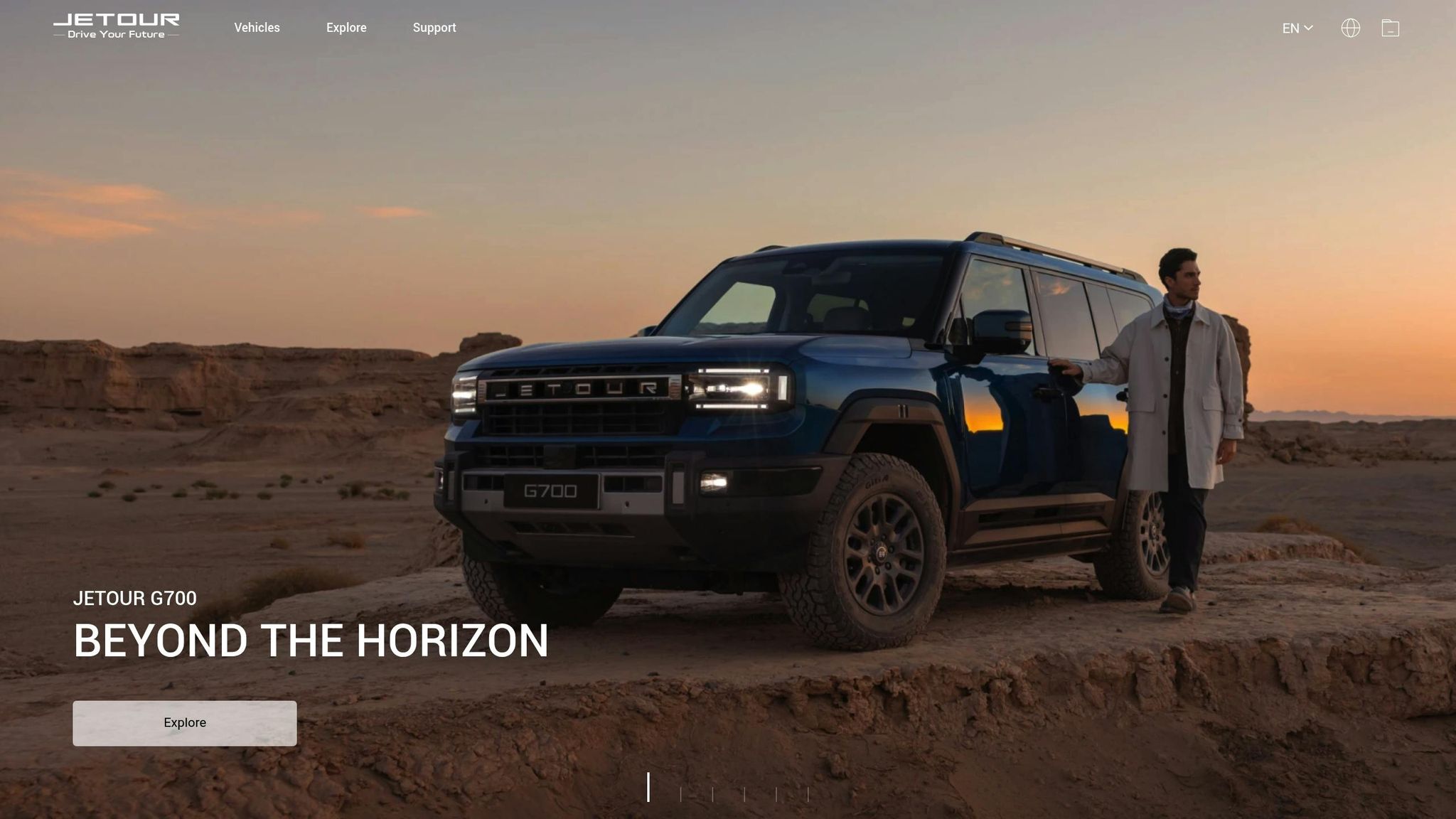
Jetour is a fresh face in South Africa’s automotive market, making its debut with the X70 Plus and Dashing models. As a spin-off from Chery, Jetour focuses on crafting practical, mid-size SUVs designed for families and individuals who value spacious interiors and affordability.
Affordability
Jetour strikes a balance between premium features and reasonable pricing. By offering higher trim levels without stepping into luxury price territory, it appeals to buyers who want more than just basic transportation but aren’t ready to pay the premium associated with high-end brands.
Reliability and Warranty
One of Jetour’s standout features is its extensive warranty coverage. This long-term protection is a reassuring factor for buyers hesitant to invest in a newer brand. Paired with competitive pricing and modern technology, the warranty gives Jetour a strong edge in attracting budget-conscious yet quality-focused customers.
Technology and Features
Jetour vehicles are packed with modern conveniences, including advanced infotainment systems and driver assistance technologies. This approach mirrors the trend among Chinese automakers of delivering cutting-edge features at accessible prices. It’s a winning formula, particularly in the sub-R500,000 segment, where value for money is a top priority.
4. BAIC/Beijing
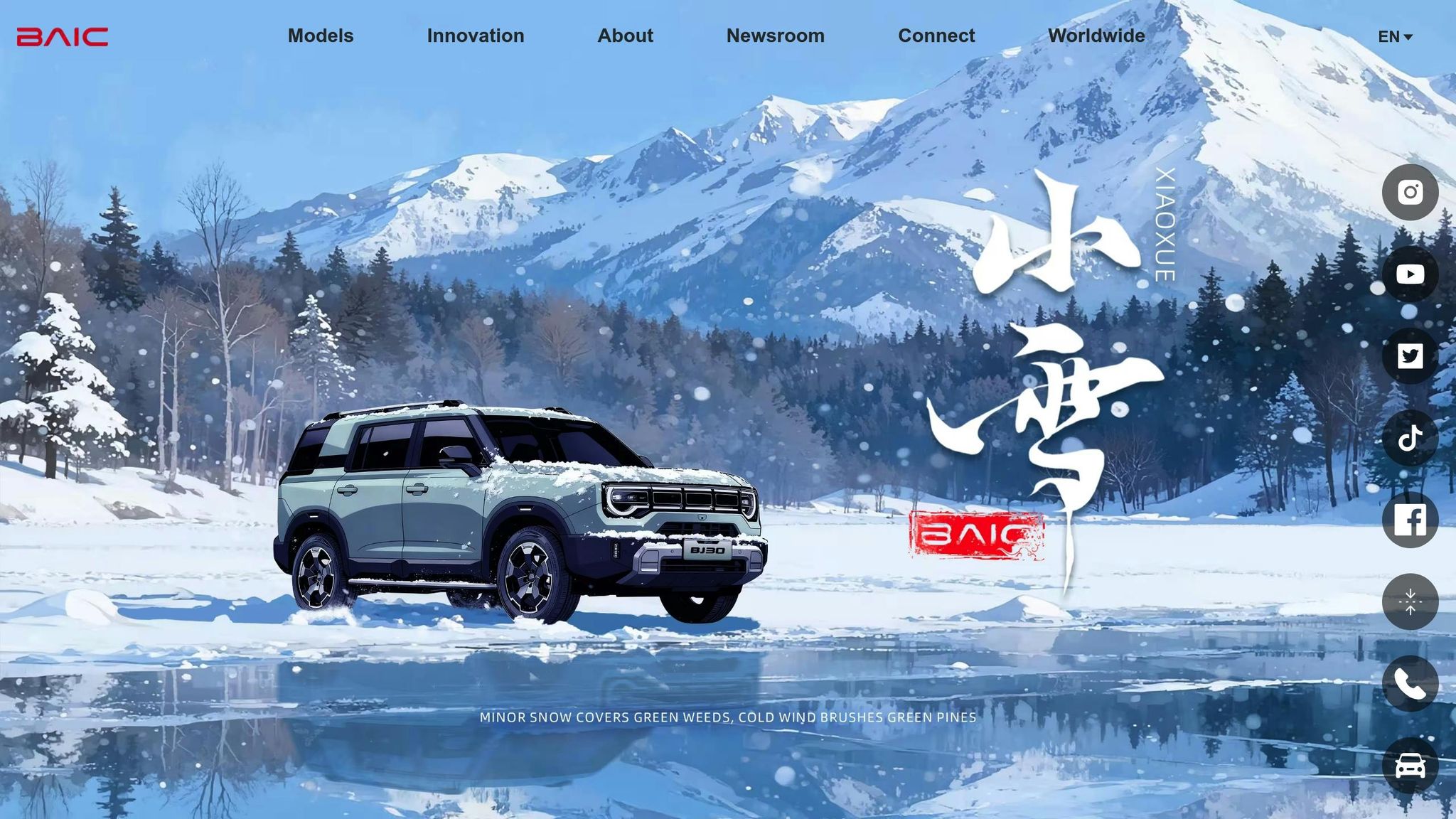
BAIC (Beijing Automotive Industry Corporation) has established a strong presence in South Africa, driven by its focus on local manufacturing. The company’s assembly plant in Gqeberha, operational since 2018, has been a key factor in keeping vehicle prices competitive while maintaining quality. This facility even produced one of the top-selling vehicles in 2024, reflecting a positive response from local buyers. By producing vehicles locally, BAIC not only reduces costs but also adapts quickly to market demands.
Affordability
Assembling vehicles locally allows BAIC to price its models competitively in a market where affordability is crucial. In 2023, 66.3% of cars sold were priced under $26,787 (around ZAR500,000).
Technology and Features
BAIC vehicles come equipped with advanced features like modern infotainment systems and driver assistance technologies – amenities that are often found in pricier European or Japanese brands. This focus on technology has played a big role in boosting the market share of Chinese car brands, which grew from 3.1% three years ago to 14.8% by Q2 2025. BAIC also caters to a wide range of customer needs by offering SUVs in various sizes, from compact crossovers to larger family-friendly models. On top of that, the company is investing in electric vehicle (EV) development, preparing for the growing demand for greener transportation.
Dealer and Service Network
The Gqeberha plant highlights BAIC’s commitment to South Africa, enabling the brand to provide tailored options for local buyers. This investment also supports the expansion of its dealer and service networks, ensuring better accessibility and customer support.
sbb-itb-09752ea
5. GAC
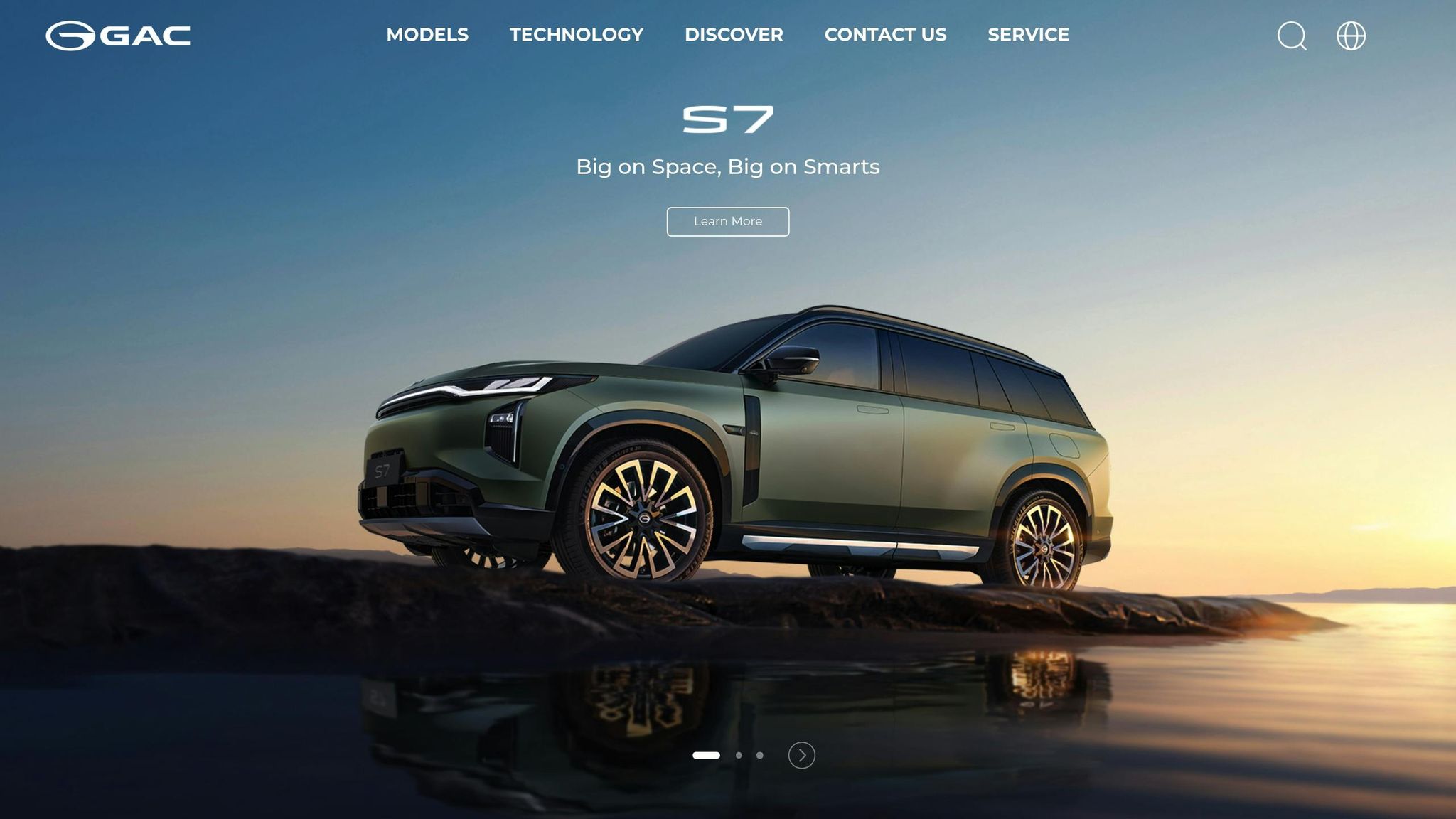
GAC, short for Guangzhou Automobile Group, is one of the latest players to enter the South African market. As Chinese automakers continue to expand their presence, GAC is working to carve out its place and establish its name in this competitive landscape. The company is banking on a technology-focused approach to make an impression.
Technology and Features
GAC is keeping up with current industry trends by offering a range of modern features. These include advanced infotainment systems, driver assistance technologies, and seamless connectivity options, all designed to provide excellent value to customers.
Market Position
For GAC, success in South Africa will depend on its ability to meet the growing demand for affordable vehicles packed with modern technology. If it can strike the right balance, it has a chance to stand out in a market that’s becoming increasingly crowded.
6. MG
MG has carved out a place for itself by blending affordability with modern features, making it a strong option for budget-conscious buyers. While it shares similarities with other brands in its price range, MG stands out by offering extended warranties and a growing service network.
MG, a well-established Chinese brand in South Africa, focuses on delivering value-packed vehicles that cater to the needs of cost-sensitive customers.
Affordability
MG’s pricing strategy is all about delivering more for less. By offering vehicles loaded with features at competitive prices, MG appeals to a wide range of buyers, from first-time car owners to young families. In a market where every dollar counts, this approach makes MG an attractive choice.
Reliability and Warranty
One of MG’s key selling points is its extensive warranty coverage, which provides peace of mind to buyers. However, concerns linger about the brand’s long-term reliability and resale value, especially when compared to Japanese and Korean competitors.
Technology and Features
MG equips its vehicles with cutting-edge technology, including user-friendly infotainment systems, seamless smartphone integration, and driver assistance features. These additions enhance both safety and convenience, keeping the brand competitive in the market.
Dealer and Service Network
MG is steadily expanding its dealer network in major cities, making it easier for urban customers to access sales and services. However, the service network in remote areas still has room for improvement, as customers in these locations may need to travel farther for maintenance. The brand is actively working to address this gap as it pushes forward with its expansion plans into 2025.
Strengths and Weaknesses Comparison
As Chinese car brands gear up to enter the South African market in 2025, early observations shed light on their strengths and challenges in areas like pricing, reliability, technology, and service accessibility. Here’s a snapshot of how these brands are currently positioned:
| Brand | Strengths | Challenges |
|---|---|---|
| Chery (Omoda/Jaecoo) | Affordable pricing with a feature-packed lineup; growing presence in urban areas | Limited local reliability data; service network still in the early stages of expansion |
| GWM/Haval | Well-established in the market with a wide dealer network; SUVs suited for diverse terrains | Technology and model variety are still being assessed |
| Jetour | Stylish designs and advanced technology aimed at tech-savvy buyers | Newer to the market, with long-term performance and service reach yet to be proven |
| BAIC/Beijing | Budget-friendly entry-level options with practical designs | Needs further development in technology offerings and service infrastructure |
| GAC | Premium feel with a focus on safety and comfort at competitive mid-range prices | Higher price points and a service network concentrated in major cities |
| MG | Models packed with features and backed by solid warranty coverage; growing urban dealer network | Concerns about long-term durability and limited service options in rural areas |
This overview highlights the varied strategies these brands are employing. Some cater to budget-conscious buyers, while others emphasize advanced features or a more premium experience. For buyers prioritizing reliability and a strong service network, established brands might hold more appeal. Meanwhile, those drawn to cutting-edge technology and value-packed options could find newer entrants more enticing.
Ultimately, the right choice boils down to personal priorities – whether it’s affordability, dependability, modern features, or access to service. As the market develops, keeping an eye on updated performance data and improvements in service networks will be key to making an informed decision.
Conclusion
By 2025, Chinese automotive brands offer a range of options tailored to suit different types of buyers. Here’s a quick look at which brands might fit various needs.
For budget-conscious buyers, BAIC delivers practical, affordable models, while Chery stands out with its Omoda and Jaecoo lines, blending solid features with competitive pricing.
Families will likely gravitate toward GWM and Haval for their reliable networks and comfortable SUVs. Meanwhile, GAC provides a premium driving experience with a focus on safety, making it a great pick for longer trips. If you’re venturing off-road, GWM’s SUVs are built to handle rugged terrains while ensuring parts and service are accessible even outside urban areas.
Tech enthusiasts have plenty to enjoy with Jetour and MG, thanks to their cutting-edge connectivity, advanced driver assistance systems, and stylish designs.
Finding the right car in 2025 comes down to matching your priorities with what each brand excels at. If reliability and an established service network matter most, brands like GWM and Haval are strong contenders. On the other hand, if you’re after innovation and affordability, Jetour and Chery deliver exciting options.
Make sure to test-drive your favorites and verify local service availability to ensure you’re making the best long-term choice.
FAQs
Why are Chinese car brands gaining popularity in South Africa by 2025?
Chinese car brands are gaining traction in South Africa, thanks to their ability to deliver great value for money. By offering affordable vehicles packed with advanced features, they’ve managed to capture the attention of a growing number of buyers. These cars often come equipped with modern technology, upgraded safety systems, and sleek designs, making them a strong contender in the market.
What’s more, their emphasis on SUVs and multi-purpose models fits perfectly with South African drivers’ preferences. With expanded dealership networks and better after-sales support, these vehicles have become more accessible and trustworthy. By designing cars that cater to local tastes and conditions, Chinese automakers are steadily carving out their niche in South Africa’s competitive automotive scene.
How are Chinese car brands like Chery, GWM, and Jetour building trust and ensuring reliability for South African drivers?
Chinese car manufacturers like Chery, GWM, and Jetour are working hard to win over South African consumers. They’re doing this by growing their dealer networks, offering extensive warranties, and stepping up their after-sales service. These strategies are all about building confidence and ensuring customers feel supported in a competitive market.
On top of that, these brands are rolling out vehicles tailored to South African drivers. They’re focusing on key factors like affordability, fuel efficiency, and durability to handle local driving conditions. By blending modern technology with practical features, they’re carving out a place for themselves in the ever-changing automotive market.
What sets the new Chinese car brands apart in terms of features and pricing in South Africa for 2025?
Chinese car brands are set to make waves in the South African market in 2025, offering a mix of affordability, modern features, and a variety of options. Here’s a quick look at what sets each brand apart:
- Chery: Known for its wallet-friendly vehicles, with a particular emphasis on SUVs.
- Haval: Delivers sleek, feature-rich SUVs tailored for contemporary lifestyles.
- Omoda: Targets younger drivers with bold designs and tech-savvy interiors.
- Jetour: Focuses on roomy SUVs that combine practicality with extended warranties.
- Jaecoo: Blends tough, rugged looks with everyday functionality.
- BYD: Specializes in electric and hybrid models, showcasing advanced tech.
What’s even more appealing? Chinese cars tend to be 15–25% cheaper compared to similar European or Japanese models. This price advantage, combined with a focus on reliability and features suited to local conditions, makes them an attractive choice for South African buyers looking for great value.
Related Blog Posts
- Top 5 Cars for South African Roads
- Chinese EV brands gain momentum in South African market
- Chinese automaker Jetour overtakes Mercedes-Benz & Mazda in South Africa
- South Africa new-vehicle sales hit 55 000+ in October 2025 – best month in a decade