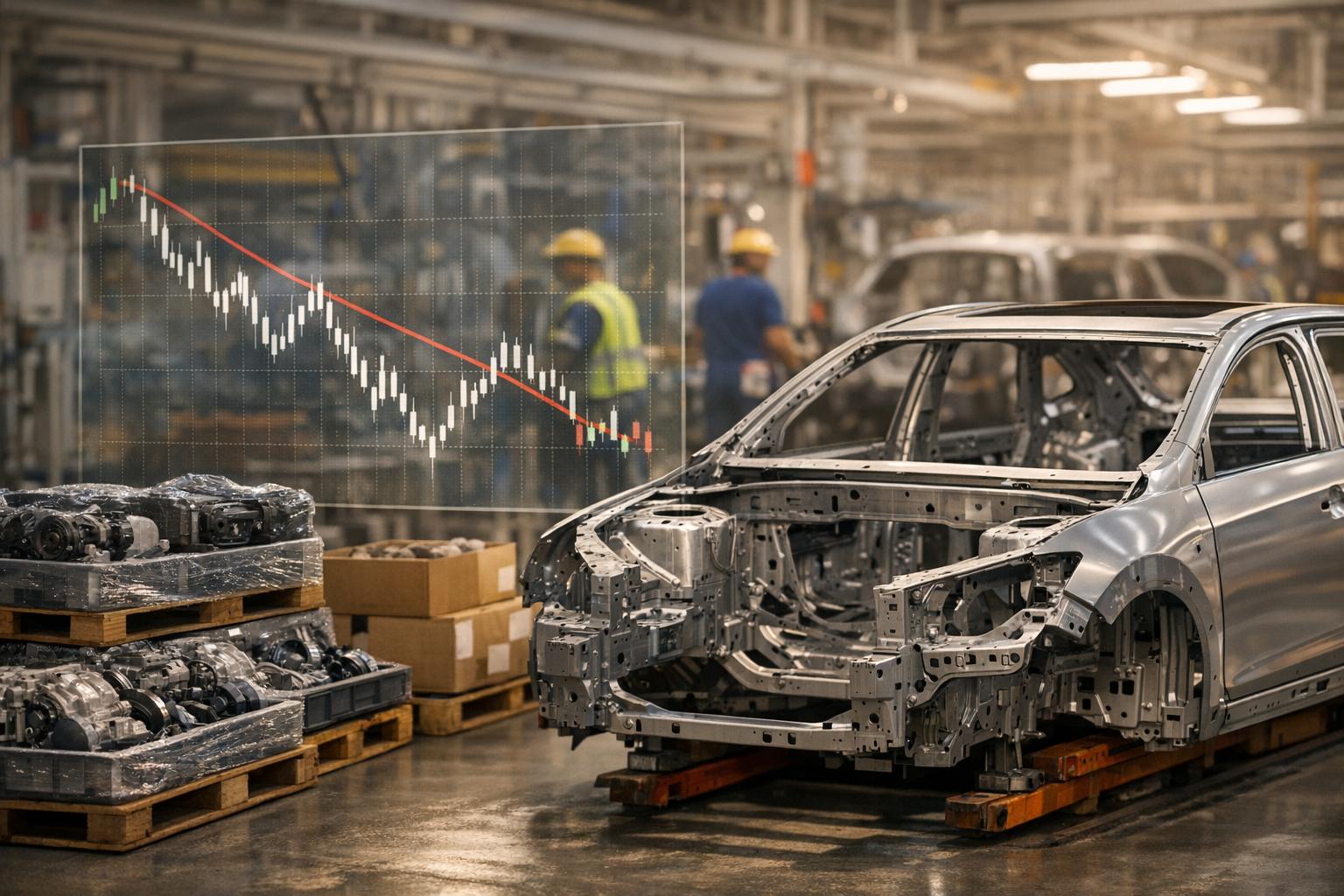
South Africa’s car industry is under pressure due to the unstable rand, which impacts both production costs and export revenues. Automakers rely heavily on imported parts priced in foreign currencies, while also depending on exports for income. This creates a double-edged challenge: rising costs for imports when the rand weakens, and shrinking export margins due to pricing instability.
Key points:
- Rand volatility: The currency fluctuated between R18.00 and R19.90 per USD in early 2025, making cost forecasting difficult.
- Import reliance: Only 39% of vehicle parts are sourced locally, far below the 60% target.
- Export struggles: Vehicle exports to the U.S. fell by 85% in May 2025.
- Job losses: Over 4,000 jobs and 12 factories have been lost in the last two years.
- Foreign competition: Chinese and Indian carmakers are gaining market share with affordable, tech-forward vehicles.
Solutions include using currency hedging tools, increasing local part production, and expanding into new export markets like Africa and Southeast Asia. Manufacturers must also focus on affordable, eco-friendly models and reduce energy and logistics costs to remain competitive.

South Africa Automotive Industry Crisis: Key Statistics and Impact 2025
SA auto industry facing volatile and uncertain global trading outlook
sbb-itb-09752ea
How Rand Volatility Affects South African Car Makers
The unpredictable nature of the rand continues to shake up South Africa’s automotive industry, adding layers of complexity to an already strained supply chain. In early 2025, the currency swung between R18.00 and nearly R19.90 against the U.S. dollar. These fluctuations make it nearly impossible for manufacturers to forecast costs accurately. The ripple effects are felt across the board – from skyrocketing prices for imported parts to challenges in setting stable export prices.
Higher Costs for Imported Parts
South African vehicle production heavily depends on imported components, with only 39% of parts sourced locally – far below the government’s 60% target. This reliance means that a weaker rand directly translates to costlier imports, as these parts are priced in dollars and euros. For example, in April 2025, the rand hit 19.2050 against the dollar before recovering slightly to 17.8655 by July. To make matters worse, a 25% U.S. duty on automotive parts introduced in May 2025 further strained manufacturers, forcing them to either absorb the additional expenses or pass them on to consumers.
Export Competitiveness Problems
The instability of the rand also creates headaches for automakers exporting vehicles. Frequent repricing disrupts long-term supply agreements, making South African manufacturers less competitive globally. As Mikel Mabasa, CEO of naamsa, explained:
"This mounting pressure will force South Africa-based automakers exporting to U.S., including Mercedes-Benz, to absorb rising costs, scale back production, and reconsider future investments."
The numbers paint a grim picture: vehicle exports to the U.S. dropped by 73% in Q1 of 2025, plunging further to 80% in April and 85% in May. These export struggles, coupled with the rising cost of production, are making it harder for local automakers to remain competitive both internationally and at home.
Effects on Local Car Prices and Sales
At home, the volatile rand is driving up car prices, putting many vehicles out of reach for the average buyer. The sweet spot for vehicle financing in South Africa is between R350,000 and R400,000, but rising production costs are pushing locally made cars beyond this range. Meanwhile, imported vehicles – making up 64% of all car sales in South Africa – are offering stiff competition, with Chinese brands like Chery standing out for their affordability.
For consumers, the financial strain is becoming evident. Young buyers under 35 now make up 45% of WesBank’s customer base, with many opting for longer loan terms to manage monthly payments. But when currency-driven price hikes hit, demand drops further. This only compounds the challenges faced by an industry already dealing with plant closures and job losses.
Competition from Foreign Imports
Exchange rate fluctuations are creating significant challenges for local manufacturers while giving foreign imports a competitive edge. Fully imported vehicles, often backed by large-scale production efficiencies and government subsidies, manage to maintain lower prices – even when the rand weakens and component costs rise. This advantage has allowed Chinese and Indian brands to carve out a growing share of the market.
Chinese and Indian Imports Gaining Market Share
Chinese and Indian automakers are steadily increasing their foothold in South Africa by offering vehicles that outperform local options in both price and technology. Siyabonga Mthembu, Automotive Sector Leader at BDO South Africa, explains:
"Chinese manufacturers are expanding their presence in SA with aggressive pricing strategies and offering the latest technologies through electric vehicles (EVs), which will further disrupt the market".
The numbers tell a stark story. Local production localization levels dropped from 42% in 2021 to just 38% in 2023. At the same time, the Completely Knocked Down (CKD) unit mix has shifted dramatically, with imports rising from 54% to 60% since 2018. Adding to these challenges, twelve automotive-related companies have shut down in the past two years, resulting in over 4,000 job losses. Each closure forces remaining manufacturers to rely even more on imported components, leaving them vulnerable to currency swings. Meanwhile, imported vehicles continue to dominate with competitive pricing, leaving local manufacturers struggling to keep up.
Delayed New Model Launches
The ongoing volatility in exchange rates is also causing local manufacturers to delay launching new models, further weakening their position in the market. With the rand’s instability making accurate pricing difficult, manufacturers hesitate to roll out updates. Unfortunately, this delay creates a snowball effect: while local brands hold back, Chinese and Indian competitors introduce the latest electric and hybrid models, widening the gap in technology and innovation. Combined with persistent issues like infrastructure bottlenecks and logistical challenges, local manufacturers are increasingly falling behind on both price and technological advancements.
Ways to Reduce Exchange Rate Risks
South African car manufacturers face significant challenges from currency fluctuations, but there are practical ways to manage these risks. By adopting strategic measures, companies can stabilize costs and protect their profit margins. Here’s how manufacturers can address these challenges effectively.
Using Currency Hedging Tools
Currency hedging tools are a practical way to manage exchange rate risks. Forward contracts, for instance, allow companies to lock in exchange rates for future transactions, providing certainty in financial planning. Similarly, currency options offer protection against unfavorable currency movements while still allowing businesses to benefit if the rand strengthens. As Chris Braun, Head of Foreign Exchange at U.S. Bank, puts it:
"The focus of any currency hedging program is typically on the reduction of risk, not on trading the market."
Another approach is natural hedging, which involves aligning revenue and expenses in the same currency. This strategy minimizes exposure to exchange rate volatility by balancing cash flows.
Sourcing Components Locally
Relying less on imported parts and sourcing more components locally can significantly reduce exposure to currency fluctuations. This strategy aligns with the goals of the South African Automotive Masterplan, which emphasizes increasing local content. However, achieving true localization comes with challenges, such as the difficulty of reaching economies of scale with current production volumes of 600,000 units. To overcome these hurdles, manufacturers must focus on fostering innovation and improving productivity. Deloitte South Africa highlights this point:
"Meaningful localisation, at its core, forms part of value beyond compliance: it drives innovation and productivity, and aligns economic performance with social progress."
Tailored skills training for local suppliers and leveraging special economic zones can further enhance the effectiveness of localization efforts by reducing administrative barriers.
Reducing dependence on imports not only mitigates currency risks but also strengthens the local supply chain.
Working with Government on Trade Policy
Government support plays a crucial role in helping the automotive sector manage currency challenges. Programs like the Automotive Production and Development Programme (APDP) have already attracted nearly R80 billion (about $4.2 billion) in investments since 2011 and provided over R20 billion in incentives to major manufacturers. For example, South Africa exported approximately $1.8 billion worth of vehicles to the United States in 2024. These figures underscore the importance of coordinated efforts between the government and the industry.
Manufacturers should actively engage with policymakers to advocate for trade policies that cushion the sector against currency volatility and international trade shifts. Collaborative efforts can ensure a more stable operating environment for the automotive industry.
Building Long-Term Industry Strength
The South African automotive industry plays a significant role in the national economy, contributing nearly 5% to the GDP and providing over 100,000 jobs. However, to withstand the challenges posed by fluctuating exchange rates, the sector must make deep adjustments. This means looking beyond traditional markets, rethinking product strategies, and trimming operational costs that erode profits during uncertain times. These steps build on earlier measures aimed at stabilizing costs and export prices.
Expanding into New Export Markets
In 2023, South Africa’s automotive exports reached R270.8 billion (approximately $14.3 billion), spanning 148 countries. Despite this success, rising protectionism poses new challenges. To remain competitive, the industry must diversify its export focus toward regions like Africa, Southeast Asia, Latin America, and the Middle East.
Among these, strengthening trade within Africa offers the most immediate potential. Regional integration helps shield the industry from currency volatility, as neighboring countries often face similar economic conditions. Parks Tau, South Africa’s Minister of Trade, Industry and Competition, underscored this shift:
"What we’re currently considering is the possibility of expanding the automotive industry production plan so that we’re able to mitigate the impact in our industry".
Other regions, such as Southeast Asia, Latin America, and the Middle East, also hold promise, especially as European markets phase out combustion engines. With major manufacturers like BMW, Ford, Mercedes-Benz, and Toyota already producing in South Africa, existing infrastructure can be leveraged to tap into these emerging markets.
Focusing on Affordable and Eco-Friendly Vehicles
While entering new markets is a priority, it’s equally important for automakers to align their products with consumer budgets and evolving environmental regulations. Affordability and eco-friendliness are becoming non-negotiable. Currently, the localization rate in South Africa’s automotive sector is just 39%. Parks Tau highlighted the urgency of increasing local production:
"Localisation is not merely policy compliance, it is existential. A 5% increase in local content would unlock 30 billion rand in new procurement".
To meet these demands, automakers must shift toward producing eco-friendly models. Range Extended Electric Vehicles (REEVs) offer a practical solution. Stellantis, for instance, announced in July 2025 its partnership to bring the Leapmotor brand to South Africa, with the C10 REEV set to debut in September 2025. This approach addresses a critical challenge: South Africa’s unreliable power grid, which currently supports only about 300 public charging stations. Collaborating with Chinese and Indian manufacturers like Chery and BYD can also provide access to cost-effective production methods and advanced technologies, enabling South African automakers to remain competitive while meeting environmental standards.
Reducing Energy and Logistics Costs
In addition to localizing production, reducing energy and logistics expenses is essential for maintaining operational stability. Currency fluctuations further strain profits, and inefficiencies at South African ports exacerbate logistical delays. Compounding this, frequent energy disruptions disrupt production schedules.
One promising development is Transnet’s plan to involve private sector operators in managing railway lines, which could improve the transportation of vehicles between key regions like the Eastern Cape and Gauteng. Siyabonga Mthembu, Automotive Sector Leader at BDO South Africa, remarked:
"When it comes to infrastructure and logistics, we’re beginning to see initiatives by Transnet to bring in the private sector to run the railway lines. This will improve efficiency in transporting vehicles, particularly between the Eastern Cape and Gauteng".
On the energy front, manufacturers should consider investing in independent power generation and energy efficiency upgrades to reduce reliance on the unstable national grid. As noted by the OECD Economic Outlook:
"Reforms in the electricity sector would enhance businesses’ ability to operate efficiently and strengthen their incentives to invest".
Additionally, developing local Tier 2 suppliers could lower import costs and simplify logistics. However, this will require sustained commitment, especially following the closure of key suppliers like ArcelorMittal and Goodyear.
Conclusion
South Africa’s car manufacturers are grappling with serious challenges posed by exchange rate volatility. The unpredictable shifts in the rand drive up costs for imported parts, disrupt export pricing, and threaten the industry’s ability to compete locally. With the automotive sector contributing almost 5% to the nation’s GDP and providing over 100,000 jobs, the stakes are undeniably high.
To tackle these challenges, manufacturers need a well-rounded strategy. Quick fixes alone won’t suffice. Immediate steps, like currency hedging and taking advantage of government incentives under the Automotive Production and Development Programme (APDP), must be paired with forward-thinking measures. One key focus is boosting local content. Trade Minister Parks Tau highlighted the potential here, noting that even a 5% rise in local manufacturing content could unlock as much as 30 billion rand in new procurement opportunities.
Expanding export markets is another critical move. The industry must look beyond traditional markets and position itself in regions like Africa and Southeast Asia. Busisiwe Mavuso, Chief Executive of Business Leadership South Africa, stressed this point:
"It is now more important than ever… to focus on the rest of Africa".
Short-term solutions must lay the groundwork for lasting change. Collaboration among manufacturers, suppliers, and the government is vital. As the BEE Chamber aptly put it:
"Transformation is not just a moral imperative; it’s now a commercial gateway to accessing the funding needed for survival and growth".
The industry’s future hinges on bold and unified efforts to reduce reliance on imports and build resilience against market fluctuations. With a shared commitment to reform, South Africa’s automotive sector can regain its competitive edge and withstand the challenges ahead.
FAQs
How does the fluctuating value of the rand affect production costs for South African car manufacturers?
When the value of the rand shifts, it has a direct effect on the cost of importing components and materials priced in stronger currencies, such as the US dollar. This means South African car manufacturers often face rising production costs as they pay more for critical parts.
On top of that, unpredictable exchange rates bring uncertainty, complicating budget planning and cost management for manufacturers. This combination can shrink profit margins and drive up the overall expense of producing vehicles in South Africa.
What can South African car manufacturers do to increase the use of locally sourced vehicle parts?
South African automakers have a clear opportunity to boost local sourcing by building stronger ties with domestic suppliers and taking full advantage of government support programs. Working closely with smaller suppliers – whether by collaborating on product design, providing training initiatives, or setting measurable local content targets – can go a long way in creating a dependable supply chain. A prime example of this effort is the South African Automotive Masterplan, which aims to increase local content from below 40% today to 60% by 2035.
Government initiatives like the Automotive Investment Scheme (AIS) and the Enterprise and Supplier Development (ESD) framework offer a range of incentives, including tax breaks, rebates, and supplier development support. Automakers can take this further by standardizing parts across different vehicle models, entering long-term agreements with local suppliers, and forming joint ventures to share knowledge and resources.
These combined efforts not only reduce dependency on imports but also help manage risks tied to currency fluctuations. More importantly, they lay the groundwork for sustainable industry growth and strengthen the sector’s ability to weather global market uncertainties.
What steps are South African car manufacturers taking to compete with Chinese and Indian imports?
South African automakers are stepping up their game to tackle competition from Chinese and Indian imports by boosting local production and teaming up with global manufacturers. For instance, companies like Beijing Auto Industrial Corporation (BAIC) and Mahindra are transforming their South African assembly lines into full-scale manufacturing plants. This shift means more components can be sourced and assembled locally, cutting down on import dependency, creating jobs, and making locally produced vehicles more affordable.
At the same time, the industry is pushing for stronger government incentives through the Automotive Production and Development Program. These incentives are designed to help offset the higher costs of production and encourage investment in advanced technologies, including electric vehicles. By combining these local manufacturing initiatives with government backing, South African carmakers aim to stay competitive and solidify the country’s role as a key player in the global automotive industry.
Related Blog Posts
- How Exchange Rates Affect Car Prices in South Africa
- Export Tax Incentives: Boosting SA Auto Exports
- US import duties under review: What it means for SA automakers
- South Africa hits decade-high new vehicle sales – market surges in October