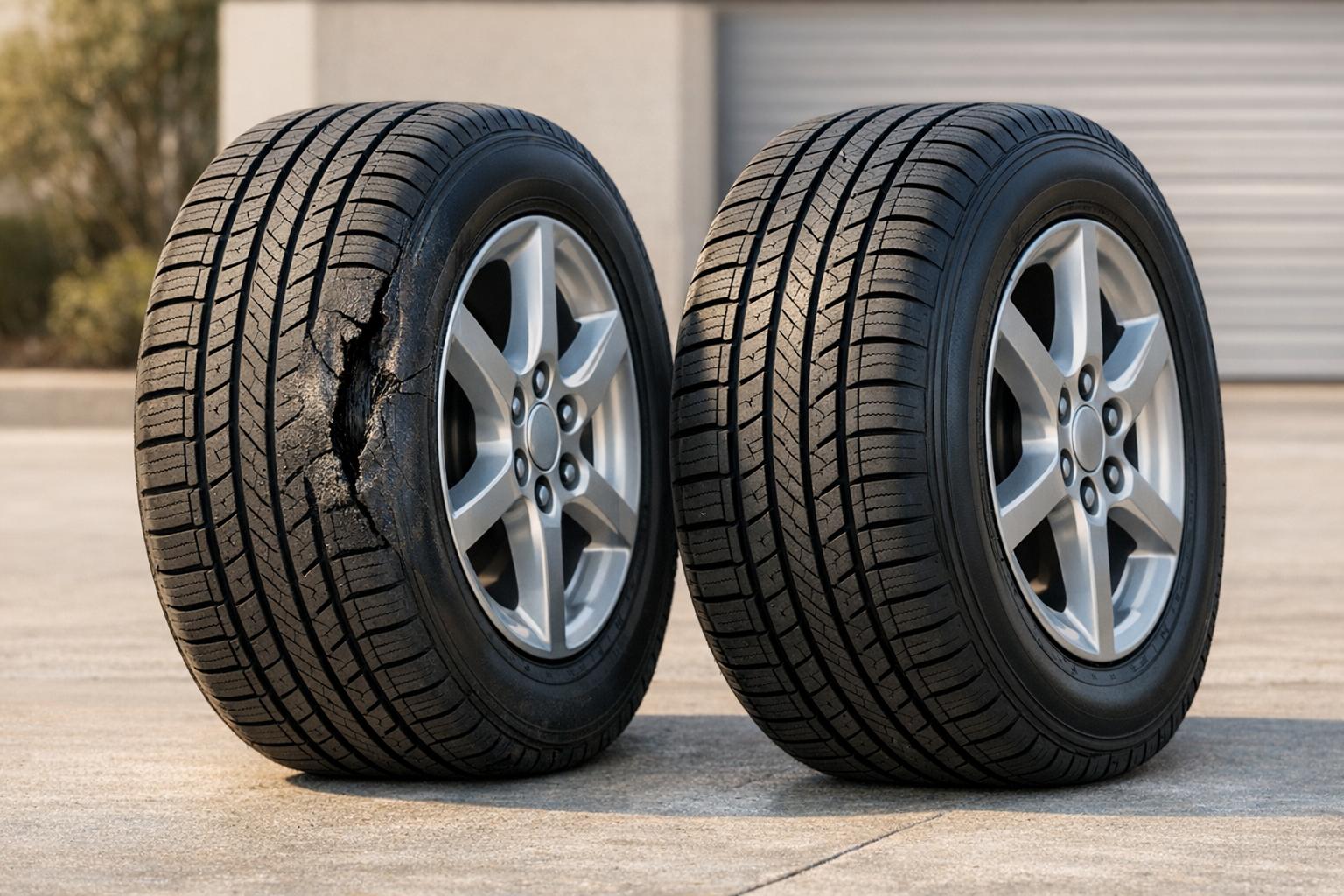
If you’ve ever dealt with a punctured or damaged tire, you’ve likely wondered: should you repair it or replace it? The choice depends on the type and severity of the damage, as well as safety and cost considerations. Here’s what you need to know:
- Repair: Best for small punctures (less than 1/4 inch) in the tread area. A professional plug-and-patch repair can extend the tire’s life but won’t restore it to new condition. Cost: ~$20–$50.
- Replace: Necessary for sidewall damage, large punctures, or worn-out tread (below 2/32 inch). New tires improve safety and performance but are more expensive. Cost: $100–$1,200 per tire depending on type.
Key Tip: Always prioritize safety. If in doubt, consult a professional to inspect the tire’s internal condition. A bad repair could lead to a blowout, while a timely replacement ensures peace of mind on the road.
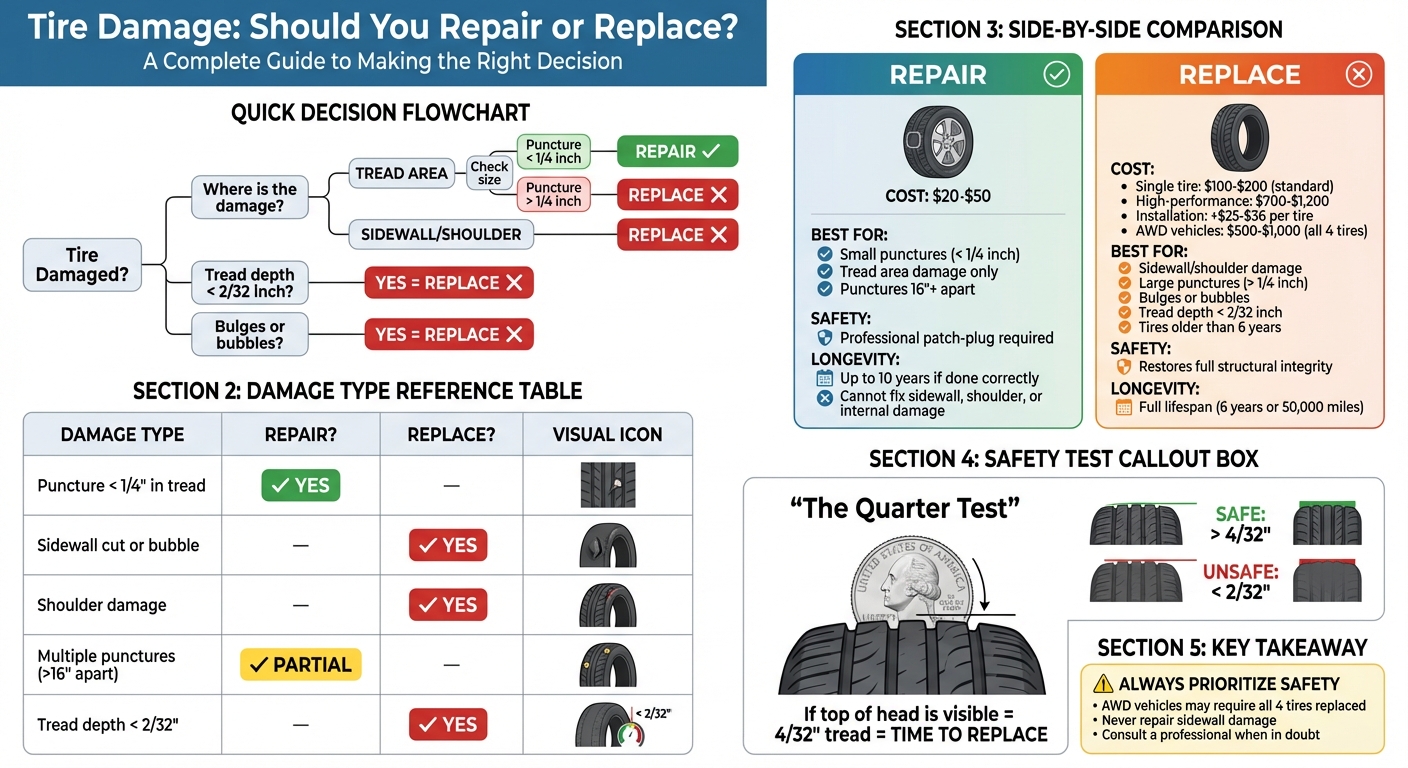
Tire Repair vs Replacement Decision Guide: Cost, Safety and Damage Types
1. Repairing Damaged Tires
Cost
Fixing a damaged tire is far more affordable than replacing it. A new tire typically costs between $150 and $200, with an additional $25–$36 for installation. For all-wheel-drive (AWD) vehicles, replacing just one tire may require swapping out all four, which can run anywhere from $500 to $1,000.
While saving money is appealing, it’s critical to follow established safety standards when deciding to repair a tire.
Safety
Having a certified technician perform the repair ensures the tire’s safety and reliability. Proper repairs involve using a patch-plug combination, which seals both the puncture and the inner liner. This method is far superior to do-it-yourself plug-only kits, which fail to seal the inner liner and leave the tire vulnerable to moisture damage and corrosion.
"A tire repair is only safe if it is carried out properly, which is why it is important to have it done by a professional." – Michelin
A thorough inspection is essential. The technician must remove the tire from the rim to check for hidden internal damage, like "mottling" (creases inside the tire) or "chattering" (loose rubber fragments). If such damage is found, the tire cannot be safely repaired.
Longevity
When repaired correctly, a tire can last up to 10 years and generally withstands up to two repairs, as long as the repairs are spaced at least 16 inches apart.
"If the tire has not been damaged by running flat, its life span will be exactly the same as if the tire had not been punctured." – Michelin
Applicability to Damage Types
Not all tire damage can be repaired. Only punctures smaller than 1/4 inch (6 mm) located in the tread area are eligible for safe repairs. Damage to the sidewall or shoulder, which are critical for the tire’s structural strength, is not repairable. Additionally, tires with bubbles, bulges, or a tread depth below 2/32 inches must be replaced to ensure safety.
| Damage Type | Repairable | Details |
|---|---|---|
| Puncture < 1/4" in tread | Yes | Must be professionally patched and plugged |
| Sidewall cut or bubble | No | Structural integrity compromised |
| Shoulder damage | No | High-flex area; repairs won’t hold |
| Multiple punctures | Partial | Only if punctures are at least 16" apart |
| Tread depth < 2/32" | No | Tire is worn out and unsafe |
2. Replacing Damaged Tires
Cost
Buying new tires is a bigger investment compared to repairs. For most common models, a single tire will set you back between $100 and $200, while high-performance or larger tires can cost anywhere from $700 to $1,200 each. On top of that, installation – which includes mounting and balancing – adds about $25–$36 per tire. If you own an AWD (all-wheel drive) vehicle, you might need to replace all four tires instead of just one. This is because keeping an even tread depth is crucial to protect the drivetrain. It’s a hefty cost, but when it comes to safety, it’s worth it.
Safety
When a tire’s structure is damaged, replacement is the only safe solution. Damage to the sidewall or shoulder can’t be fixed because these areas flex constantly during use. Similarly, if you notice bulges or bubbles on the sidewall, this means the internal carcass ply has failed – an issue that could lead to a sudden blowout. Other situations that call for immediate replacement include:
- Punctures larger than 1/4 inch
- Tires with worn or thin treads
- Damage to the steel or fiberglass belts inside the tire
Driving on a flat or underinflated tire can also cause internal damage, often referred to as "mottling" or "chattering", which weakens the tire further.
"Drivers should take their tire condition seriously, as it impacts safety. Begin shopping by 4/32nds, looking for deals, and replace the tires before the braking and wet-weather traction significantly degrade." – Ryan Pszczolkowski, Tire Program Manager, Consumer Reports
Replacing damaged tires doesn’t just improve safety – it also ensures better performance and durability over time.
Longevity
A brand-new tire gives you its full lifespan, typically lasting about six years or 50,000 miles under normal driving conditions. With fresh tread depth and optimal traction, new tires deliver peak performance from day one. In contrast, repaired tires continue to age from their original manufacture date, meaning they’re already closer to the end of their life.
Applicability to Damage Types
Some types of damage simply can’t be repaired, making replacement the smarter choice. To check if your tread depth is still safe, try the quarter test: place a quarter into the tread groove with George Washington’s head facing down. If the top of his head is level with the tread, you’ve got about 4/32 inch of tread left, and it’s time to start shopping for replacements. Tires older than six years should also be replaced, even if they look fine – rubber naturally degrades over time.
QUICK TIP: REPAIRABLE TIRE VS NON-REPAIRABLE THE DO’S AND DONT’S OF TIRE REPAIR!
sbb-itb-09752ea
Pros and Cons
Let’s break down the advantages and drawbacks of tire repair versus replacement, focusing on cost, safety, and durability.
Repairing a tire is a good option for small punctures located in the center tread area. The biggest perk? It’s much cheaper than buying a new tire – plug-and-patch repairs cost just a fraction of a replacement. But repairs have limits. They’re not suitable for sidewall or shoulder damage, large punctures, or tires that have been driven while flat. Internal damage, like mottling, is a clear sign the tire shouldn’t be fixed.
Replacing a tire, on the other hand, offers peace of mind. A new tire restores full structural integrity, extends lifespan, and improves overall handling. It’s essential for tires with sidewall damage, significant wear, or large cuts. The downside? It’s more expensive. Beyond the cost of the tire itself, you’ll also need to factor in installation and balancing. For AWD vehicles, replacing one tire often means replacing all four to protect the drivetrain.
| Feature | Tire Repair | Tire Replacement |
|---|---|---|
| Cost | Lower upfront cost | Higher cost, includes installation |
| Safety | Safe for small, center-tread punctures | Best for sidewall damage, bulges, or wear |
| Longevity | Extends remaining lifespan if done right | Restores full lifespan (up to six years or 50,000 miles) |
| Suitability | Works for center-tread punctures | Necessary for large punctures or structural damage |
| Performance | Maintains current performance | Improves handling, braking, and traction |
Ultimately, the choice between repair and replacement depends on the tire’s condition. Matching the right method to the situation ensures safety, performance, and value for your money.
Conclusion
When deciding between repairing or replacing a tire, focus on three main factors: the location and size of the damage, the tire’s overall condition, and your vehicle type. If the puncture is less than 1/4 inch and located in the center tread, a professional plug-and-patch repair is typically safe. However, damage to the sidewall, bulges, or punctures larger than 1/4 inch mean it’s time for a replacement.
Your safety should always come first. Use the quarter test as a quick check – if the tread depth is even with Washington’s head, it’s time to replace the tire. For vehicles with all-wheel drive, keep in mind that you’ll likely need to replace all four tires at once to ensure even traction.
The key takeaway? Always prioritize safety. While a properly repaired tire can serve you for up to 10 years if the damage is minor and fixed correctly, replacing the tire is often the safer choice when you’re unsure. It’s an investment in your vehicle’s performance, your family’s safety, and your peace of mind.
FAQs
How do I know if my tire can be repaired or needs to be replaced?
When deciding if a tire should be repaired or replaced, there are a few critical factors to keep in mind:
- Puncture location: Damage in the tread area is generally repairable. But if the puncture is in the sidewall or shoulder, the tire will need to be replaced.
- Puncture size: Holes larger than 1/4 inch mean replacement is necessary. Small punctures in the sidewall (less than 1/8 inch) might be repairable, but only under specific conditions.
- Tread depth and condition: Tires with less than 2/32 inch of tread, visible cracks, or exposed cords can’t be repaired safely.
- Damage history: A tire can usually handle up to two repairs in the tread area, provided the punctures are at least 16 inches apart.
For your safety, always have a qualified technician inspect the tire. They can check for internal damage and ensure the repair is done correctly. If the damage goes beyond safe repair limits, replacing the tire is the safest choice to ensure proper performance.
What are the dangers of an improperly repaired tire?
Improperly fixing a tire isn’t just a minor inconvenience – it can be a serious safety hazard. Over time, the tire may gradually lose air pressure, which can affect your car’s handling and even lower its fuel efficiency. On top of that, water could seep into the damaged area, leading to corrosion of the steel belts inside the tire. This kind of damage can trigger tread separation, sidewall failure, or, worse, a sudden blowout while you’re driving.
These problems don’t just impact how well your vehicle performs – they also put you and others on the road at greater risk of accidents. To stay safe, always have tire repairs handled by a qualified professional who uses the right techniques. Your safety is worth it.
When is it necessary to replace all four tires on an AWD vehicle?
When it comes to an AWD vehicle, replacing all four tires at the same time is often the best course of action if one or more tires show significant tread wear, uneven wear, or are nearing the end of their lifespan. This is because AWD systems depend on all tires having similar tread depths to maintain proper traction and prevent unnecessary stress on the drivetrain.
Using tires with mismatched circumferences can cause mechanical problems and lead to costly repairs. To keep your vehicle running safely and efficiently, replacing all four tires together is typically the smarter and more cost-effective choice.
Related Blog Posts
- 10 Easy Car Maintenance Tips for South African Roads
- How to Spot a Worn Brake Pad Before It’s Too Late
- When to Replace Your Tyres – South Africa’s Guide
- 7 most common car breakdowns in South Africa (and how to avoid them)