Hybrids are gaining traction in South Africa in 2026. With rising fuel costs and electric vehicles still out of reach for many, hybrids offer a middle ground. They save fuel, avoid reliance on charging infrastructure, and are becoming more affordable thanks to local production. Toyota leads the market, but Chinese brands like BYD and Haval are challenging with competitive pricing and features. Here’s a quick look at the top hybrid options:
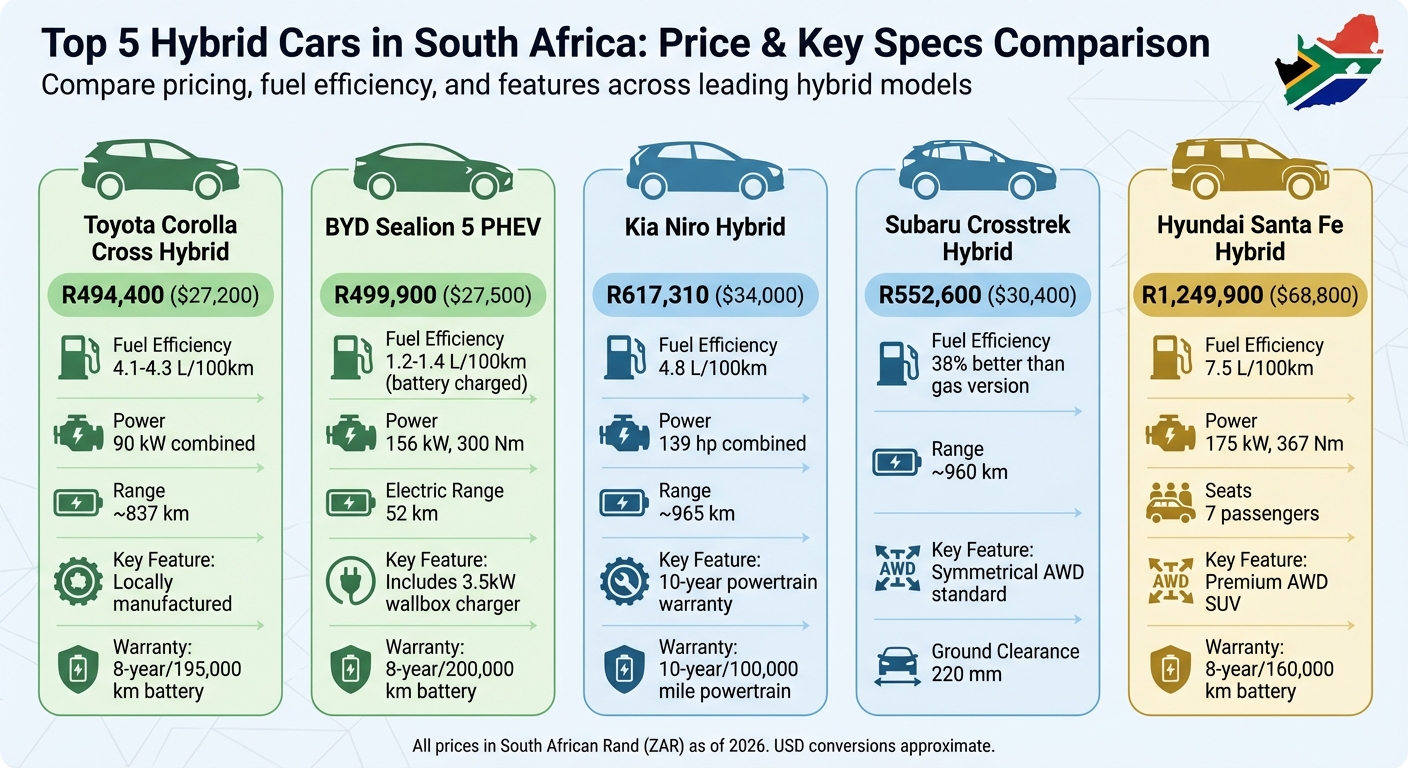
- Toyota Corolla Cross Hybrid: Locally made, starting at R494,400 ($27,200), with impressive fuel efficiency (4.1–4.3 L/100 km).
- BYD Sealion 5: Plug-in hybrid starting at R499,900 ($27,500), with a pure electric range of 52 km.
- Hyundai Santa Fe Hybrid: Premium SUV priced at R1,249,900 ($68,800), offering luxury and family-friendly features.
- Kia Niro Hybrid: Mid-range option at R617,310 ($34,000), designed for city efficiency.
- Subaru Crosstrek Hybrid: All-wheel drive at R552,600 ($30,400), ideal for varied road conditions.
Hybrids are practical for South African roads, offering lower fuel costs, long ranges, and reduced emissions. Whether you’re budget-conscious or seeking premium features, there’s a hybrid to match your needs.
South Africa Top 5 Hybrid Cars Price and Specs Comparison 2026
2025 Toyota Corolla Cross HEV Review | SA’s Best Selling Hybrid
Market Overview and Current Trends
Toyota continues to dominate South Africa’s hybrid market, commanding a 67% share of the hybrid and plug-in hybrid segment in 2024. This leadership is the result of nearly three decades of expertise in hybrid technology, dating back to 1997 when Toyota first introduced hybrids commercially. Local manufacturing has further strengthened its position, making Toyota the brand to beat as competition intensifies.
However, the landscape is shifting. Chinese automakers are making significant inroads, securing 15% of the total market share in Q3 2025 with a staggering 88% year-on-year growth. Leading this charge is BYD, which has disrupted the market with competitive pricing and strategic investments in infrastructure. In December 2025, BYD South Africa launched the Sealion 5 PHEV at R499,900, directly targeting Toyota’s Corolla Cross. Beyond pricing, BYD is partnering with Eskom to establish 200 to 300 charging stations across the country, with the first set to go live by Q3 2026.
As BYD South Africa MD Steve Chang remarked, "We must remember we are here to develop a market that wasn’t here".
Consumer interest in hybrid technology is also climbing. Surveys show that 39% of buyers are considering hybrids, while 24% are exploring plug-in hybrids. Among younger generations, Gen Z stands out, with 55% expressing a preference for hybrid vehicles. Despite this growing interest, challenges remain. Economic pressures, high import taxes, unreliable power supply, and limited charging infrastructure continue to hinder widespread adoption of fully electric vehicles, positioning hybrids as the more practical alternative.
Toyota South Africa CEO Andrew Kirby highlighted these hurdles, stating, "We do have some taxation structures that are a little bit counterproductive and so we’ve made some fiscally neutral policy proposals", as part of broader recommendations submitted by the "big seven" local manufacturers to the government.
Affordability is improving, though. Vehicle inflation hit a record low of 1.5% in late 2025, and competitive pricing – especially from locally produced models – is making hybrid and plug-in hybrid options more accessible. This shift reflects a broader strategy that now includes internal combustion engines (ICE), hybrids, plug-in hybrids (PHEVs), and electric vehicles (EVs).
TransUnion Africa CEO Lee Naik summed it up well: "The success of value-driven models shows how affordability, technology and trust are now the true levers of brand growth in South Africa".
Next, we’ll take a closer look at the top hybrid models available to South African consumers.
1. Toyota Corolla Cross Hybrid
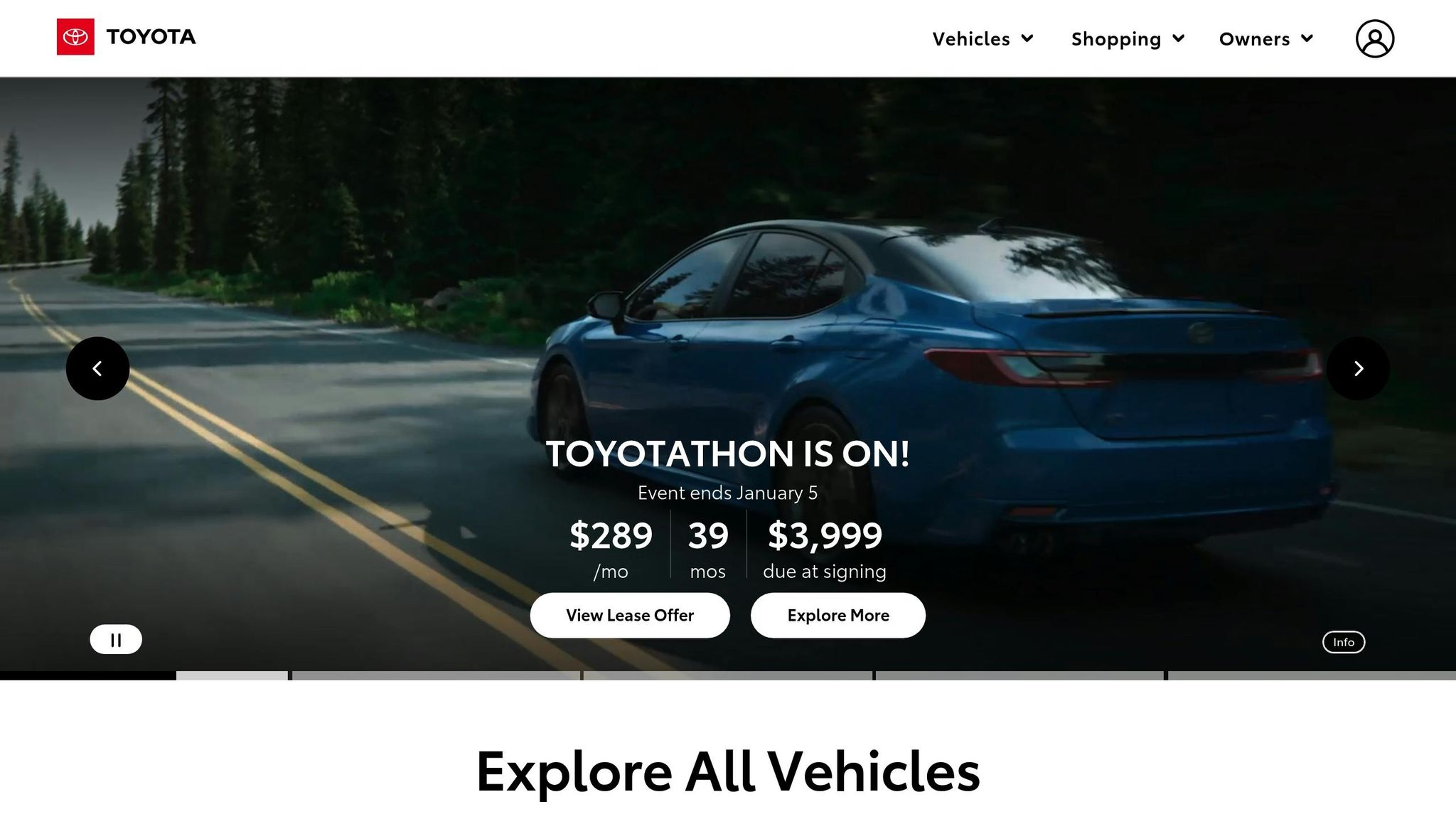
The Toyota Corolla Cross Hybrid holds the distinction of being South Africa’s first locally manufactured hybrid vehicle. Built at the Prospecton plant in Durban, this model not only boosts local production but also offers competitive pricing. At its launch, Nigel Ward of Toyota South Africa highlighted its importance:
"This is a significant milestone for Toyota South Africa. It’s not often that we get to produce a brand-new body shape in our factory; plus it is the very first time that we will be manufacturing a Hybrid model."
Price Range and Affordability
The Corolla Cross Hybrid is offered in three trims: the XS priced at R494,400 (around $27,200), the XR at R545,200 (about $30,000), and the GR-Sport at R561,700 (approximately $30,900). Each model includes a 3-year/100,000 km warranty and a 6-service/90,000 km service plan. The hybrid battery is covered by an extended 8-year/195,000 km warranty, providing long-term peace of mind.
Fuel Efficiency and Performance
Under the hood, the Corolla Cross Hybrid pairs a 1.8-liter petrol engine with an electric motor, delivering a combined output of 90 kW. Its self-charging hybrid system shines in fuel efficiency, achieving an impressive 4.1–4.3 L/100 km in Eco mode. This translates to a theoretical range of approximately 837 km – far surpassing the standard petrol variant’s 6.8 L/100 km. The hybrid also performs well in urban settings, with a 0 to 100 km/h acceleration time of about 11.96 seconds.
Key Features and Technology
Toyota has equipped the Corolla Cross Hybrid with a range of modern features. The base XS trim includes LED headlamps, dual-zone air conditioning, and a reverse camera. Stepping up to the XR trim adds Toyota Safety Sense, which offers advanced safety systems like adaptive cruise control, blind spot monitoring, lane trace assist, and a pre-collision system. It also comes with a 12.3-inch digital display for enhanced functionality.
Practicality is another strong suit, with 440 liters of boot space that expands to over 1,200 liters when the rear seats are folded. Built on Toyota’s TNGA platform, the Corolla Cross Hybrid boasts improved handling and a lower center of gravity, making it ideal for both city driving and light off-road adventures common in South Africa.
2. BYD Sealion 5
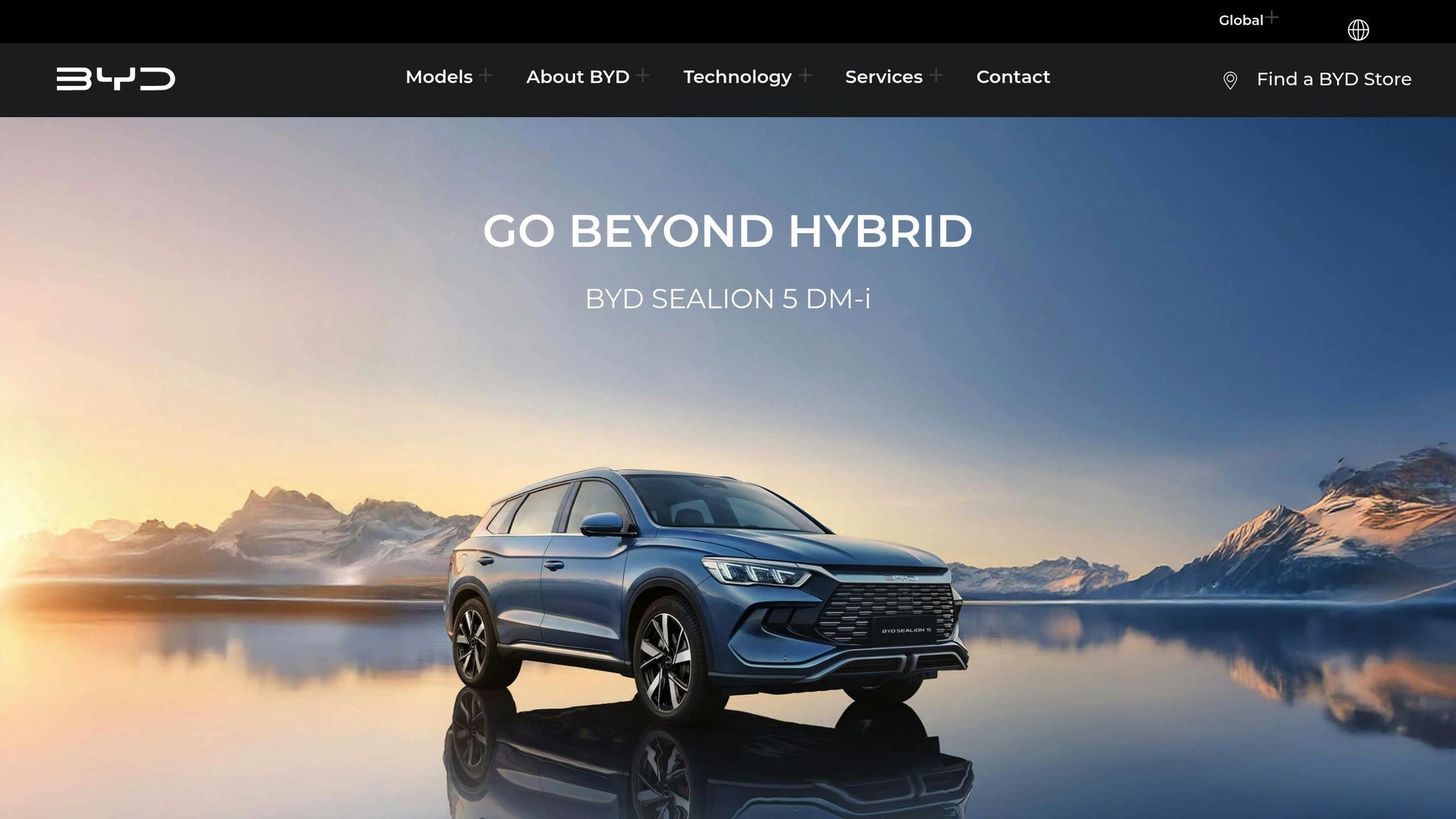
The BYD Sealion 5 has entered the South African market as the most budget-friendly plug-in hybrid electric vehicle (PHEV) available. Its pricing starts at R499,900 (roughly $27,500) for the Comfort trim and R569,900 (about $31,400) for the Dynamic trim. Steve Chang, Managing Director of BYD Auto South Africa, highlighted the company’s approach to pricing:
"With the Sealion 5 starting at just R499,900, we’re not just launching a new car; we’re redefining value in the SUV market."
Price and Included Features
Both the Comfort and Dynamic trims come with a 3.5kW wallbox charger and a vehicle-to-load (V2L) adapter, which allows the car to power external devices during outages. The Sealion 5 is supported by a comprehensive package, including a 5-year/100,000 km warranty, a 4-year/60,000 km service plan, and an 8-year/200,000 km battery warranty. For an additional R70,000 (approximately $3,900), the Dynamic trim adds luxury features such as an electric sunroof, a 360° camera, wireless charging, and electrically adjustable front seats.
Next, let’s dive into its performance and fuel efficiency.
Performance and Fuel Economy
The Sealion 5 is powered by BYD’s DM-i hybrid system, which combines a 12.96kWh "Blade" battery with a 1.5-liter petrol engine and an electric motor. Together, they produce 156kW and 300Nm, delivering a solid performance. Fuel consumption is claimed to be as low as 1.2–1.4 L/100 km in mixed driving when the battery is fully charged. Once the battery is depleted, real-world consumption increases to 4.9–5.2 L/100 km. With a pure electric range of 52 km, it’s perfect for daily city commutes.
These features set the stage for how the Sealion 5 performs on South African roads.
Fit for South African Roads
The Sealion 5 shines in urban environments, offering quiet operation and, in the Dynamic trim, a 360° camera for easier maneuvering. With a ground clearance of 150mm, it’s best suited for on-road use rather than off-road adventures. Mark Handley, Commercial Director at BYD Auto South Africa, commented:
"The Sealion 5 delivers that balance. It’s built for the realities of our market and shows how new-energy technology can be practical for everyday family life."
However, the absence of a spare wheel might pose challenges on rural roads. On the upside, the plug-in hybrid system eliminates range anxiety during long trips, as the 1.5L petrol engine seamlessly takes over when the battery runs out. Looking ahead, BYD plans to bolster its presence in South Africa by installing 200–300 public charging stations by the end of 2026.
Features and Interior Tech
The Sealion 5 doesn’t just excel in performance; it also offers a tech-rich, comfortable cabin. It includes a 12.8-inch rotating touchscreen with Apple CarPlay, Android Auto, voice control, and a digital instrument cluster. Measuring 4,738 mm in length, the vehicle provides a spacious interior that can comfortably seat five adults. Safety features like adaptive cruise control, lane-keeping assist, and traffic sign recognition come standard. Additionally, the V2L functionality allows the car to serve as a mobile power source, making it ideal for camping trips or emergencies.
3. Hyundai Santa Fe Hybrid
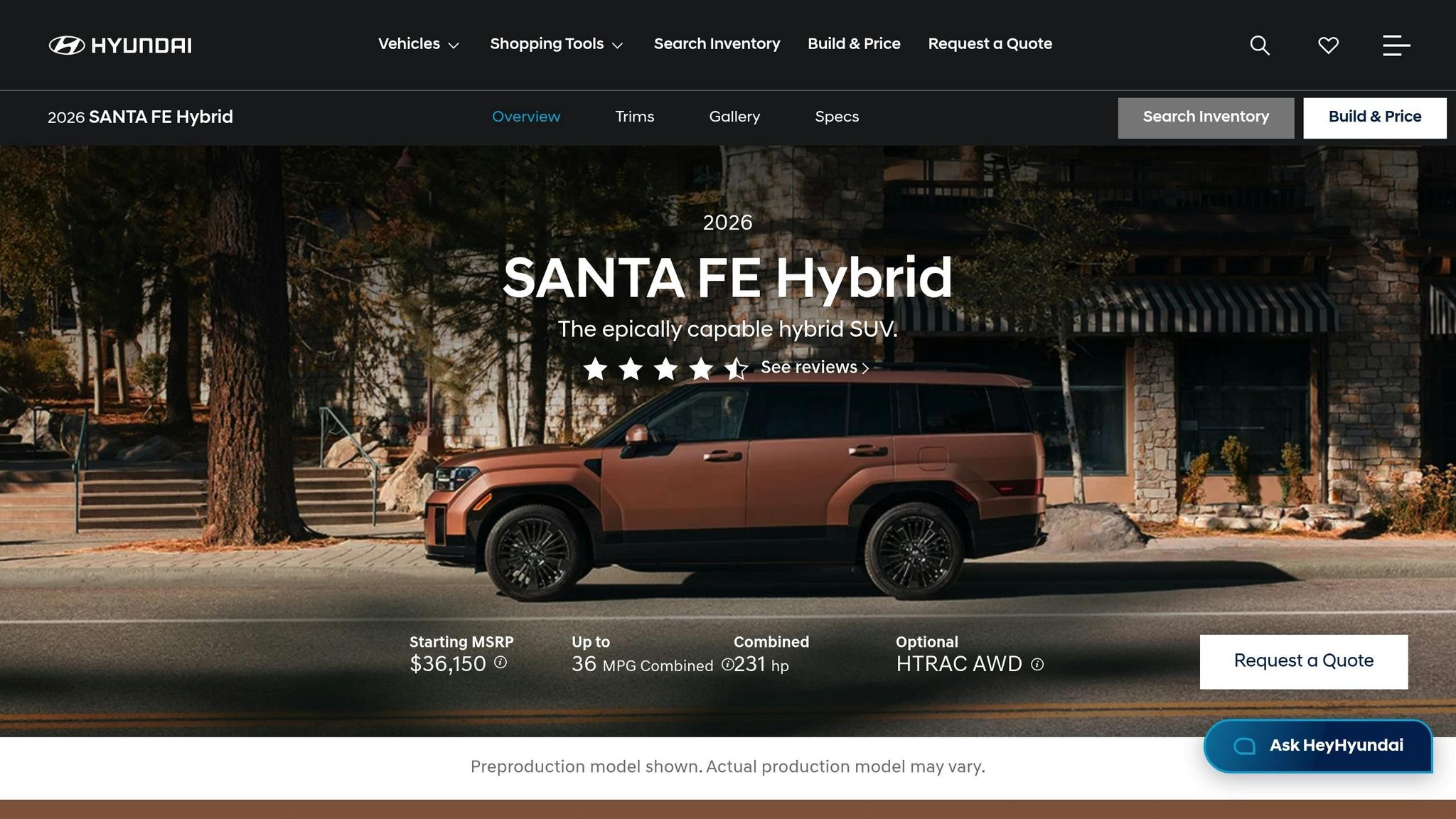
Hyundai has stepped into the hybrid game with the Santa Fe Hybrid, replacing the turbodiesel option in its lineup. With a price tag of R1,249,900 (around $68,800), this premium family SUV comes with a solid package of warranties: a 7-year/200,000 km vehicle warranty, a 6-year/90,000 km service plan, and an 8-year/160,000 km hybrid battery warranty.
Price Range and Features
The Santa Fe Hybrid is available exclusively as the Elite AWD model, priced at R1,249,900. Positioned as a high-end offering, it combines practicality with luxury. The SUV accommodates seven passengers and provides 413 liters (approximately 14.6 ft³) of cargo space, which expands to 1,148 liters (about 40.5 ft³) when the middle row is folded down. With these features, it caters to both family and utility needs.
Performance and Fuel Economy
Under the hood, the Santa Fe Hybrid pairs a 1.6-liter turbocharged petrol engine with a 44 kW electric motor and a 1.49 kWh battery. Together, they generate 175 kW and 367 Nm of torque. The vehicle achieves a fuel consumption rate of 7.5 L/100 km (approximately 31 mpg US), accelerates from 0 to 100 km/h (0–62 mph) in 9.5 seconds, and has a top speed of 190 km/h (about 118 mph).
One standout feature is the paddle-type regenerative braking system, traditionally seen in electric vehicles. As Stanley Anderson, Hyundai Automotive South Africa’s Sales and Operations Director, explained:
"We also brought the paddle-type regenerative braking mode to hybrid models, which was used primarily on electric vehicles. This gives the driver many options."
These steering-mounted paddle shifters allow drivers to fine-tune the intensity of regenerative braking, enhancing control and efficiency. This thoughtful design ensures that the Santa Fe Hybrid meets a variety of driving preferences.
Adaptability for South African Roads
Designed with versatility in mind, the Santa Fe Hybrid features an all-wheel-drive system and a Terrain Mode selector. Drivers can choose settings tailored for sand, snow, and mud, alongside three on-road modes: Eco, MyDrive, and Sport. However, with a ground clearance of 177 mm, it’s better suited to paved roads than rugged off-road adventures.
The SUV has also earned global recognition, including the 2025 Women’s Worldwide Car of the Year and the TopGear.com SUV of the Year awards. These accolades highlight its balance of safety, convenience, and bold design.
Interior and Technology Highlights
Inside, the Santa Fe Hybrid offers a tech-forward cabin. Dual 12.3-inch curved displays handle both instrument and infotainment needs, while wireless Apple CarPlay and Android Auto keep you connected. A 12-speaker Bose premium sound system enhances the audio experience.
Comfort features include heated and ventilated front seats, heated second-row seats, a heated steering wheel, and dual wireless charging pads. On the safety front, Hyundai’s SmartSense system delivers advanced features like a 360-degree camera, blind-spot collision avoidance, forward collision avoidance with junction assist, and lane-follow assist.
Stanley Anderson summed it up perfectly:
"The Hyundai SANTA FE Hybrid is family-friendly, tech-savvy and sustainable. It is the ultimate choice for drivers who demand more adaptability, luxury and innovation from their vehicle."
4. Kia Niro Hybrid
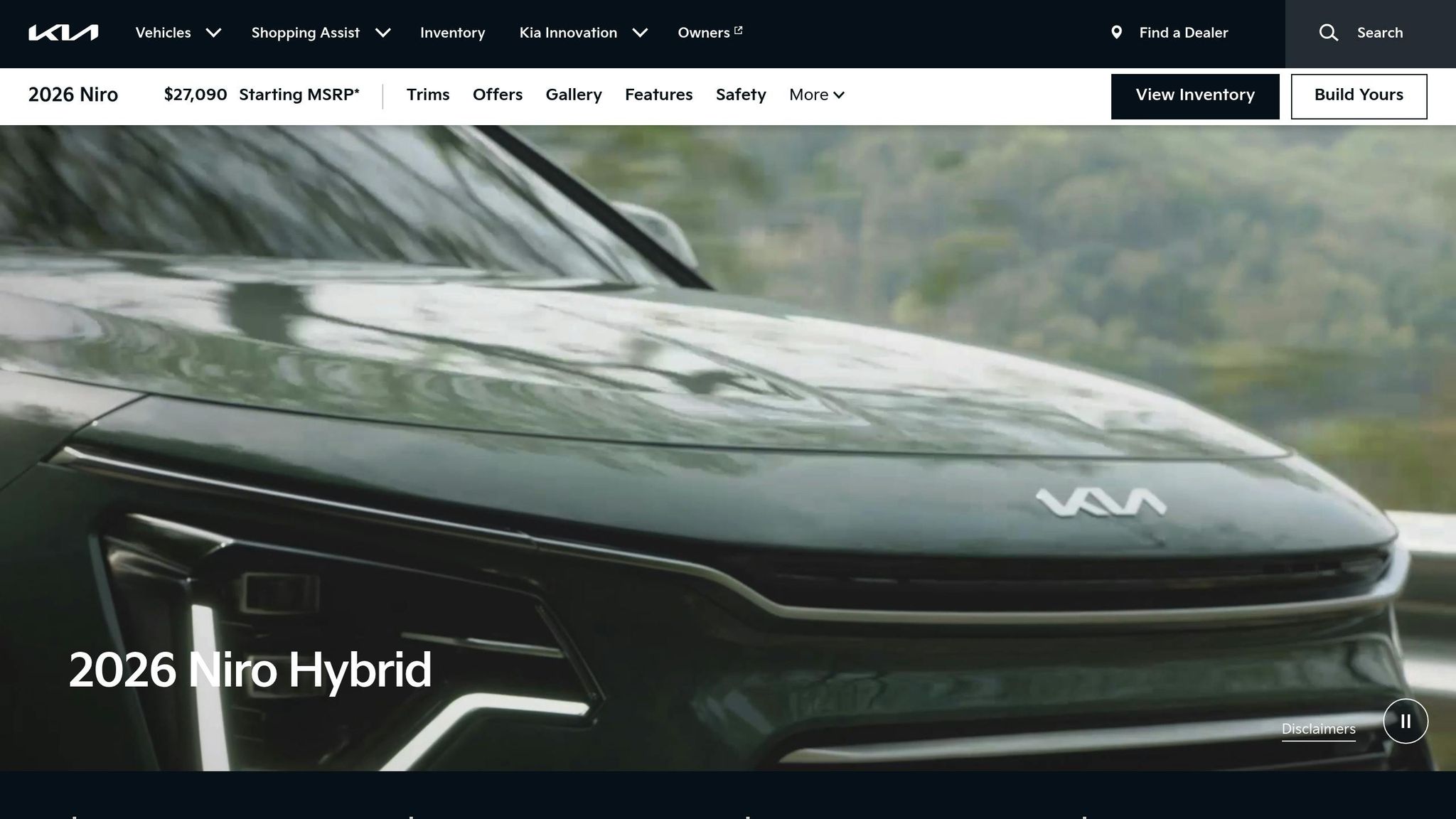
The Kia Niro Hybrid SX has made its way into South Africa’s hybrid market with a price tag of R617,310. It slots neatly between more affordable options like the Toyota Corolla Cross Hybrid and premium choices such as the Haval H6 HEV [20,21].
Price Range and Value
With a starting price of R617,310, the Niro Hybrid is priced approximately R131,000 higher than the Toyota Corolla Cross Hybrid, but it undercuts the Haval H6 HEV Ultra Luxury by R52,640. This pricing reflects the growing interest in hybrid vehicles [20,21]. Kia also backs the Niro with a 10-year/100,000-mile powertrain warranty, which includes coverage for the battery, offering buyers added confidence for the long haul.
Performance and Efficiency
The Niro Hybrid doesn’t just impress with its pricing – it brings solid performance to the table. It’s powered by a 1.6-liter four-cylinder engine paired with a 32-kW electric motor and a 1.32-kWh lithium-ion polymer battery. Together, they deliver a combined 139 horsepower and 195 lb-ft of torque. Unlike many hybrids, the Niro uses a six-speed dual-clutch transmission, providing a more traditional driving feel while maintaining efficiency.
Fuel economy is another highlight, with the Niro achieving an impressive 4.8 L/100 km (49 mpg US). Its 42-liter fuel tank allows for a range of up to 965 km (600 miles) on a single fill-up. As Jerry Reynolds of CarPro aptly pointed out:
"There is something truly wonderful about filling a gas tank that only holds 11 gallons of regular unleaded and having 600 miles of range".
The front-wheel-drive setup makes it an excellent choice for city driving, where the electric motor takes on most of the workload.
Interior Features and Technology
Step inside the Niro Hybrid, and you’ll find a thoughtfully designed cabin loaded with modern tech. It boasts a 10.25-inch digital touchscreen, a customizable digital gauge cluster, and a 7-speaker Harman Kardon sound system. The interior also emphasizes sustainability, featuring vegan leather seats with eucalyptus-based accents. Despite its compact footprint, the Niro offers generous space, including up to 63.7 cubic feet of cargo room (with the rear seats folded) and 39.8 inches of rear legroom.
Safety is a priority, with features like automatic emergency braking, blind-spot monitoring, lane-keep assist, forward collision avoidance, and rear cross-traffic alert coming standard. For a sportier drive, switching to Sport mode activates the gasoline engine for maximum power. However, the touch-sensitive controls for climate and infotainment might take some getting used to.
Up next, we’ll dive into how these features and design choices make the Niro Hybrid a standout in its class.
sbb-itb-09752ea
5. Subaru Crosstrek Hybrid
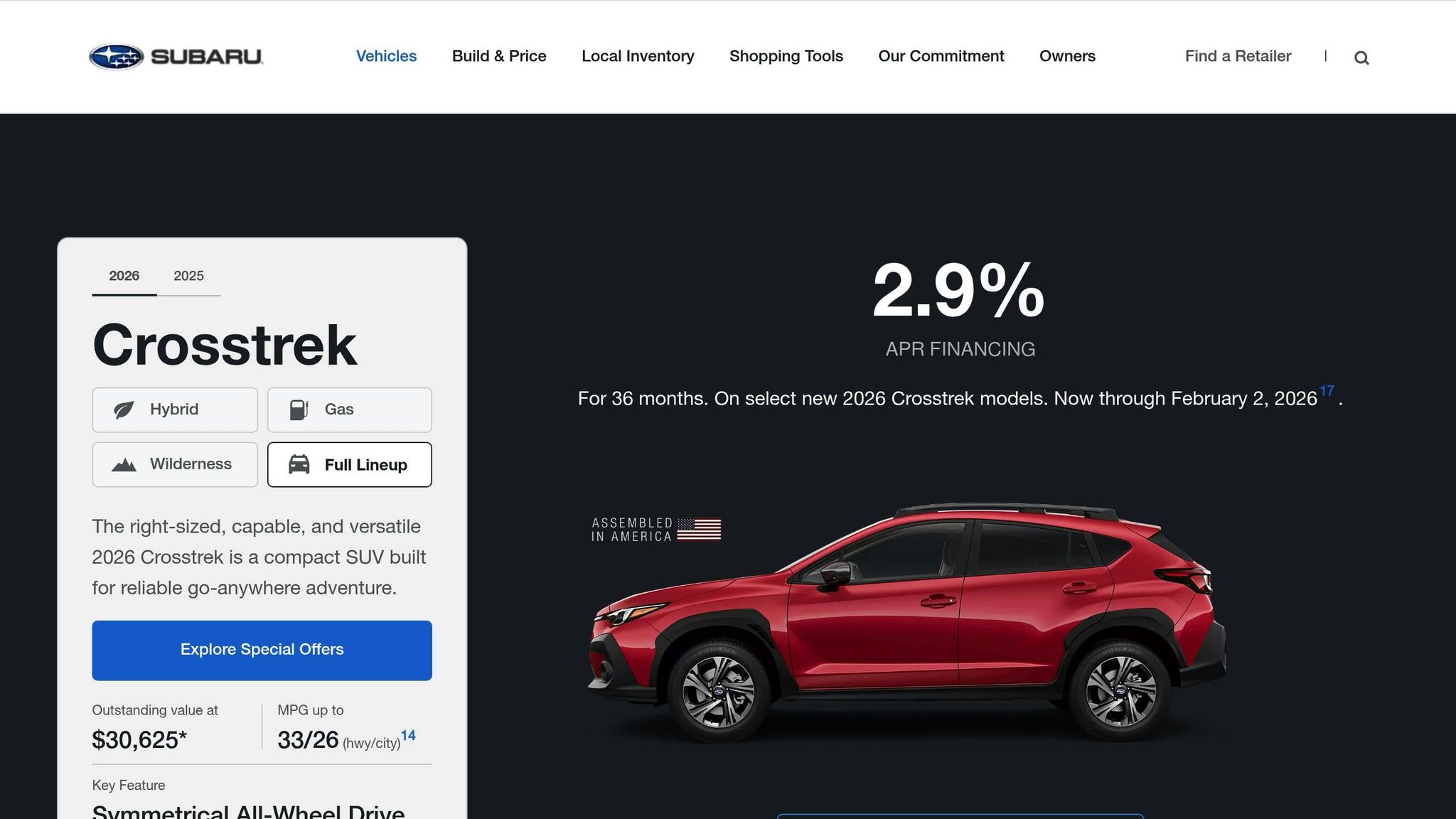
The Subaru Crosstrek Hybrid brings something different to the table, combining all-wheel-drive capability with hybrid efficiency. It’s priced at R552,600 (around $30,400) in South Africa and comes standard with Subaru‘s Symmetrical All-Wheel Drive – a feature often missing in entry-level hybrids that typically stick to front-wheel drive. Let’s break down what makes this hybrid stand out.
Price Comparison
At R552,600, the Crosstrek Hybrid positions itself above the Haval Jolion HEV and costs R110,000 more than the Corolla Cross Hybrid. However, it’s still R146,000 less than higher-end competitors like the RAV4 Hybrid. This pricing sweet spot offers buyers the advantage of all-wheel drive without tipping into the premium price range.
Efficiency and Performance
This hybrid doesn’t just look good on paper – it delivers where it counts. The 2026 Crosstrek Hybrid boasts a 38% increase in city fuel economy compared to its gas-only counterpart. With a range of up to 597 miles (approximately 960 km) on a single tank, it’s built for both efficiency and endurance. Its hybrid system combines a gasoline engine, electric motor, and CVT, offering improved horsepower and torque for a more dynamic driving experience.
Built for South African Roads
With a ground clearance of 8.7 inches (220 mm) and standard all-wheel drive, the Crosstrek Hybrid is ready for anything – from navigating city potholes to handling gravel roads in rural areas. Its crossover design fits perfectly with South Africa’s preference for versatile vehicles. Plus, Subaru’s reputation for durability is proven: 97% of Crosstrek vehicles sold in the last decade are still on the road today.
Features and Safety
The 2026 model is packed with tech. It includes an 11.6-inch touchscreen with built-in navigation and an optional 10-speaker Harman Kardon audio system for audiophiles. Safety is a strong point too. Subaru’s EyeSight Driver Assist Technology has earned the Crosstrek Hybrid a 5-Star Overall Vehicle Score from the National Highway Traffic Safety Administration. Awards from Consumer Reports and ACSI further cement Subaru’s reputation, naming it the 2025 Best Overall and Most Reliable Automotive Brand and ranking it #1 in safety for five straight years.
If you’re looking for a hybrid that combines rugged capability with modern efficiency, the Subaru Crosstrek Hybrid makes a strong case.
6. New and Upcoming Hybrid Options
The hybrid market in South Africa is picking up speed, thanks to fresh models offering updated features and competitive pricing. One standout is the BYD Sealion 6, now the most affordable plug-in hybrid at R639,900 (about $35,200). This price point undercuts the Toyota RAV4 PHEV by a staggering R340,100, making plug-in hybrid technology more accessible to a broader audience. The Sealion 6 boasts an impressive total range of up to 1,092 km (678 miles) in its front-wheel-drive version, while the Premium AWD variant accelerates from 0 to 100 km/h in just 5.9 seconds.
Price Range and Affordability
These new hybrid models cater to a wide range of budgets, from entry-level to premium. For instance, the BYD Sealion 6 Comfort FWD starts at R639,900, while the Premium AWD version is priced at R789,900 (roughly $43,500). Meanwhile, the Haval H6 GT PHEV, delivering an impressive 342 kW of power, is priced around R800,000 (approximately $44,000). This diverse price range ensures there’s something for everyone in the growing hybrid market.
Fuel Efficiency and Performance
Fuel efficiency is a key selling point for these new hybrids. The BYD Sealion 6 offers an all-electric range of 70-80 km, making it a practical choice for daily commutes. Additionally, Chinese brands are introducing features like adjustable regenerative braking via paddle shifters, a feature previously reserved for fully electric vehicles.
Key Features and Technology
Advanced technology is now standard in these hybrids, enhancing safety and comfort. The Santa Fe Hybrid, for example, comes equipped with Hyundai’s Smart Sense suite, which includes blind-spot monitoring, forward-collision avoidance, and a 360-degree camera system. Inside, you’ll find H-Tex synthetic leather, heated and ventilated seats, and a premium Bose sound system for added luxury. On the utility front, the BYD Shark 6 is making waves as one of South Africa’s first plug-in hybrid bakkies (pickups), blending hybrid efficiency with the rugged functionality typically associated with diesel-powered vehicles.
Price Comparison and Value Analysis
The South African hybrid market is split into two main price categories. For budget-conscious buyers, options start at around R439,900 (approximately $24,200), with the Chery Tiggo Cross 1.5 CSH Hybrid leading the segment. The Toyota Corolla Cross HEV XS is priced at R494,400 (about $27,200), while the Haval Jolion Pro 1.5 HEV Ultra comes in at R519,950 (roughly $28,600). The Honda Fit 1.5 Hybrid e-HEV, offering an impressive fuel consumption rate of 3.7 liters per 100 km, is priced at R544,900 (around $30,000).
For those seeking premium models, prices start above R550,000. The Toyota Corolla Hatch Hybrid ranges from R552,700 to R595,100 (approximately $30,400 to $32,700). The Chery Tiggo 7 1.5T CSH PHEV, with an all-electric range of 93 km and a total range of about 1,200 km, is priced between R619,900 and R679,900 (about $34,100 to $37,400). The Haval H6 Hybrid delivers an impressive 179 kW and 530 Nm of power at R679,950 (roughly $37,400), while the Toyota RAV4 2.5 Hybrid GX tops the range at R748,700 (approximately $41,200).
The true value lies in total ownership costs. While entry-level hybrids may have monthly financing costs about R100 higher than petrol models, they offer fuel savings of R500 to R700 per month. For drivers covering more than 30 km daily, these savings can accumulate quickly. Additionally, hybrids reduce maintenance costs thanks to regenerative braking, which minimizes wear on brake pads and rotors. This combination of slightly higher financing costs and significant fuel and maintenance savings highlights the strong value hybrids offer in South Africa.
"With fuel prices remaining high and with most electric vehicles positioned out of financial reach for most consumers, many are turning to hybrids as a way to reduce fuel consumption." – Gero Lilleike, Motoring Journalist
Resale value is another important factor. Toyota hybrids currently hold strong residual values in South Africa’s used car market, outperforming many newer competitors. These advantages in cost savings and resale value make hybrids an appealing choice – next, we’ll explore how they perform on South African roads.
How Hybrids Handle South African Roads
South Africa’s roads cover a wide spectrum, from smooth highways to bustling city streets and rugged gravel paths. To tackle these varied conditions, vehicles need to be versatile, and hybrids have shown they can rise to the challenge. Crossover and SUV hybrids, in particular, stand out with their higher ground clearance, making them better equipped to handle potholes and uneven surfaces compared to low-slung sedans.
Power is another key factor when navigating South Africa’s more demanding routes. Models like the Haval H6 HEV, Toyota RAV4 Hybrid, BYD Shark, and GWM Tank 300 HEV demonstrate how a combination of sufficient engine power and AWD or 4×4 systems ensures smooth overtaking and reliable off-road capabilities, no matter the terrain.
For long trips, hybrids shine by offering exceptional fuel efficiency and range. The Toyota RAV4 Hybrid, for example, achieves a fuel consumption of just 4.8 L/100 km, making it ideal for extended journeys with fewer fuel stops. Similarly, the Chery TIGGO 9 CSH boasts an impressive range of 1,200 to 1,400 km, perfect for long-haul routes like the drive from Johannesburg to Cape Town.
Hybrids also excel in city traffic, where stop-and-go conditions are the norm. Thanks to regenerative braking, these vehicles can capture energy during braking to recharge their batteries, significantly improving efficiency. The Honda Fit Hybrid, for instance, achieves an impressive 3.7 liters per 100 km, largely because it relies on electric power during urban driving.
A standout example of hybrid innovation tailored to South Africa is the locally manufactured Toyota Corolla Cross Hybrid. Built in KwaZulu-Natal, this model is designed with local road conditions in mind. Its self-charging system eliminates the need for external charging, offering a practical alternative for drivers transitioning from traditional fuel-powered cars to fully electric vehicles.
Conclusion
Hybrid vehicles have carved out a solid niche in South Africa’s automotive market, offering a smart middle ground between traditional gas-powered cars and fully electric options. With the country’s ongoing electricity challenges and limited charging infrastructure, hybrids provide a solution that blends convenience with fuel efficiency, taking the stress out of searching for charging stations while still offering reduced emissions.
Several models stand out for their performance and value. The locally built Toyota Corolla Cross Hybrid and the Haval Jolion HEV strike a balance between affordability and features, while the Honda Fit Hybrid impresses with its fuel economy, helping drivers save money at the pump over time.
Designed to handle South Africa’s diverse road conditions, hybrids feature higher ground clearance and self-charging systems, eliminating the need for external power sources. For those tackling longer trips, models like the Toyota RAV4 Hybrid shine with their low fuel consumption, making them ideal for economical travel. These features highlight why hybrids are both practical and efficient for a variety of driving needs.
As motoring writer Marcé from Stuff puts it: "Hybrids offer that in-between choice – eliminating charging worries while keeping fuel convenience." This sentiment captures the essence of why hybrids are a compelling option for South African drivers today.
To make the most of a hybrid, consider your daily commute, typical road conditions, and budget. By aligning these factors, you can choose a hybrid that delivers long-term savings, reliable performance, and the versatility you need.
FAQs
What are the benefits of driving a hybrid car in South Africa?
Driving a hybrid car in South Africa comes with a host of perks that make it an appealing choice for many. One of the standout benefits is fuel efficiency. Hybrids use significantly less fuel than traditional gas-powered vehicles, which translates to noticeable savings at the pump – especially important given the frequent spikes in fuel prices. Plus, they’re a cleaner option, producing fewer emissions compared to conventional cars. This makes hybrids an attractive middle ground for those not ready to commit to fully electric vehicles but still want to reduce their carbon footprint.
Another advantage is the smooth and responsive driving experience hybrids deliver. By blending a traditional engine with electric power, these cars offer strong acceleration and extended driving ranges, making them well-suited for everything from daily commutes to long road trips. Many hybrid models also come with roomy interiors and advanced safety features, making them a practical choice for families and individuals alike. With their mix of performance, cost savings, and eco-consciousness, hybrids strike a perfect balance for drivers looking for versatility and dependability.
How do Chinese automakers like BYD and Haval compare to Toyota in South Africa’s hybrid car market?
Chinese automakers are making noticeable strides in South Africa’s hybrid market, presenting a serious challenge to Toyota’s established dominance. Toyota’s locally manufactured Corolla Cross 1.8 Hybrid, priced at approximately $23,100, combines affordability with impressive fuel efficiency of about 57.4 mpg. This mix of cost-effectiveness and dependability has cemented its popularity among South African drivers.
Meanwhile, Haval’s entry-level H6 Hybrid, starting at roughly $35,400, offers a more premium SUV experience. Though Haval is still carving out its space in the hybrid market, Chinese automakers as a whole are expanding quickly, now holding over 15% of South Africa’s passenger vehicle market. BYD, while not yet offering a hybrid model locally, is leveraging its expertise in electric drivetrains to compete with Toyota’s strong presence.
Toyota continues to lead with its proven mix of affordability and efficiency, but Chinese brands like Haval and BYD are steadily gaining ground with higher-end models and an increasing market share.
How do I choose between a hybrid and an electric vehicle?
Choosing between a hybrid and an electric vehicle (EV) often comes down to your driving patterns, access to charging, and overall budget. If most of your trips are short and within the city, and you have reliable access to home or nearby charging, an EV could be a great choice. They let you save on "fuel" costs (electricity) and offer the ease of overnight charging. Hybrids, however, shine on longer drives or in areas where charging stations are scarce, thanks to their ability to switch to a gas engine when the battery runs low.
It’s also important to weigh practical considerations like charging infrastructure and expenses. EVs generally have fewer maintenance requirements and may qualify for federal tax incentives, though their initial cost is usually higher. Hybrids, on the other hand, don’t require charging at all, making them a good option if you lack a parking spot with access to electricity or live somewhere with frequent power outages. For a middle ground, plug-in hybrids combine a limited electric-only range with the reassurance of a gas engine for longer trips.
Ultimately, your choice should align with your daily driving distance, access to charging, and long-term financial goals to ensure the vehicle fits both your lifestyle and budget.
Related Blog Posts
- Electric vs Hybrid: Fuel Costs Compared
- Electric vs Petrol: Trends in South Africa
- Top 10 Most Affordable Hybrid Cars in South Africa in 2025
- EVs vs Hybrids: Which is Better for South African Drivers?