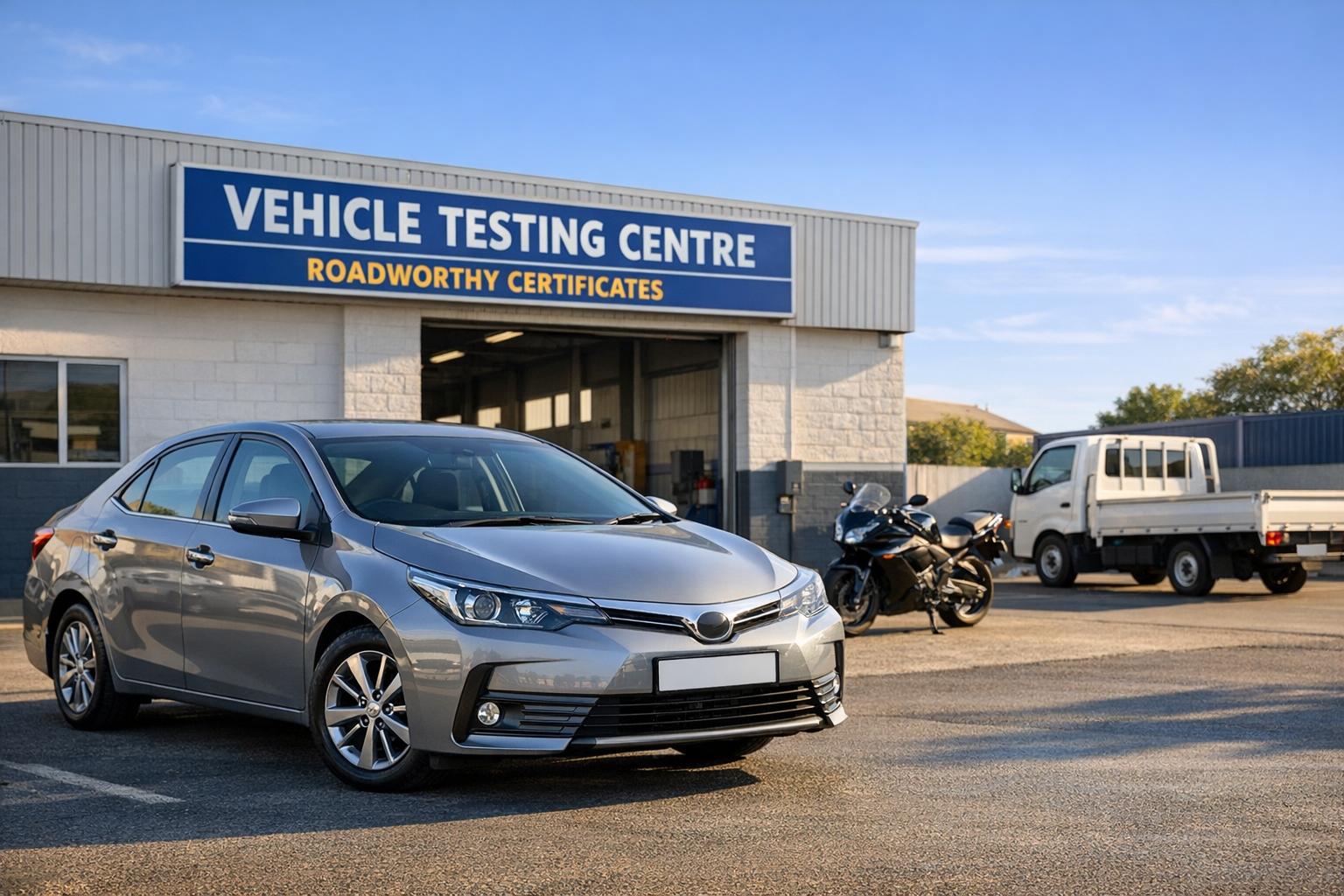
In South Africa, a roadworthy certificate (RWC) is required to confirm that a vehicle meets safety standards. It’s mandatory for ownership transfers, vehicle re-registration, and other administrative updates. The cost varies by vehicle type, location, and testing center. Here’s a quick breakdown:
- Motorcycles and small trailers: Around R550
- Private passenger cars: R300–R850
- SUVs, bakkies, and light commercial vehicles: R500–R1,000
- Minibuses and taxis: R600–R800
- Heavy trucks and buses: Starts at R800, exceeding R1,500 for larger vehicles
Government-run centers are cheaper but slower, while private centers are faster but more expensive. If your vehicle fails, repairs and a retest (R150–R300) may be needed. To avoid extra costs, check brakes, lights, tires, and the windshield before testing. The RWC is valid for 60 days.
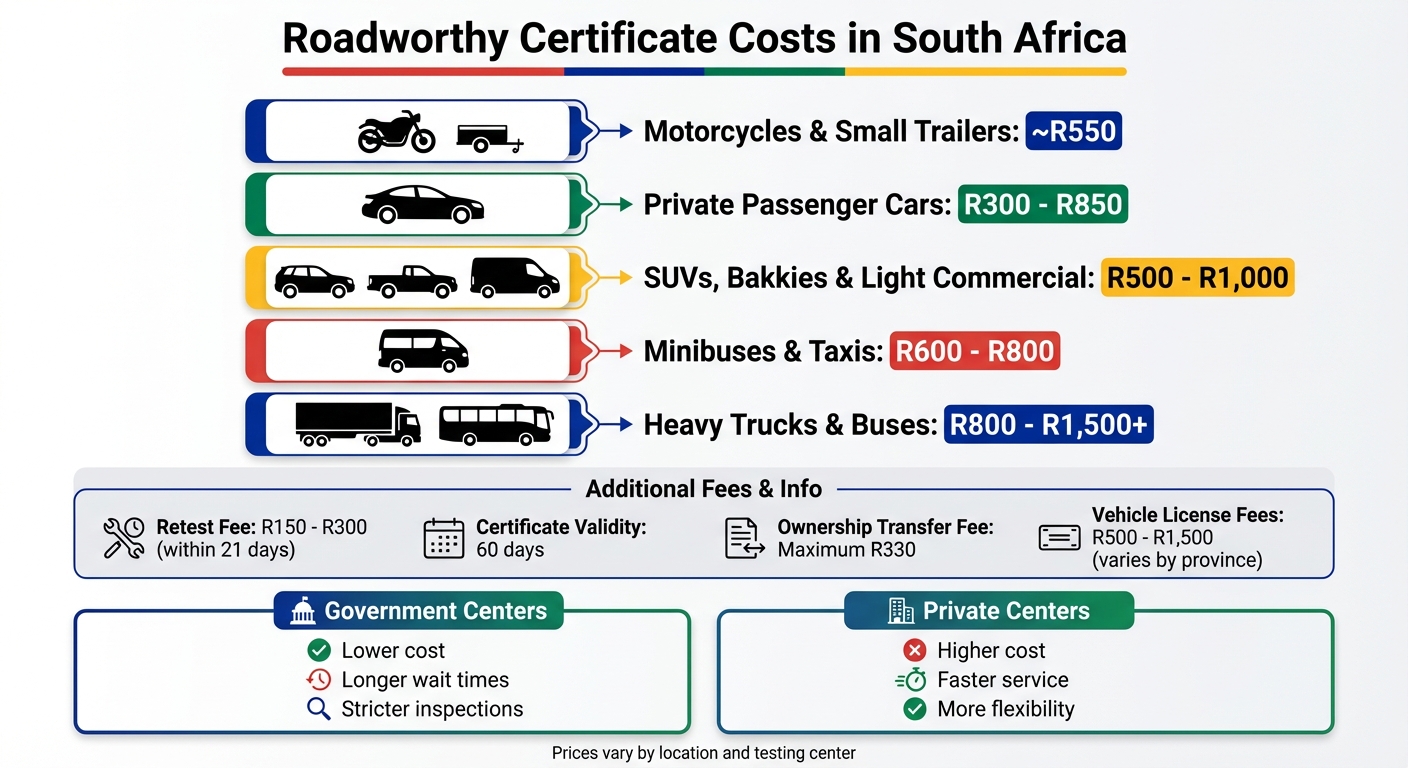
Roadworthy Certificate Costs by Vehicle Type in South Africa
Roadworthy Rules in South Africa: What You NEED to Know! | You Ask – We Answer!
How Much Does a Roadworthy Certificate Cost?
The cost of a roadworthy certificate in South Africa isn’t fixed nationwide. It depends on factors like the type of vehicle, the testing center you choose, and your location.
Government-run testing stations usually charge less but often come with longer waiting times for appointments. On the other hand, private testing centers like DEKRA or AVTS typically charge more but offer faster service and greater appointment flexibility. Keep in mind, the inspection fee only covers the test itself – if your vehicle fails, you’ll need to pay for repairs and possibly a retest.
If your vehicle doesn’t pass the inspection, most stations offer a discounted rate for a retest, provided you return within 21 days. This retest fee usually falls between R150 and R300. However, if you miss this window, you’ll have to pay the full inspection fee again.
Prices by Vehicle Type
The cost of a roadworthy certificate also varies based on your vehicle’s type and size. Here’s a general breakdown:
- Motorcycles and small trailers (gross vehicle mass of 750 kg or less): Around R550
- Private passenger cars: Between R300 and R850
- SUVs, bakkies, and light commercial vehicles: R500 to R1,000
- Minibuses and taxis: R600 to R800
- Heavy trucks and buses: Starting at R800 and exceeding R1,500 for larger vehicles
Private vehicles typically require a roadworthy certificate only during ownership transfers. However, commercial vehicles often need more frequent inspections, with annual or bi-annual testing required by law.
Price Differences Across Provinces
Costs can also vary depending on where you are in South Africa. While prices are fairly consistent across provinces, there are some differences. Urban areas like Gauteng and the Western Cape may have slightly higher rates compared to smaller municipalities. This is often due to the type of testing stations available in the area.
Government-run stations are the most budget-friendly option but may involve stricter inspections and longer waiting times. Private centers, while more expensive, provide faster service and greater convenience. Your choice will largely depend on whether you value saving money or saving time.
What Gets Inspected During a Roadworthy Test?
A roadworthy test ensures that all safety-critical components of your vehicle comply with South African standards. This inspection typically takes between 30 and 60 minutes, covering everything from brakes to the windscreen. Understanding what gets checked can help you prepare and avoid common pitfalls. Here’s a breakdown of the key areas reviewed during the process.
Main Components Checked
The inspection focuses on six primary categories:
- Braking Systems: Inspectors examine brake pads, discs, drums, and the handbrake. They also check brake fluid levels and test the ABS system. Common issues that cause failures include worn-out pads, uneven braking, or leaking brake fluid.
- Steering and Suspension: This includes checking the steering mechanism, shock absorbers, control arms, bushings, and wheel alignment to ensure everything operates as it should.
- Tires and Wheels: Tires must have a tread depth of at least 1.6 mm and be free of bulges or cuts. Inspectors also look at the spare wheel and ensure wheel nuts are secure.
- Lighting, Electrical, and Visibility: All external lights – such as headlights (both high and low beams), indicators, brake lights, and reverse lights – are tested. The horn, wipers, and dashboard alerts are also checked. Additionally, the windscreen, mirrors, and seat adjustment mechanisms are inspected for cracks, chips, or anything that might obstruct the driver’s view.
- Body and Structure: The vehicle’s frame is reviewed for rust or damage that could compromise its safety. Doors must open and close properly, and seatbelts need to be secure and in good condition.
- Engine and Transmission: Inspectors check for excessive smoke, oil or fluid leaks, and the condition of engine mounts. They also verify the Vehicle Identification Number (VIN) and engine number against your registration documents.
It’s worth noting that the test doesn’t evaluate engine performance, fuel efficiency, or non-safety features like the radio, air conditioning, or minor cosmetic imperfections.
What Happens If Your Vehicle Fails
If your vehicle fails the test, you’ll receive a detailed fault report. You’ll have 21 days to complete the necessary repairs and pay a discounted re-inspection fee, which ranges from R150 to R300. However, if you miss this 21-day window, your initial application will expire, and you’ll need to pay the full inspection fee again. Acting quickly on repairs can save you from additional costs.
For issues like windscreen chips or cracks, make sure these are repaired before the inspection, especially if they obstruct the driver’s view. Opting for an accredited testing station, such as one affiliated with the Vehicle Testing Association (VTA), can also be beneficial. Accredited stations often offer dispute resolution services if you disagree with the inspection results. In the next section, we’ll cover how to obtain your certificate after passing the test.
sbb-itb-09752ea
How to Get a Roadworthy Certificate: Step-by-Step
Securing a roadworthy certificate involves gathering the right documents, choosing a testing station, and having your vehicle inspected. The process usually takes about 30 to 60 minutes. Here’s how to make it as straightforward as possible.
Documents You’ll Need
Make sure to have these documents ready before heading to the station:
- Original vehicle registration
- Valid South African ID or driver’s license
- Recent proof of residence (like a utility bill or bank statement)
You’ll also need to fill out the ACR form provided at the station. Being prepared with these documents helps avoid unnecessary delays. Don’t forget to pay the required fee upfront, as the inspection won’t begin without it.
Finding and Visiting a Testing Station
You have two main options for testing stations: government-run municipal centers or private authorized facilities such as DEKRA SA, AVTS, or Roadworthy Guy.
- Government centers: These are often less expensive but may involve longer wait times.
- Private centers: These tend to be faster and more conveniently located, though they might cost a bit more.
To find an authorized station, check the NaTIS website or your provincial transport directory. If you’re in a busy area like Gauteng or the Western Cape, it’s a good idea to book an appointment to save time. Once you arrive, submit your documents, complete the ACR form, and pay the inspection fee to start the process.
The Inspection and Getting Your Certificate
A qualified examiner will check your vehicle’s critical safety components, including brakes, tires, lights, and the Vehicle Identification Number (VIN). The inspection typically lasts 30 to 60 minutes. If your vehicle passes, you’ll receive the certificate immediately, and it will be valid for 60 days.
If your vehicle doesn’t pass, you’ll be given a fault report outlining the issues. Once you’ve addressed the problems, you can return for a retest, often at a discounted fee.
Extra Costs to Budget For
Inspection fees are just the beginning. If your vehicle doesn’t pass, you’ll need to account for repair and re-inspection costs. On top of that, transfer and licensing fees can add up if you don’t complete the process within the certificate’s 60-day validity period.
Repair and Re-Inspection Fees
If your vehicle fails the test, you’ll receive a fault report outlining the issues. The cost of repairs can vary significantly depending on what needs fixing, and these expenses are not included in the inspection fee. To avoid unexpected costs, it’s a good idea to have a pre-roadworthy inspection done at a service center before scheduling the official test. This can help you identify and fix any problems ahead of time.
Even after repairs, keep in mind that additional administrative fees may still apply for re-inspection.
Transfer and Licensing Fees
Once you’ve secured your certificate, you’ll need to handle the ownership transfer and licensing process. The government set the ownership transfer fee at a maximum of R330 as of May 2023. Vehicle license fees, however, depend on your province and the type of vehicle. These typically range from R500 to R1,500. For the most accurate information, check with your local licensing office.
Summary
In South Africa, the cost of obtaining a roadworthy certificate varies depending on the type of vehicle and the testing station. For private passenger cars, expect to pay between R300 and R700. Motorcycles typically range from R340 to R550, while light commercial vehicles cost between R500 and R750. The exact price depends on your province and whether you visit a government or private testing station.
The process is straightforward. You’ll need to bring your vehicle registration, a valid ID, and recent proof of address to a registered Vehicle Testing Station. The inspection, which takes about 30 to 60 minutes, checks key components like brakes, lights, tires, suspension, and steering. If your vehicle passes, you’ll receive a certificate valid for 60 days.
To avoid unnecessary retest fees (ranging from R150 to R300), it’s a good idea to inspect common problem areas beforehand. Look out for worn brake pads, faulty light bulbs, insufficient tire tread (less than 1.6 mm), and windshield damage. Should your vehicle fail the test, you’ll have 21 days to address the issues and qualify for a discounted retest fee.
Once you’ve passed, don’t forget to budget for additional costs. Beyond the inspection fee, you might need to cover repairs or administrative charges related to ownership transfers or vehicle licensing. These extra expenses can vary by province and vehicle type, so it’s wise to confirm the latest rates and payment methods with your chosen testing station.
FAQs
What happens if I don’t have a roadworthy certificate in South Africa?
Driving without a valid roadworthy certificate (RWC) in South Africa isn’t just illegal – it’s a serious matter. To register a vehicle in your name, it must first pass a roadworthiness test and be issued an RWC. For public transport and heavy-load vehicles, this test is mandatory every year, while buses face even stricter rules, requiring testing every six months. Without this certificate, you can’t register or renew your vehicle’s license. On top of that, authorities can declare the vehicle unfit for use, which could lead to fines, impoundment, or even seizure.
But the consequences go beyond legal trouble. A vehicle that hasn’t been tested for roadworthiness poses a danger to everyone on the road. Faulty brakes, malfunctioning lights, or other mechanical issues can easily lead to accidents. Research shows that non-roadworthy vehicles are a major factor in many crashes across South Africa. Getting your vehicle tested isn’t just about following the law – it’s about making the roads safer for everyone.
How can I ensure my vehicle passes the roadworthy test in South Africa on the first try?
To boost your chances of passing the roadworthy test on the first try, start by making sure your vehicle is in great shape and all the required paperwork is ready to go. You’ll need the vehicle’s registration certificate, your ID, and the inspection fee when you visit the testing station. Once there, you’ll also need to fill out the application form.
Focus on key areas like brakes, tires, lights, and safety features. Make sure the brakes are functioning properly, tires have enough tread and show no signs of damage, and all lights and signals are working as they should. Don’t overlook other critical components like wipers, mirrors, seat belts, and the exhaust system – check for any defects and resolve them before your appointment to avoid additional fees for re-inspection.
Taking your car for a quick test drive can help you identify unusual sounds or performance issues that could be flagged during the inspection. Addressing these problems in advance will save you time and make the process much smoother.
What can I do if I disagree with my roadworthy inspection results?
If you think the inspection results are wrong, the first step is to ask for a detailed written report that outlines the issues identified. This document will give you a clear understanding of the specific problems noted during the inspection. Take your time reviewing it to spot any potential errors or misunderstandings.
Still not convinced? Many testing centers offer a free retest if you return within 14 days of the original inspection. Make sure to bring the inspection notice along with any repair receipts or proof that no repairs were required. Head back to the same center for a second evaluation. If the issue remains unresolved or if the center declines to retest, you can always get a second opinion from another licensed testing station. Keep in mind, though, that using a different station might mean paying an extra fee for the re-inspection.
Throughout this process, it’s important to document everything. Save receipts, reports, and notes from any conversations. These records could be crucial if you need to escalate the issue to your provincial licensing authority.
Related Blog Posts
- Top 5 Cars for South African Roads
- Car Ownership Transfer in SA: Step-by-Step Process & Fees in 2025
- Car import duties in South Africa: SARS taxes, VAT and clearance explained
- 6 Documents You Need to Register a Car in South Africa