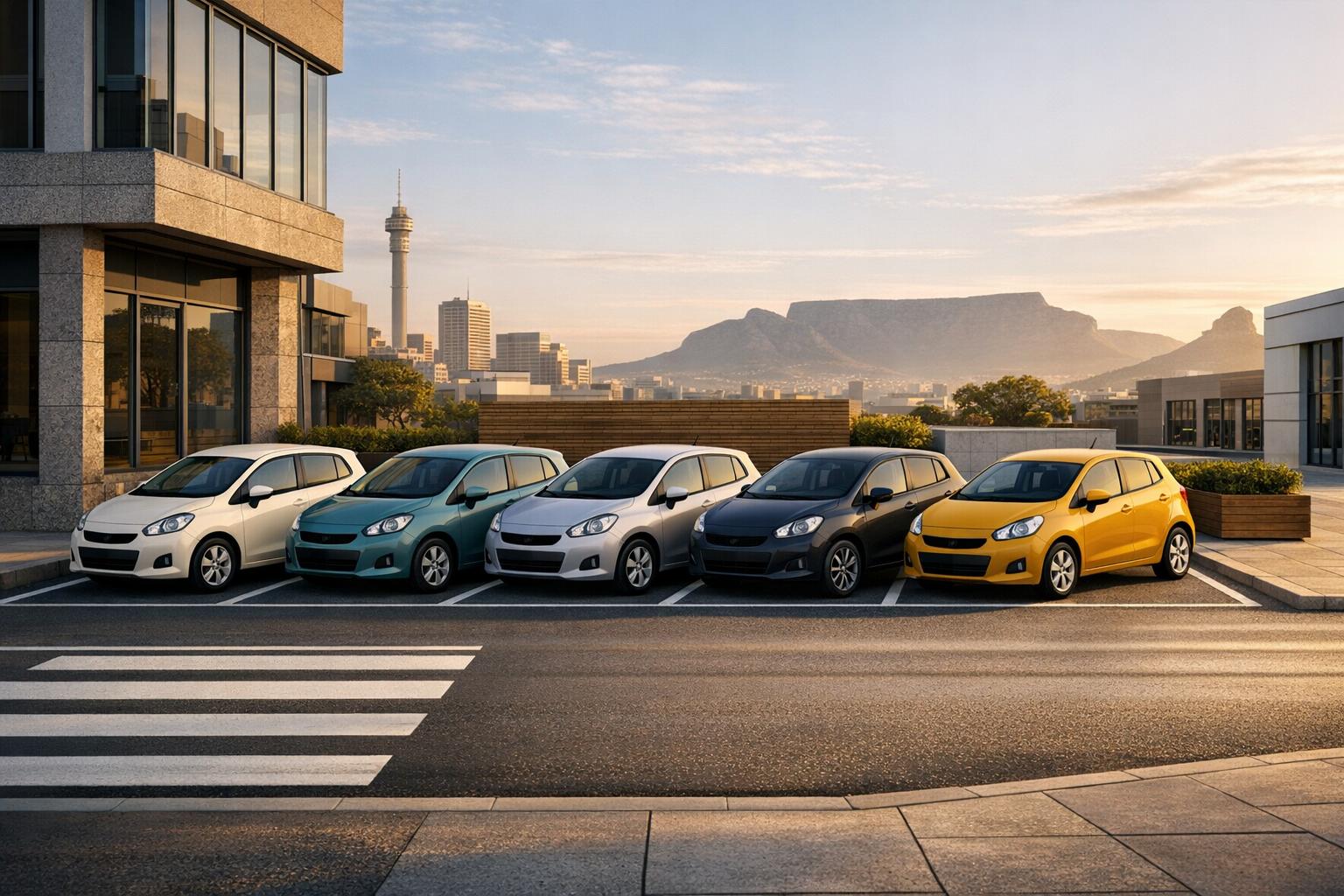
Navigating the busy streets of Johannesburg and Cape Town requires a car that’s compact, fuel-efficient, and easy to park. This guide highlights five small cars that excel in city driving based on fuel economy, affordability, handling, and parking ease. Here’s a quick summary:
- Volkswagen Polo Vivo: Reliable with strong resale value. Fuel consumption: 6.6–7.0 L/100 km. Price starts at $14,900. Compact design but lacks standard parking sensors.
- Toyota Starlet: Affordable with practical features. Fuel consumption: 5.4–6.6 L/100 km. Price starts at $13,600. Spacious interior and great dealer support.
- Suzuki Swift: Budget-friendly with top fuel efficiency (4.87–6.0 L/100 km). Price starts at $12,040. Lightweight and easy to maneuver.
- Kia Picanto: Compact and great for tight spaces. Fuel consumption: 5.1–5.8 L/100 km. Price starts at $14,290. Includes rearview camera on base models.
- Hyundai i20: Durable with higher ground clearance. Fuel consumption: 5.9–9.5 L/100 km. Price starts at $16,980. Offers solid warranties and service plans.
These cars cater to different needs, whether you prioritize fuel savings, parking ease, or long-term reliability. Below is a quick comparison for better clarity.
Quick Comparison
| Model | Fuel Economy (L/100 km) | Starting Price | Best For |
|---|---|---|---|
| Volkswagen Polo Vivo | 6.6–7.0 | $14,900 | Resale value, reliability |
| Toyota Starlet | 5.4–6.6 | $13,600 | Space, dealer network |
| Suzuki Swift | 4.87–6.0 | $12,040 | Fuel efficiency, affordability |
| Kia Picanto | 5.1–5.8 | $14,290 | Parking ease, compact design |
| Hyundai i20 | 5.9–9.5 | $16,980 | Ground clearance, warranties |
Each car has strengths tailored to city life. Choose based on your priorities – be it fuel savings, parking ease, or practicality.
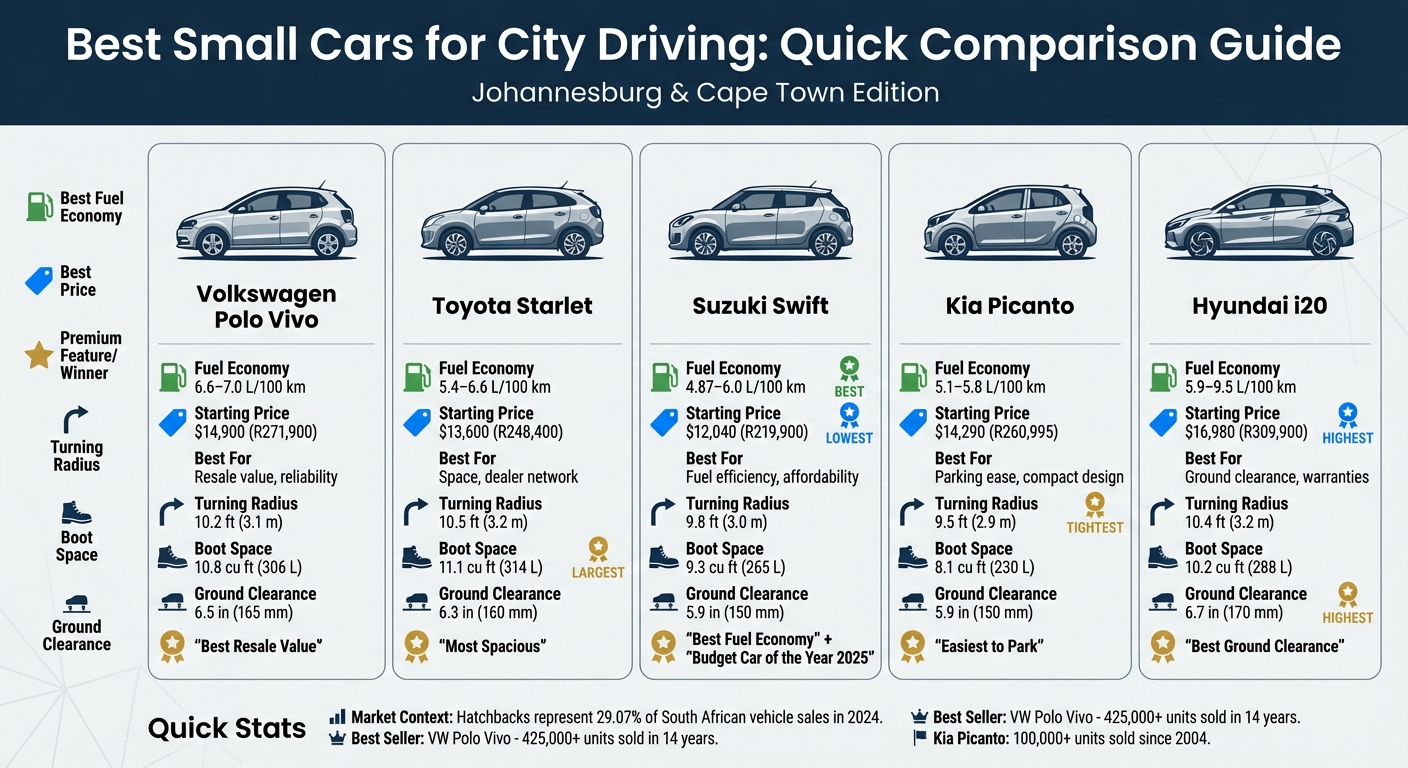
Best Small Cars for City Driving: Comparison of Fuel Efficiency, Price, and Features
1. Volkswagen Polo Vivo
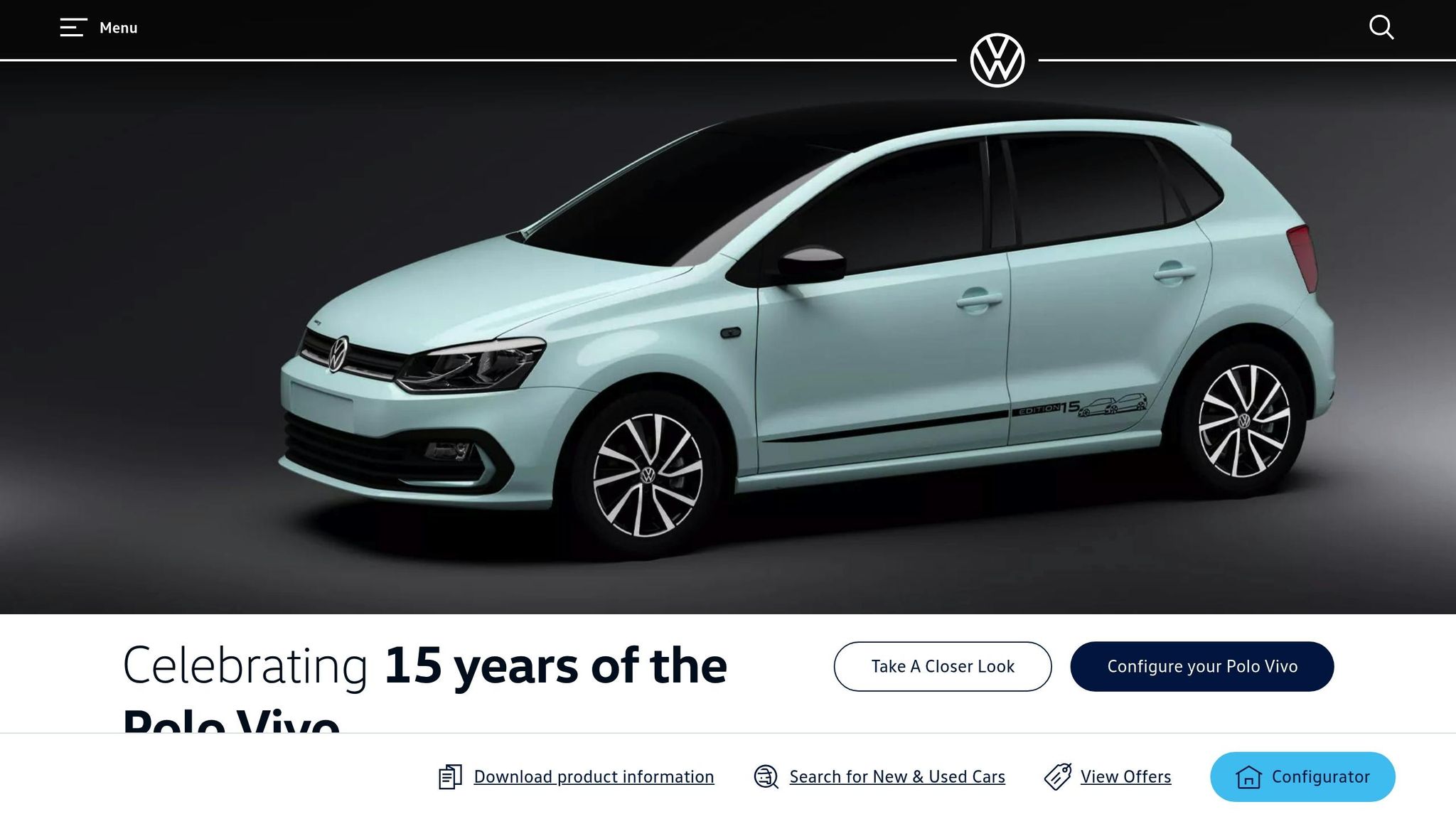
The Volkswagen Polo Vivo has held the title of South Africa’s best-selling passenger car for over ten years, with more than 425,000 units sold in the past 14 years. Its enduring popularity comes from its reliability, strong resale value, and a widespread dealer network that helps keep maintenance costs manageable. Starting at $14,900 (R271,900) for the base 1.4-liter model, it’s a practical choice for those seeking long-term value.
Fuel Efficiency
Fuel consumption for the Polo Vivo can vary depending on location. At sea level, the 1.4-liter model delivers 6.60 L/100 km (35.6 mpg), but in Johannesburg’s higher altitudes, it climbs closer to 7.0 L/100 km (33.6 mpg). Interestingly, the 1.6-liter engine often performs better in these conditions, as it doesn’t need to work as hard to maintain power.
"Our fuel route figure of 6.60 L/100 km in this model should be easy to replicate at sea level, but this unit will likely have its work cut out at higher altitudes upcountry." – CAR Magazine
For city driving, where fuel costs are a constant concern, these variations are worth considering.
Affordability
While the Polo Vivo is competitively priced, it does sit higher than some of its rivals. Insurance premiums can also be on the higher side, partly due to the car’s popularity with thieves in South Africa’s urban areas. For city drivers, the 1.4 Life trim at $16,100 (R294,300) strikes a good balance between cost and features, though you might need to factor in the expense of a tracking device – often required by insurers. For 1,000 km of urban driving, expect fuel costs to be around $96 (R1,750), based on current fuel prices.
Maneuverability
The Polo Vivo’s compact hatchback design is perfect for navigating crowded streets. Features like light steering and a lightweight clutch action make it a breeze to handle during daily commutes. Manual models, in particular, stand out for their ease of use.
"City driving is effortless thanks to its compact size and light steering, while highway trips remain comfortable for a small hatchback." – Aisha Zardad, Journalist
Its small size also makes it easy to park, even in tight urban spaces.
Ease of Parking
The car’s compact design makes it ideal for squeezing into tight parking spots. However, entry-level trims lack parking sensors or a reverse camera, which can make precision parking a bit tricky. Upgrading to the Life trim or adding the optional Park package (about $350 / R6,400) is worth considering. This package includes parking sensors and a reverse camera – features that are especially useful in busy city centers.
sbb-itb-09752ea
2. Toyota Starlet
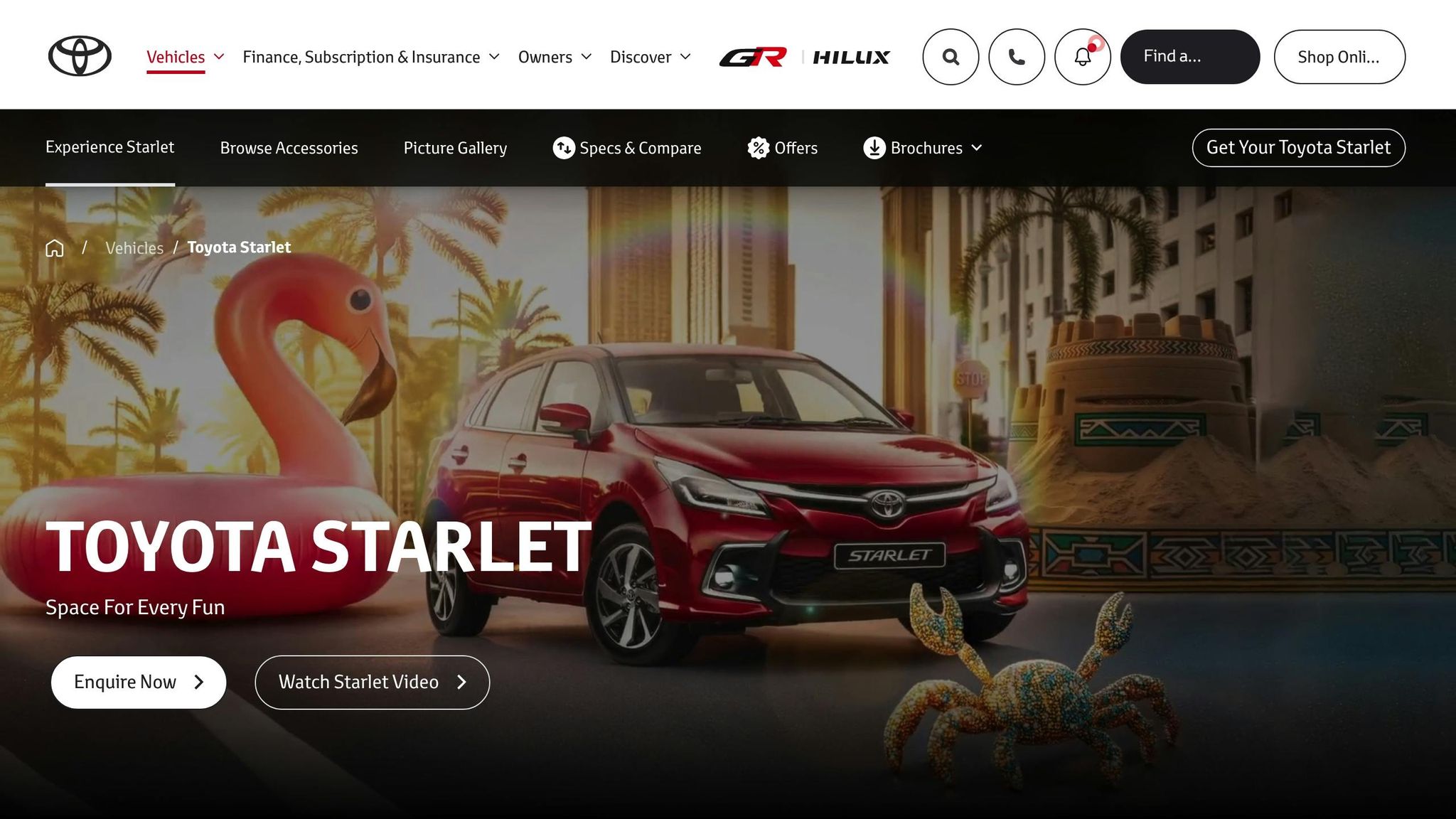
The Toyota Starlet packs in a range of practical features at a starting price of $13,600 (R248,400) for the 1.5 Xi manual model. It comes equipped with a touchscreen infotainment system compatible with Apple CarPlay and Android Auto, automatic climate control, and rear parking sensors. For those looking for extra convenience, the top-tier XR model, priced at $18,300 (R334,000), includes a reverse camera and an auto-dimming rearview mirror – perfect for navigating tight parking spots.
Fuel Efficiency
Under the hood, the Starlet features a 1.5-liter engine producing 77 kW and 138 Nm of torque. It delivers an impressive fuel consumption rate of 5.4 L/100 km (43.6 mpg) for the manual and 5.7 L/100 km (41.3 mpg) for the automatic versions. However, in heavy Cape Town traffic, consumption may rise to around 6.6 L/100 km.
"The extra performance will be useful for those at the Reef, where naturally aspirated engines can feel lethargic in the thin(ner) air."
– Ashley Oldfield, Cars.co.za
Such efficiency not only keeps running costs manageable but also adds to the Starlet’s appeal for budget-conscious buyers.
Affordability
For city dwellers prioritizing affordability and functionality, the Starlet is a compelling option. It includes a standard 3-year/45,000 km service plan and benefits from Toyota’s extensive dealer network, ensuring low maintenance costs. Additionally, its strong resale value makes it a smart choice for those considering long-term ownership.
Maneuverability and Ease of Parking
The Starlet shines as a city car, thanks to its compact design and light steering, which make tight turns and parking in crowded urban areas effortless. Its suspension is specifically tuned to handle everyday challenges like speed bumps and uneven road surfaces.
"The Starlet is easy and fun to drive, and its suspension is built for roads in far worse condition than the Western Cape’s (it makes mincemeat of speed bumps thanks to softish suspension)."
– Ané Theron, AutoTrader
The XR trim enhances parking convenience with a reverse camera, while the 314-liter trunk offers more cargo space than rivals like the Polo Vivo.
3. Suzuki Swift
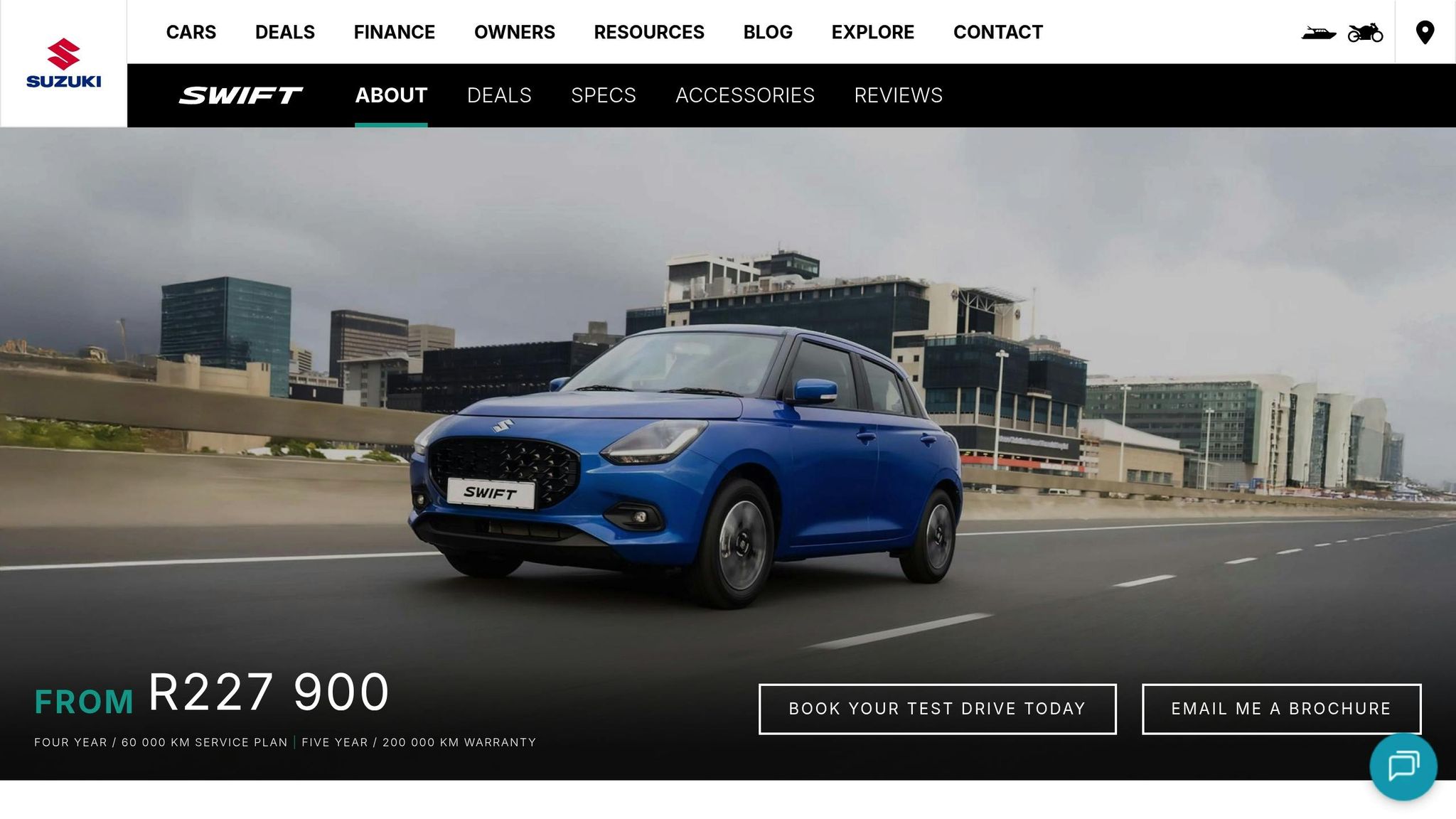
The Suzuki Swift has earned its reputation as "budget car royalty" in South Africa, thanks to its combination of affordability and thoughtful features. Starting at around $12,040 (R219,900) for the entry-level 1.2 GL manual, it offers a standard package that includes six airbags and an Electronic Stability Program (ESP) – a rare find in this price range. For those looking for more, the top-tier GLX manual, priced at approximately $14,500 (R264,900), adds premium touches like a 9-inch touchscreen, LED projector headlights, and a rearview parking camera.
Fuel Efficiency
The fourth-generation Swift boasts a new 1.2-liter three-cylinder engine designed to boost fuel efficiency by 11% compared to the older model. Weighing just about 2,028 lbs (920 kg), its lightweight build minimizes energy loss, especially in stop-and-go traffic. In a March 2025 road test by CAR magazine, the Swift achieved an impressive average fuel consumption of 4.87 L/100 km (48.3 mpg) under mixed driving conditions, and even heavy acceleration didn’t push it past 6.0 L/100 km.
"No matter how heavy your foot, the Suzi only knows to sip fuel." – Ray Leathern, Motoring Journalist, The South African
With a 37-liter (9.8-gallon) fuel tank, the Swift can cover roughly 515 miles (829 km) on a single fill, based on an average of 4.5 L/100 km. This efficiency makes it a fantastic choice for drivers who want to keep fuel costs low while navigating urban environments.
Affordability
The Swift isn’t just affordable to buy – it’s a smart long-term investment. It includes a two-year/18,641-mile (30,000 km) service plan and a five-year/124,274-mile (200,000 km) promotional warranty. In April 2025, CAR Magazine named it "Budget Car of the Year" in the under $14,235 (R260,000) category. Plus, the inclusion of six airbags as standard on the base GL model highlights its commitment to safety in the budget segment.
Maneuverability and Ease of Parking
Urban driving is where the Swift truly shines. Measuring just 12.6 feet in length and 5.7 feet in width, it’s perfectly sized for navigating narrow streets and fitting into tight parking spaces[25,26]. Its sharp turning radius and responsive handling make weaving through city traffic a breeze. For added convenience, all trims except the base GL feature a rearview parking camera and park distance control sensors.
"Tight parking spaces hold no mystery and, somehow, the Swift doesn’t feel cramped inside at all in the head, leg and shoulder department." – Ray Leathern, Motoring Journalist, The South African
Its compact design and nimble handling make it an ideal companion for bustling cities like Johannesburg and Cape Town, where space is often at a premium.
4. Kia Picanto
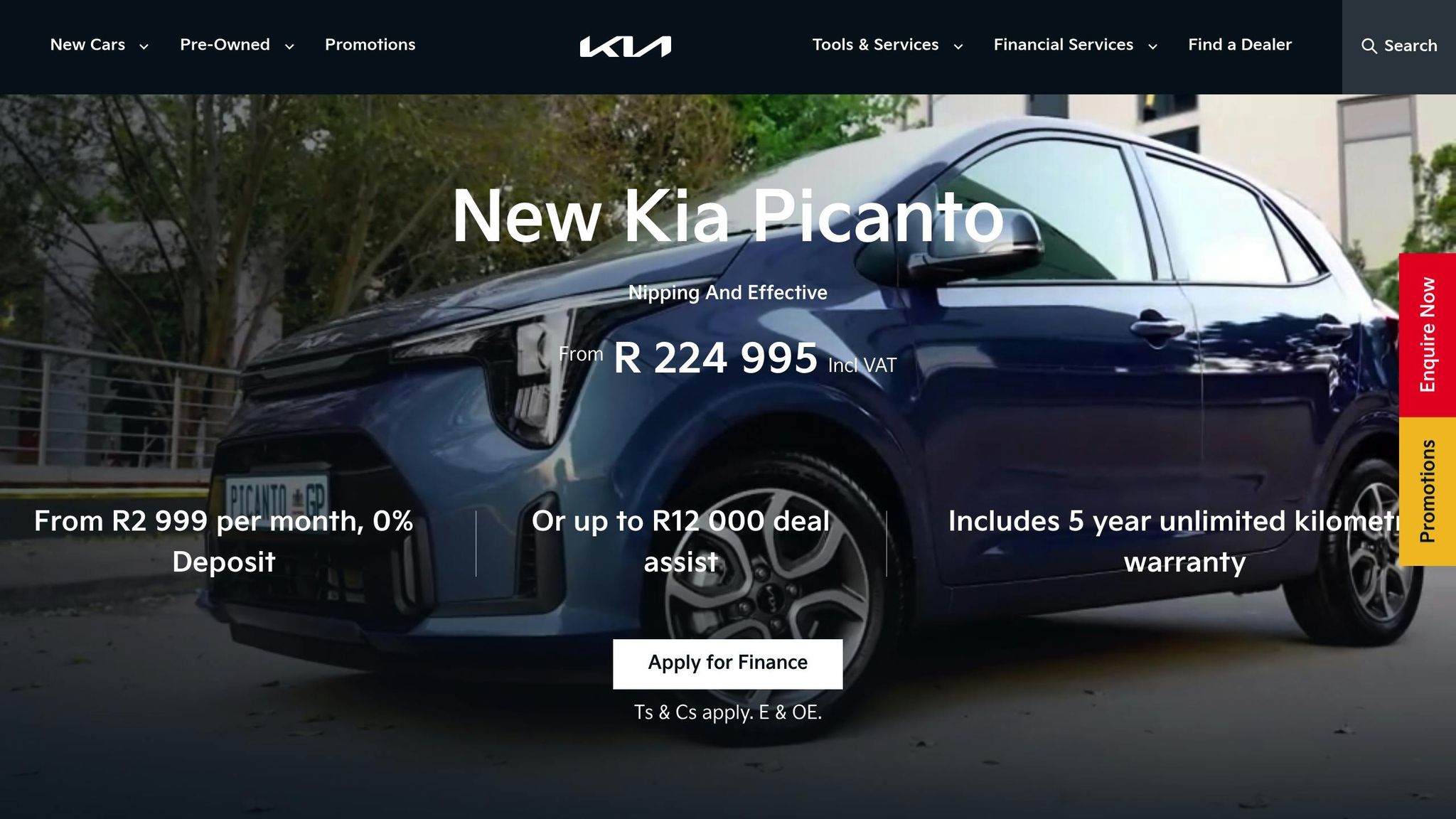
The Kia Picanto steps in as a standout option for urban drivers looking for an entry-level car with a touch of refinement. Starting at about $14,290 (R260,995) for the 1.0 LX manual, it offers more than you’d expect for its price range, including a touchscreen with a rearview camera as standard. At the higher end, the 1.2 EX Plus automatic is priced around $17,840 (R325,995). Every model is backed by a five-year/unlimited-mile warranty and a two-year/18,641-mile (30,000 km) service plan.
Fuel Efficiency
When it comes to fuel economy, the Picanto holds its own in city driving, even if it falls slightly behind some rivals. During real-world testing by The Citizen over 621 miles (1,000 km) of urban driving – including school runs and heavy traffic – the 1.2 EX manual achieved 5.2 L/100 km (45.2 mpg), closely matching Kia’s official claim of 5.0 L/100 km.
Here’s how the fuel efficiency stacks up across the range:
- 1.0-liter manual: 5.1 L/100 km (46.1 mpg)
- 1.2-liter manual: 5.2 L/100 km (45.2 mpg)
- 1.2-liter automatic: 5.8 L/100 km (40.6 mpg)
With its 9.2-gallon fuel tank, the Picanto delivers a range of approximately 435 miles per fill-up.
"We have achieved a number of 5.2L/100km over the course of almost 1,000km… our Picanto has just been put through normal daily paces which includes lots of city traffic through school runs and going to the office."
– Jaco Van Der Merwe, Head of Motoring, The Citizen
These figures help keep running costs impressively low, making it an economical choice for city dwellers.
Affordability
The Picanto’s appeal extends beyond its upfront cost, offering low long-term ownership expenses. Insurance premiums start at about $23 per month (R423). Its lightweight build – just 2,120 pounds (962 kg) – not only enhances fuel economy but also reduces maintenance complexity. Since its introduction to South Africa in 2004, over 100,000 units have been sold, proving its reliability and strong resale value. For instance, the 1.2 EX automatic depreciates by only 7% over two years, making it a smart investment.
Maneuverability and Ease of Parking
At just 11.8 feet (3,595 mm) long and 5.2 feet (1,595 mm) wide, the Picanto is one of the smallest cars on South African roads. This compact size makes weaving through congested streets in areas like Sandton, Rosebank, or Cape Town’s City Bowl a breeze. The light steering and smooth five-speed manual gearbox simplify tight maneuvers and U-turns. Higher-end EX Plus models add rear park distance sensors to complement the standard rearview camera, making parking even easier.
"In a crowded city like Cape Town, the world really is your oyster when you’re driving a Picanto!"
– Ané Albertse, Journalist, AutoTrader
5. Hyundai i20
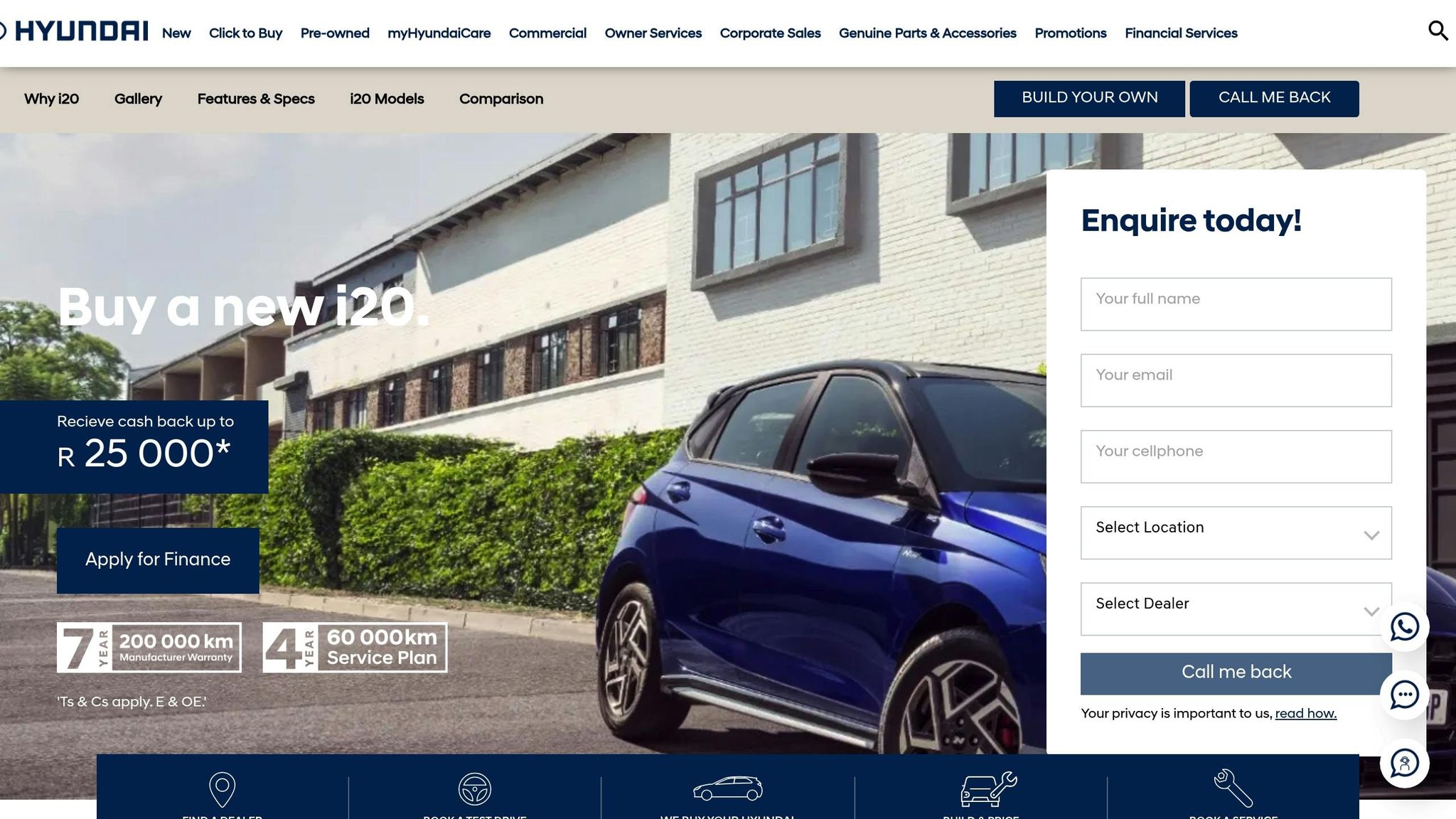
The Hyundai i20, following the Kia Picanto, is another excellent choice for nimble city driving. With its sleek design, compact size of just 13.1 feet (3,995 mm) in length, and three engine options, it stands out as a versatile option. Prices for the i20 start at $16,980 (R309,900) for the 1.2 Premium manual and go up to $25,610 (R467,500) for the sporty 1.0T N Line, which features a seven-speed dual-clutch transmission. Every model includes a seven-year/124,274-mile (200,000 km) drivetrain warranty and a four-year/37,282-mile (60,000 km) service plan, offering solid reassurance for buyers.
Fuel Efficiency
The 1.2-liter manual version is the most fuel-efficient, with a manufacturer-claimed consumption of 5.9 L/100 km (39.9 mpg). Meanwhile, the 1.4-liter automatic and 1.0T turbo models are rated at 6.9 L/100 km (34.1 mpg). However, real-world tests indicate that the 1.0T typically uses between 7.5 and 8.0 L/100 km, with aggressive driving pushing this figure up to 9.5 L/100 km. The i20’s 9.8-gallon (37-liter) fuel tank provides an estimated range of about 333 miles (536 km).
"The 1.0T Automatic… offers the best of both worlds: perky performance without a huge consumption penalty." – Martin Pretorius, Journalist, AutoTrader
This balance of performance and efficiency makes the i20 particularly suitable for navigating traffic in bustling city centers.
Affordability
Hyundai has adjusted pricing for the 2024 i20 lineup to stay competitive. The 1.2 Premium manual starts at $16,980 (R309,900), while the 1.2 Executive manual has seen a price drop from $24,590 (R448,900) to $18,070 (R329,900). The 1.4 Executive automatic, priced at $19,170 (R349,900), is often highlighted as a great balance between features and affordability. With Hyundai holding the fourth-largest market share in South Africa, buyers also benefit from reliable parts availability and a strong service network, making long-term ownership more convenient.
Maneuverability and Ease of Parking
The i20’s compact design makes it a natural fit for urban environments. Its narrow width of 5.8 feet (1,775 mm) allows it to navigate tight streets with ease, while its responsive steering ensures quick adjustments in crowded areas. Standard features like a rearview camera and rear parking sensors simplify parallel parking in cramped spaces. Additionally, the latest model has a slightly increased ride height of 6.7 inches (170 mm), which helps tackle uneven roads without scraping.
"At under 4 metres long, it’s a pleasure to swap directions in, scrubbing off speed as you do." – Calvin Fisher, Journalist, Cars.co.za
Comparison: Pros and Cons
Here’s a quick breakdown of how these five small cars stack up for city driving. The table highlights key specs:
| Model | Fuel Efficiency | Starting Price | Turning Radius | Boot Space | Ground Clearance |
|---|---|---|---|---|---|
| Volkswagen Polo Vivo | 5.4 L/100 km | $12,330 (R224,900) | 10.2 ft (3.1 m) | 10.8 cu ft (306 L) | 6.5 in (165 mm) |
| Toyota Starlet | 5.2 L/100 km | $12,330 (R224,900) | 10.5 ft (3.2 m) | 11.1 cu ft (314 L) | 6.3 in (160 mm) |
| Suzuki Swift | 5.0 L/100 km | $12,330 (R224,900) | 9.8 ft (3.0 m) | 9.3 cu ft (265 L) | 5.9 in (150 mm) |
| Kia Picanto | 5.3 L/100 km | $13,700 (R249,995) | 9.5 ft (2.9 m) | 8.1 cu ft (230 L) | 5.9 in (150 mm) |
| Hyundai i20 | 5.9 L/100 km | $16,980 (R309,900) | 10.4 ft (3.2 m) | 10.2 cu ft (288 L) | 6.7 in (170 mm) |
This table gives a snapshot of what each car brings to the table for city drivers, but let’s dive into some of their standout features.
The Suzuki Swift leads in fuel efficiency, sipping just 5.0 L/100 km, and ties for the lowest starting price at $12,330 (R224,900). If you’re looking for a car that’s light on fuel and easy on the wallet, this one’s hard to beat. Meanwhile, the Kia Picanto shines in tight spaces, thanks to its impressive turning radius of just 9.5 feet (2.9 m), making it a great choice for navigating crowded streets and parking lots.
For those who need more storage, the Toyota Starlet stands out with the largest boot space at 11.1 cubic feet (314 L) and even includes a standard service plan. On the other hand, if your daily commute involves rougher urban roads, the Hyundai i20 offers the highest ground clearance at 6.7 inches (170 mm), though it does come with a steeper price tag of $16,980 (R309,900).
Interestingly, hatchbacks make up 29.07% of all vehicle sales in South Africa in 2024, largely due to their compact size and ease of maneuvering in city environments.
Each model has its own strengths tailored to urban driving. The Polo Vivo and Starlet offer solid value with competitive pricing and practical features. The Swift wins on fuel savings and a fun driving experience. The Picanto is perfect for tight city spaces, while the i20 brings added durability and clearance for tougher city roads. Whether you’re navigating Johannesburg’s bustling streets or Cape Town’s tighter lanes, there’s a car here to suit your needs.
Conclusion
Choosing the right small car for urban driving ultimately comes down to your individual needs – whether you prioritize fuel efficiency, ease of maneuvering, or practicality. Each model discussed offers solutions tailored to the demands of navigating cities like Johannesburg and Cape Town.
If saving on fuel tops your list, the Suzuki Swift is a standout with its impressive fuel consumption of 4.9 L/100 km and a starting price of $12,330 (R224,900).
For those who need a car that can handle tight spaces with ease, the Kia Picanto shines with its nimble design and the tightest turning radius. Similarly, the Suzuki Swift offers excellent agility, making it perfect for weaving through congested streets.
When it comes to practicality, the Toyota Starlet provides a spacious interior, ideal for those who need extra room. On the other hand, if you frequently encounter uneven or rough roads in the city, the Hyundai i20 delivers better ground clearance for a smoother ride.
For reliability and local support, the Volkswagen Polo Vivo remains a trusted option. As journalist Ané Albertse highlights:
"The Polo Vivo is built right here at the Kariega plant, and it’s practically designed for South African conditions".
Its strong resale value and easy access to parts make it a dependable long-term investment.
For budget-conscious buyers, there are plenty of entry-level options that cater to fuel efficiency, maneuverability, and reliability. Consider your daily driving needs and choose a car that simplifies your urban commute while meeting your priorities.
FAQs
Which small car is cheapest to own in Joburg or Cape Town?
The Toyota Vitz, starting at R178,800, is among the most budget-friendly small cars available in South Africa. Known for its affordability, dependable performance, and excellent fuel efficiency, it’s a smart choice for navigating city streets in places like Johannesburg and Cape Town.
Do Johannesburg’s high altitudes noticeably hurt fuel economy?
At Johannesburg’s high altitude, the thinner air can slightly affect fuel economy in gasoline engines. This happens because the lower air density impacts engine combustion efficiency and aerodynamics. On the flip side, reduced air resistance at higher altitudes can help counterbalance these effects, meaning the overall impact on fuel consumption might not be as noticeable as you’d expect.
Which trims include a reverse camera or parking sensors?
The details about which specific trims include a reverse camera or parking sensors are not clearly outlined in the available information.
Related Blog Posts
- Top 5 Cars for South African Roads
- Best Cars Under R300K in South Africa (2025 Update)
- Top 5 city cars for Johannesburg, Cape Town and urban driving
- Top 5 Cars to Buy in South Africa for Less Than R 150 000