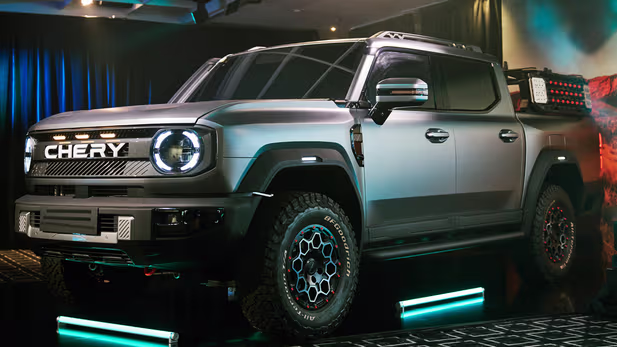
The bakkie market in South Africa is about to get a lot more interesting. Chinese automaker Chery has officially unveiled the KP31 concept in Australia, and it’s previewing what could be the world’s first diesel plug-in hybrid (PHEV) bakkie — with South Africa firmly in its sights. Here’s everything local bakkie buyers need to know.
What Is the Chery KP31?
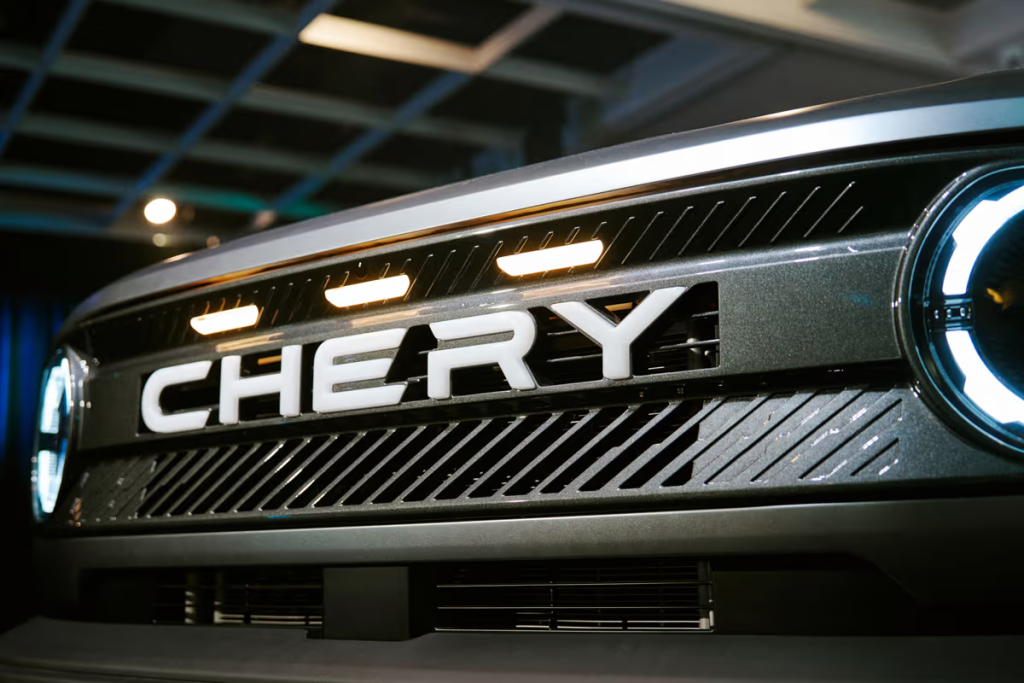
The KP31 is a double-cab bakkie concept that Chery unveiled in Australia, where the production version is scheduled to go on sale in the final quarter of 2026. It’s closely related to the Rely P3X — a pick-up that debuted in China in September 2025 under Chery’s revived Rely bakkie brand. The KP31’s defining feature is its powertrain: a 2.5-litre four-cylinder turbodiesel engine paired with a plug-in hybrid electric system, which Chery claims is the first of its kind in the bakkie segment worldwide.
This isn’t Chery’s only bakkie project. The brand is simultaneously developing the ladder-frame Himla (already confirmed for a 2026 South African launch) and has shown the unibody T1TP concept as well. Subsidiary brand Jetour is also preparing to reveal its new P5 pick-up. It’s clear that Chery is mounting a serious, multi-model charge into the global bakkie market — and South Africa is central to that ambition.
The Powertrain: Diesel Meets Electric in a World First
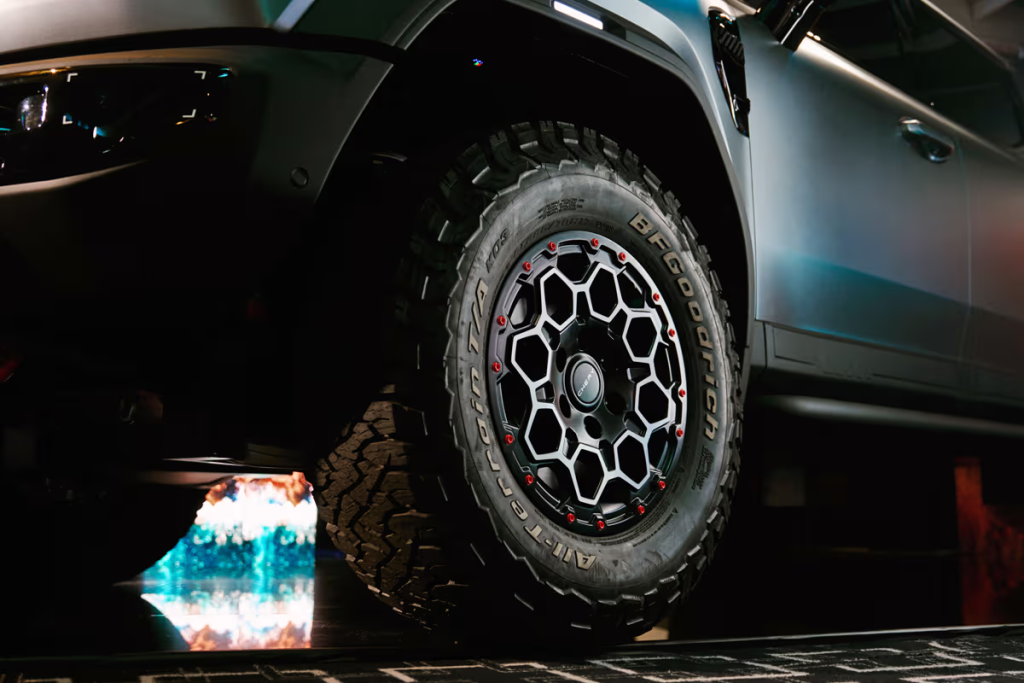
The headline news is the drivetrain. The KP31’s diesel PHEV system centres on a 2.5-litre turbodiesel engine that Chery claims achieves a class-leading thermal efficiency of 47% — a genuinely impressive figure that speaks to how efficiently the engine converts fuel into usable energy. For context, most diesel engines in this segment operate at significantly lower thermal efficiency levels.
Chery further claims the engine is around 10% more fuel efficient than the average diesel, and that the production version will reduce vibration by approximately 30% compared to a typical diesel powertrain. Full details on the electric motor configuration and battery capacity haven’t been released yet, but earlier information tied to the related Rely P3X pointed to a potential combined range exceeding 1,300 km — a figure that would be genuinely extraordinary for a working bakkie.
For buyers curious about fully electric alternatives in the pick-up and light commercial space, EV24.africa imports electric vehicles into South Africa, broadening the options available to drivers who want to reduce their fuel footprint without sacrificing utility.
Size, Payload, and Towing: Does It Measure Up?
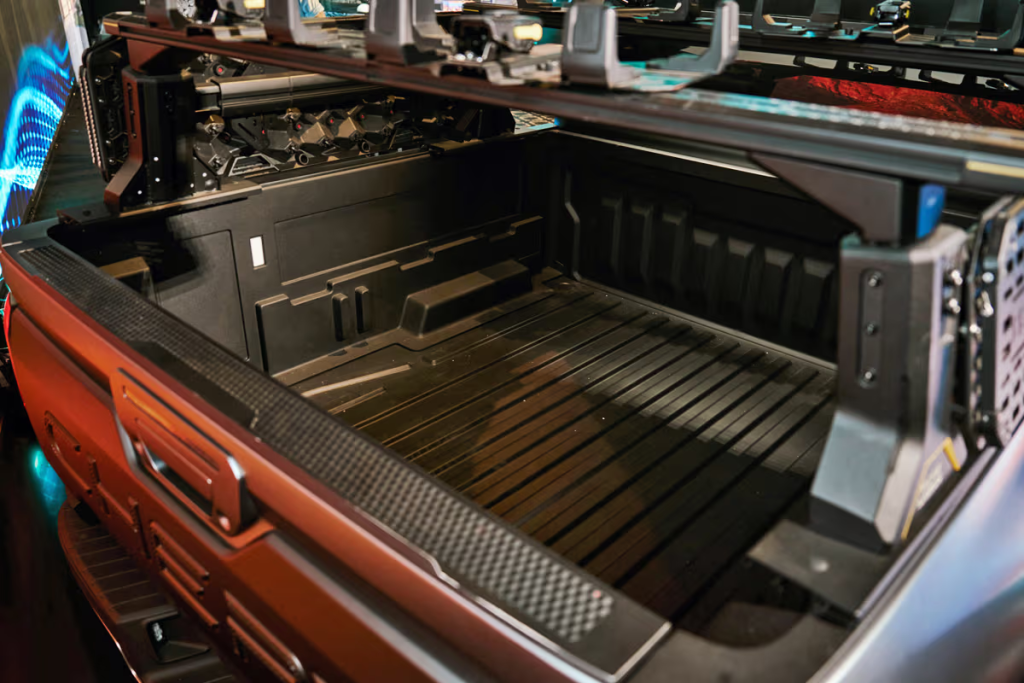
Numbers matter in the bakkie world, and the KP31 delivers competitive figures. The production version will measure 5,450 mm in length — approximately 100 mm longer than a Ford Ranger double cab — while standing 1,920 mm wide and 1,925 mm tall. That puts it firmly in full-size double-cab territory.
On capability, Chery has targeted a 1,000 kg payload and a 3,500 kg braked towing capacity. These are the benchmark figures that South African bakkie buyers expect — the same targets that Toyota Hilux and Ford Ranger owners use as a baseline. The fact that a diesel PHEV system can reportedly match these numbers while delivering exceptional range and fuel efficiency is what makes the KP31 genuinely compelling.
Is the KP31 Confirmed for South Africa?
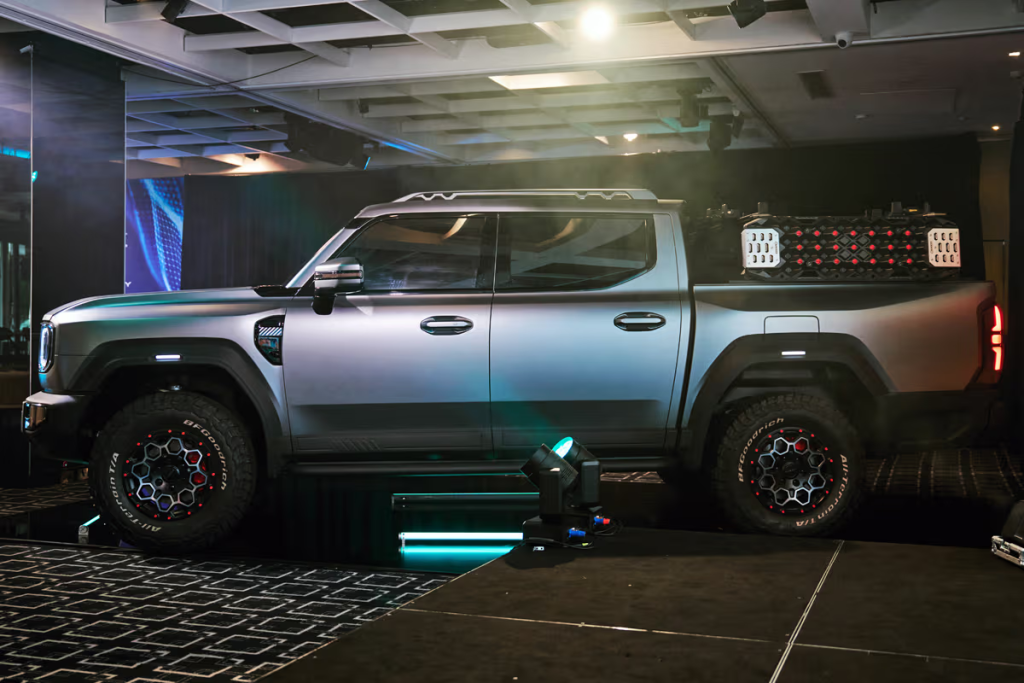
In short: very likely, yes. Tony Liu, Chief Executive Officer of Chery Group South Africa, confirmed as far back as October 2025 that Chery was developing this exact type of diesel PHEV powertrain. When approached more recently, Chery SA indicated that the KP31 is “definitely most similar to what’s coming to SA at the end of 2026.” A senior Chery engineer speaking to Australian publication CarExpert at the KP31 reveal event also specifically referenced the South African market — which is as close to confirmation as we’re likely to get before an official announcement.
The Himla bakkie is expected to launch locally in 2026 first, potentially giving Chery a foothold in the market before the more advanced KP31 arrives — possibly in 2027.
How Does the KP31 Stack Up Against the Competition?
The South African bakkie market is fiercely competitive. The Toyota Hilux and Ford Ranger dominate sales, with Isuzu D-Max, Volkswagen Amarok, and Nissan Navara also holding meaningful market share. The KP31 would enter as a wildcard — larger than most rivals, potentially more fuel-efficient than any of them, and carrying a technology story that none of the established players can currently match.
If Chery prices the KP31 competitively and backs it with solid after-sales support, it could genuinely disrupt buying patterns in the segment. That said, South African bakkie buyers are known for their brand loyalty and their preference for proven reliability — so Chery will need to earn trust alongside the technical achievements.
If you’re in the market for a bakkie right now and don’t want to wait for new models, auto24.co.za offers a wide selection of used bakkies and commercial vehicles, including popular models like the Toyota Hilux, Ford Ranger, and Isuzu D-Max — all well-suited to South African conditions and available at various price points.
What the Diesel PHEV Technology Means for Everyday Bakkie Owners
PHEV technology in a bakkie context is different from what you’d find in a passenger car. The electric motor is designed to complement the diesel engine’s torque delivery — particularly useful for off-road driving, towing from a standstill, and fuel efficiency in stop-start urban traffic. The ability to charge the battery externally (via a plug) means owners with home charging setups could potentially cover daily commutes on electric power alone, reserving the diesel for longer trips or heavy-duty work.
For practical maintenance, PHEV bakkies introduce some additional considerations over traditional diesels. Battery health checks should be part of your regular service schedule. Keep charging ports clean and free of dust and moisture — particularly important in South Africa’s dusty interior regions. As with any diesel, adhering to oil change intervals and using the correct specification oil remains critical to engine longevity.
For the latest updates on the KP31’s South African launch timeline, pricing speculation, and full spec comparisons, imotonews.co.za covers the South African automotive market in depth, with news, reviews, and buying guides tailored to local drivers and enthusiasts.
Chery’s Broader South African Bakkie Strategy
The KP31 doesn’t exist in isolation. Chery is approaching the bakkie segment with a clearly thought-out portfolio strategy: the Himla covers the traditional ICE buyer, the T1TP concept explores unibody versatility, and the KP31 targets the technology-forward buyer who wants diesel capability with hybrid efficiency. It’s a broad sweep, and it suggests Chery is serious about becoming a long-term player in this segment — not just a newcomer testing the waters.
With the South African government’s growing focus on emissions regulations and fuel economy standards, a bakkie that delivers 3,500 kg towing capacity alongside 1,300+ km of range and class-leading thermal efficiency could find itself very well positioned in the years ahead.
Frequently Asked Questions
How does the KP31 differ from the Chery Himla? The Himla is a traditional ladder-frame bakkie using 2.0 or 2.3-litre turbodiesel engines. The KP31 is larger, more technologically advanced, and introduces a world-first diesel PHEV powertrain, making it a very different product aimed at a different type of buyer.
When could the KP31 arrive in South Africa? The Himla is expected in 2026. The KP31, based on comments from Chery SA and its engineering team, is most likely to arrive at the end of 2026 or into 2027.
Can a PHEV bakkie genuinely tow 3,500 kg? According to Chery, yes. The diesel PHEV system has been specifically engineered to deliver the low-end torque required for serious towing and payload work, while also offering the fuel efficiency and range benefits of hybrid technology.
What range can the KP31 achieve? Based on early information linked to the related Rely P3X, the combined range could exceed 1,300 km — though official figures for the production model have yet to be confirmed.