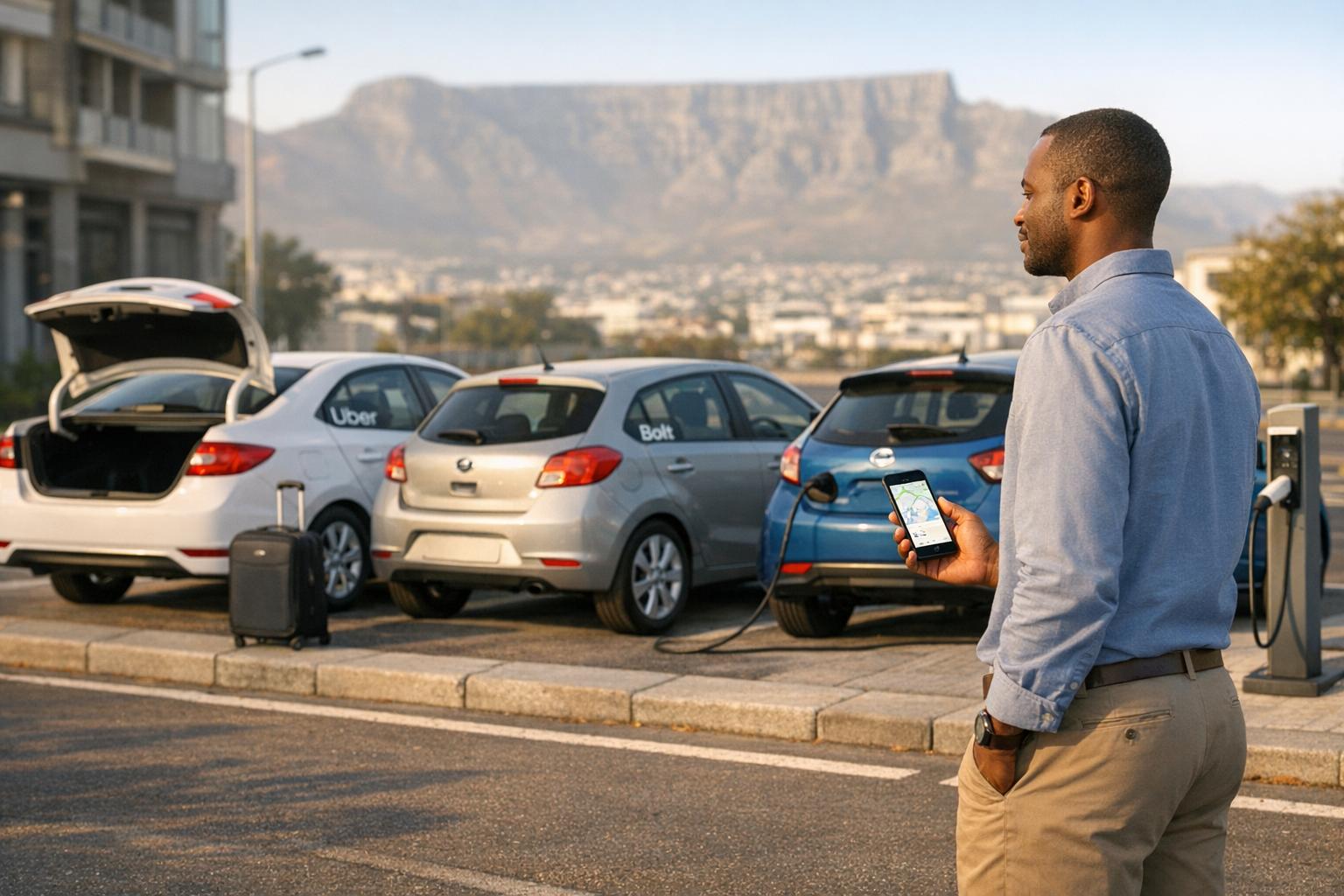
Choosing the right car for ride-hailing in South Africa can significantly impact your earnings. Here’s what matters most:
- Fuel Efficiency: Cars that consume 4–5 L/100 km or less (or electric/hybrid models) can save you thousands annually.
- Platform Requirements: Uber and Bolt require 4-door vehicles with air conditioning, ABS, and airbags. Uber limits cars to 3–5 years old, while Bolt allows up to 10 years.
- Passenger Comfort: Ample rear legroom and a trunk of at least 400 liters are essential for customer satisfaction.
- Regulations: Post-2025 laws mandate e-hailing licenses, vehicle branding, safety features like panic buttons, and compliance with specific standards.
Top Picks:
- BYD Seagull: Electric, low running costs, compact, but limited trunk space.
- Suzuki Swift GLX: Budget-friendly, fuel-efficient, small trunk.
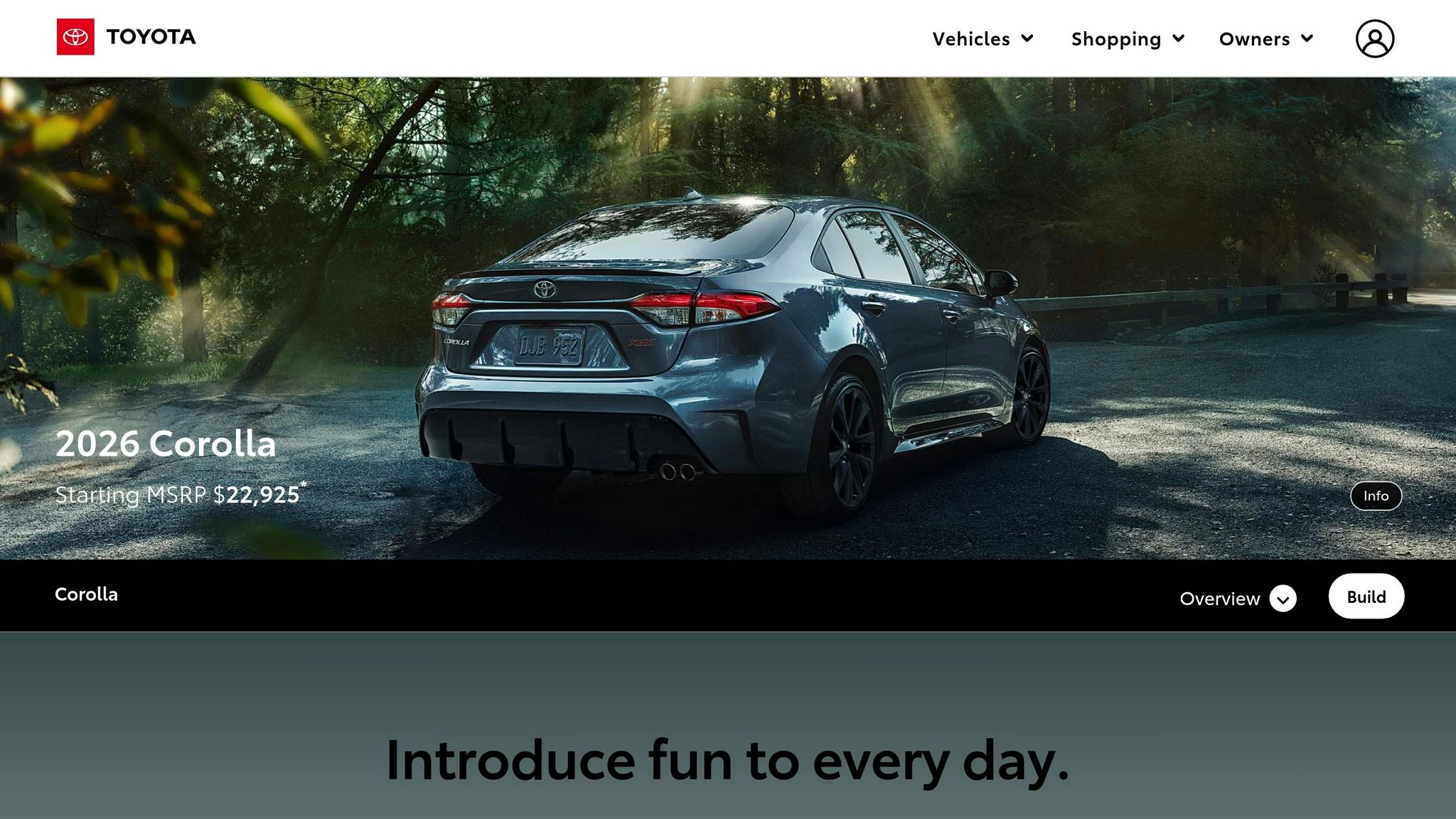
- Toyota Corolla: Reliable, spacious, and hybrid options available.
- Tesla Model 3: Premium electric, high upfront cost, limited charging infrastructure.
- Hyundai Kona Electric: Long range, low maintenance, but expensive.
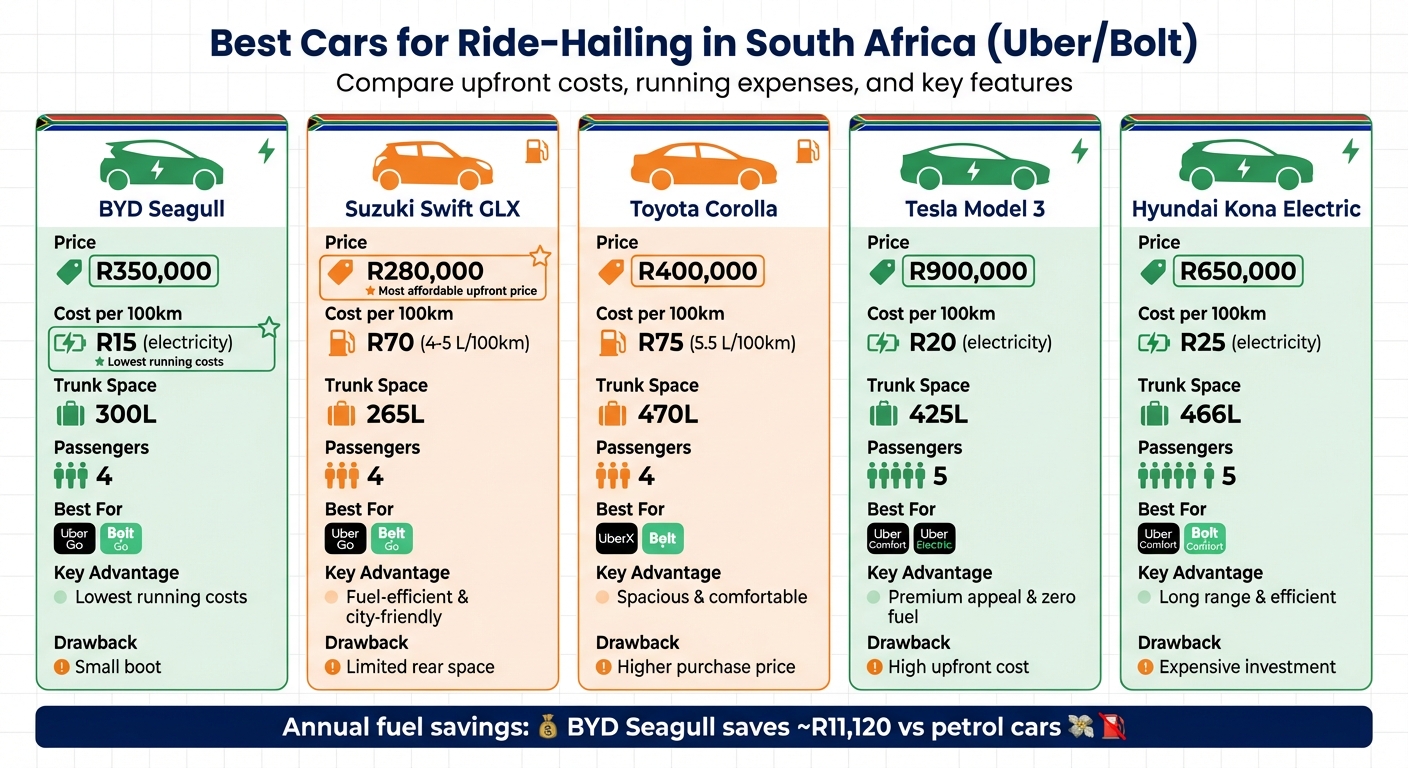
Quick Comparison
| Vehicle | Price (ZAR) | Fuel/Charge Cost per 100km | Trunk Space | Best For | Key Drawback |
|---|---|---|---|---|---|
| BYD Seagull | ~R350,000 | ~R15 (electricity) | 300L | Uber Go, Bolt Go | Small trunk |
| Suzuki Swift GLX | ~R280,000 | ~R70 (4–5 L/100km) | 265L | Uber Go, Bolt Go | Limited rear space |
| Toyota Corolla | ~R400,000 | ~R75 (5.5 L/100km) | 470L | UberX, Bolt | Higher purchase price |
| Tesla Model 3 | ~R900,000 | ~R20 (electricity) | 425L | Uber Comfort, Electric | High upfront cost |
| Hyundai Kona Electric | ~R650,000 | ~R25 (electricity) | 466L | Uber Comfort | Expensive initial investment |
For city trips, the Suzuki Swift or BYD Seagull are cost-effective. For airport runs or premium services, the Toyota Corolla or electric models like the Tesla and Hyundai Kona stand out. Always ensure your vehicle meets platform and regulatory requirements.
Best Ride-Hailing Cars in South Africa: Cost and Features Comparison
1. BYD Seagull
Affordability
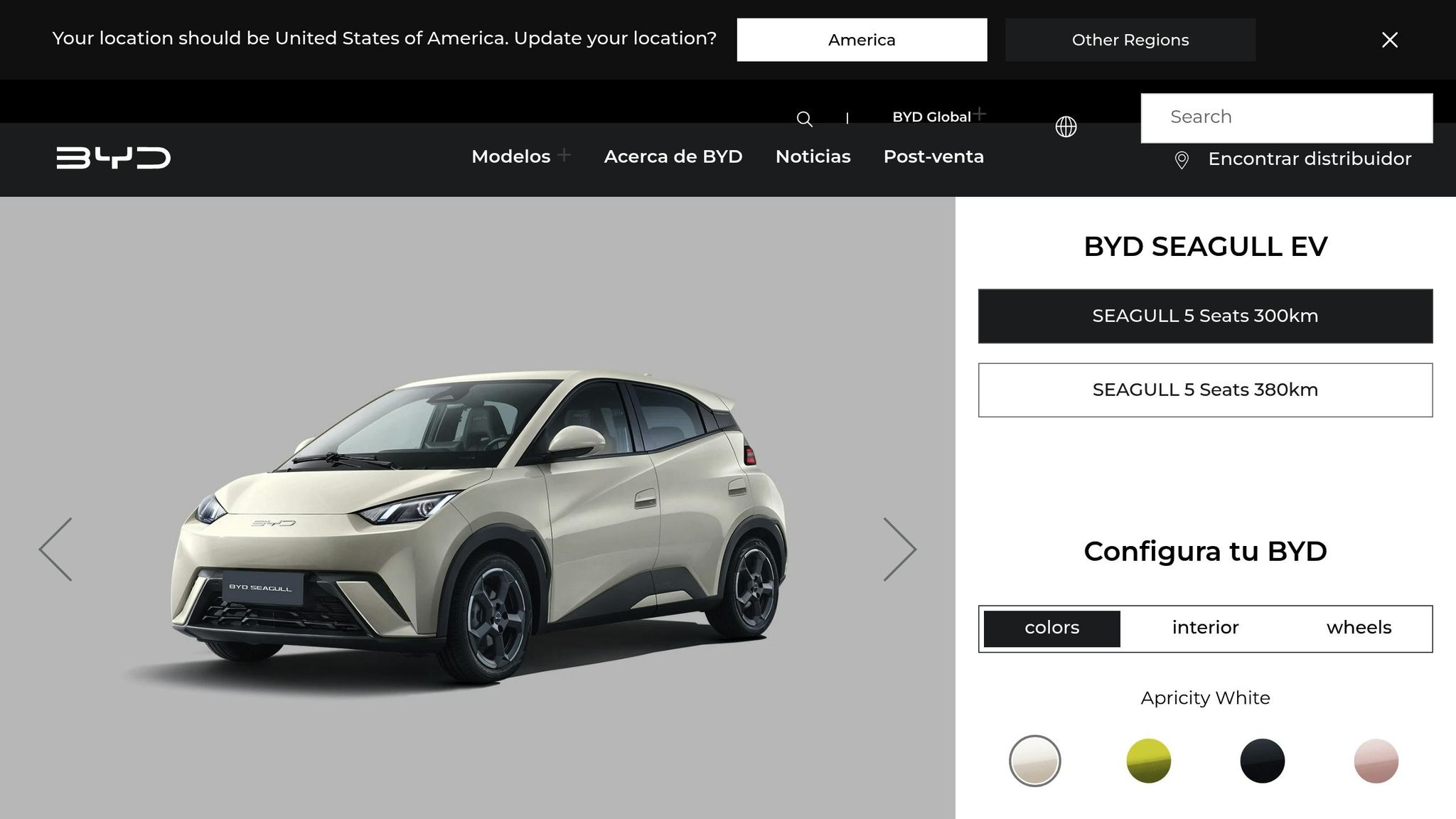
The BYD Seagull, also known as the Dolphin Mini, starts at R339,900 for the Comfort trim and R389,900 for the Dynamic trim. While this price tag is about R80,000 higher than budget-friendly petrol cars like the Kia Picanto, the Seagull’s lower running costs can help offset the difference over time. Plus, ABSA Bank sweetens the deal with financing incentives, including a R10,000 cash discount, bringing the starting price down to R329,900. For those in the ride-hailing business, the savings are even more pronounced – switching from petrol could save drivers around R11,120 annually. Let’s take a closer look at its efficiency.
Fuel Efficiency/Range
The Dolphin Mini offers two battery options to suit different driving needs. The first is a 30.08 kWh battery with a 232 km WLTP range, while the second is a 38.88 kWh battery offering up to 295 km WLTP range. On highways, these ranges are slightly reduced to approximately 200 km and 270 km, respectively. Operating costs remain impressively low at around 50¢ per km. Charging at home is especially economical, costing between R105 and R136 for a full charge, compared to R226 to R292 at public charging stations. For those in a hurry, DC fast charging can replenish the battery from 10% to 80% in just 41–42 minutes. Now, let’s explore the interior features.
Passenger Comfort
Despite its compact size, the Seagull’s 2,500 mm wheelbase creates a surprisingly roomy cabin. However, taller passengers might find the rear legroom a bit tight. The interior includes faux-leather upholstery and a rotating 10.1-inch touchscreen with wireless Apple CarPlay and Android Auto (available on the Dynamic trim). While rear air vents are absent – potentially a drawback in hotter climates – the vehicle’s 4.95-meter turning radius makes it ideal for navigating crowded city streets. Let’s move on to safety and compliance.
Regulatory Compliance
The Dolphin Mini is well-equipped to meet ride-hailing safety standards. It features six airbags, electronic stability control, and has earned a five-star EuroNCAP safety rating. Higher trims include advanced features like Vehicle-to-Load (V2L), allowing the car to power external devices. Additionally, the Blade Battery (Lithium Iron Phosphate) technology ensures fast charging and reliable thermal stability for long-term durability.
sbb-itb-09752ea
2. Suzuki Swift GLX
Affordability
The Suzuki Swift GLX starts at R271,900 for the manual version and R291,900 for the CVT option. This pricing positions it as a strong contender against cars like the Kia Picanto and Hyundai Grand i10 while remaining more budget-friendly than many VW Polo Vivo models. Beyond its price tag, the Swift GLX includes a 5-year/200,000 km promotional warranty and a 2-year/30,000 km service plan, which help keep maintenance costs predictable – an essential factor for ride-hailing drivers. With its reliable performance and solid resale value, the Swift GLX stands out as a practical choice for business use.
Fuel Efficiency/Range
When it comes to fuel consumption, the Swift GLX delivers impressive numbers. Real-world tests show it averages between 4.7 L/100 km and 5.3 L/100 km, making it one of the most fuel-efficient non-hybrid cars available. Its lightweight build (920 kg) and efficient 1.2-liter three-cylinder engine contribute to an 11% boost in fuel economy. For ride-hailing drivers, this translates to lower running costs over time.
"No matter how heavy your foot, the Suzi only knows to sip fuel".
Passenger Comfort
The GLX trim prioritizes passenger comfort with features like automatic climate control, a 9-inch infotainment system supporting wireless Apple CarPlay and Android Auto, and a leather-wrapped steering wheel. Enhanced suspension and sound-deadening materials ensure a smoother, quieter ride. The 265-liter trunk is ideal for city trips, and if needed, it expands to 580 liters – plenty of space for extra luggage.
Regulatory Compliance
The Swift GLX meets all ride-hailing safety requirements, equipped with six airbags, ESP, ABS with EBD, and Hill-hold control. A notable update is the addition of a full three-point safety belt for the rear center seat, replacing the older lap belt. It also includes ISOFIX child-seat anchors and a reverse camera for added safety. Reflecting its popularity, the Swift was South Africa’s best-selling passenger car in Q1 2025, with 6,587 units sold – a 42.4% year-on-year increase.
3. Toyota Corolla
Affordability
The Toyota Corolla offers a range of pricing options that cater to ride-hailing drivers at different stages. The Corolla Quest 1.8 Plus starts at around R336,000 for the manual version, making it a great entry point for services like UberX or Bolt. If fuel savings are a priority, the Corolla 1.8 Hybrid XR is priced at approximately R584,400 – just R10,000 more than the 2.0-liter petrol version. For those on a tighter budget, used models, such as earlier Corolla Quest versions, can be found starting at about R85,000. The Corolla’s reputation for reliability also means it holds its value well over time. Now, let’s take a closer look at how its fuel efficiency adds to its appeal.
Fuel Efficiency and Range
When it comes to fuel economy, the Corolla Hybrid is hard to beat. Toyota claims it achieves 3.9 L/100 km, but real-world tests in South African traffic have shown even better results, as low as 2.7 L/100 km. This level of efficiency can cut daily fuel costs to about R11.11 (based on a fuel price of R22.86 per liter), adding up to roughly R511.06 for a 23-day work month. On the other hand, the standard 2.0-liter petrol version delivers a respectable 5.9 L/100 km and boasts a range of 848 km with its 50-liter tank. The Hybrid’s regenerative braking system is particularly effective in urban stop-and-go traffic, making it ideal for ride-hailing. Combine this with Toyota’s famously low maintenance costs, and the Corolla becomes a practical choice for drivers.
Maintenance Costs
Toyota’s reputation for affordability extends to its maintenance costs. Parts are among the cheapest in South Africa, and the Corolla’s 6-service/90,000 km service plan covers major maintenance expenses during the early years. For Hybrid models, an 8-year/195,000 km warranty on the battery and electric components offers peace of mind against potential long-term issues. The Corolla’s durability is legendary – one 2016 Corolla Quest reportedly reached nearly 600,000 km without significant mechanical problems. This reliability ensures drivers can focus on their work without worrying about frequent repairs.
Passenger Comfort
The Toyota Corolla is designed with passengers in mind. Its 470-liter luggage compartment is spacious enough for airport trips and large amounts of baggage. The Hybrid model’s quiet engine and refined interior make it a great choice for premium services like Uber Comfort or Uber Black. Newer models also feature improved cabin space and upgraded materials, which passengers will appreciate on longer rides. Safety is another strong point, with the Corolla offering 7 airbags, Toyota Safety Sense (including features like a Pre-Crash System and Blind Spot Monitor), and a 5-star Euro NCAP safety rating with an impressive 95% score for adult occupant protection.
4. Tesla Model 3
Affordability
The 2024 Tesla Model 3 comes with a price tag of $58,800–$61,900, while used 2022 models range from $49,500–$54,200. To set up home charging, you’ll need a $740 Tesla Gen 3 Wall Connector. Its premium pricing makes it eligible for higher-paying fare categories like Uber Black or Uber Comfort, where elevated fares can help balance the upfront costs. However, it’s essential to check which Uber tier the Model 3 qualifies for in your city, as these requirements can differ. Additionally, consider the car’s range and charging specs to evaluate its practicality for ride-hailing.
Range and Charging
The 2024 Model 3 delivers an impressive range of 513–629 km per charge, which is more than enough for a full day of urban driving. Using a 170 kW Tesla V3 Supercharger, you can go from 0% to 100% in about 35 minutes. For at-home charging, an 11 kW Wallbox takes roughly 5 hours and 45 minutes for a full charge. That said, South Africa’s limited charging infrastructure could result in some downtime. The car does come with an 8-year or 160,000 km battery warranty, offering peace of mind, but the availability of charging stations remains a key factor to consider.
Maintenance Costs
Over a five-year period, the Model 3’s maintenance costs average $2,085 annually, which is less than the $2,545 average for traditional sedans – a savings of about $460. The car’s simplified design eliminates the need for oil changes and other standard maintenance, though its heavier weight may lead to faster tire wear, with replacements costing $1,700–$2,500 per set. Opting for tires from independent mechanics instead of Tesla can help reduce costs. The regenerative braking system also minimizes brake wear, extending the lifespan of brake components. Repairs average around $1,780 over five years, although earlier models (pre-2019) had some issues, such as panel gaps and creaky dashboards. Overall, the Model 3’s low maintenance needs and premium passenger experience make it a strong contender for ride-hailing.
Passenger Comfort
The Model 3’s interior is sleek and modern, offering a comfortable and tech-forward experience that passengers appreciate. The minimalist cabin includes a large central touchscreen, multi-zone climate control, and a high-quality audio system with a subwoofer. Rear passengers can even stream Netflix, YouTube, or Disney+ on the display screen, adding an extra layer of entertainment for premium rides. The car’s low center of gravity, thanks to its battery placement, enhances stability during turns, while the supportive front seats ensure comfort during long drives. Safety features like ABS, 360° cameras, Autopilot, and lane departure warnings go above and beyond South Africa’s Uber safety requirements of ABS and at least two airbags. Plus, with a 0-100 km/h acceleration time of just 3.1 seconds, the Model 3 delivers a sporty edge that many premium passengers will enjoy.
Top 10 CARS for Uber/Bolt in South Africa
5. Hyundai Kona Electric
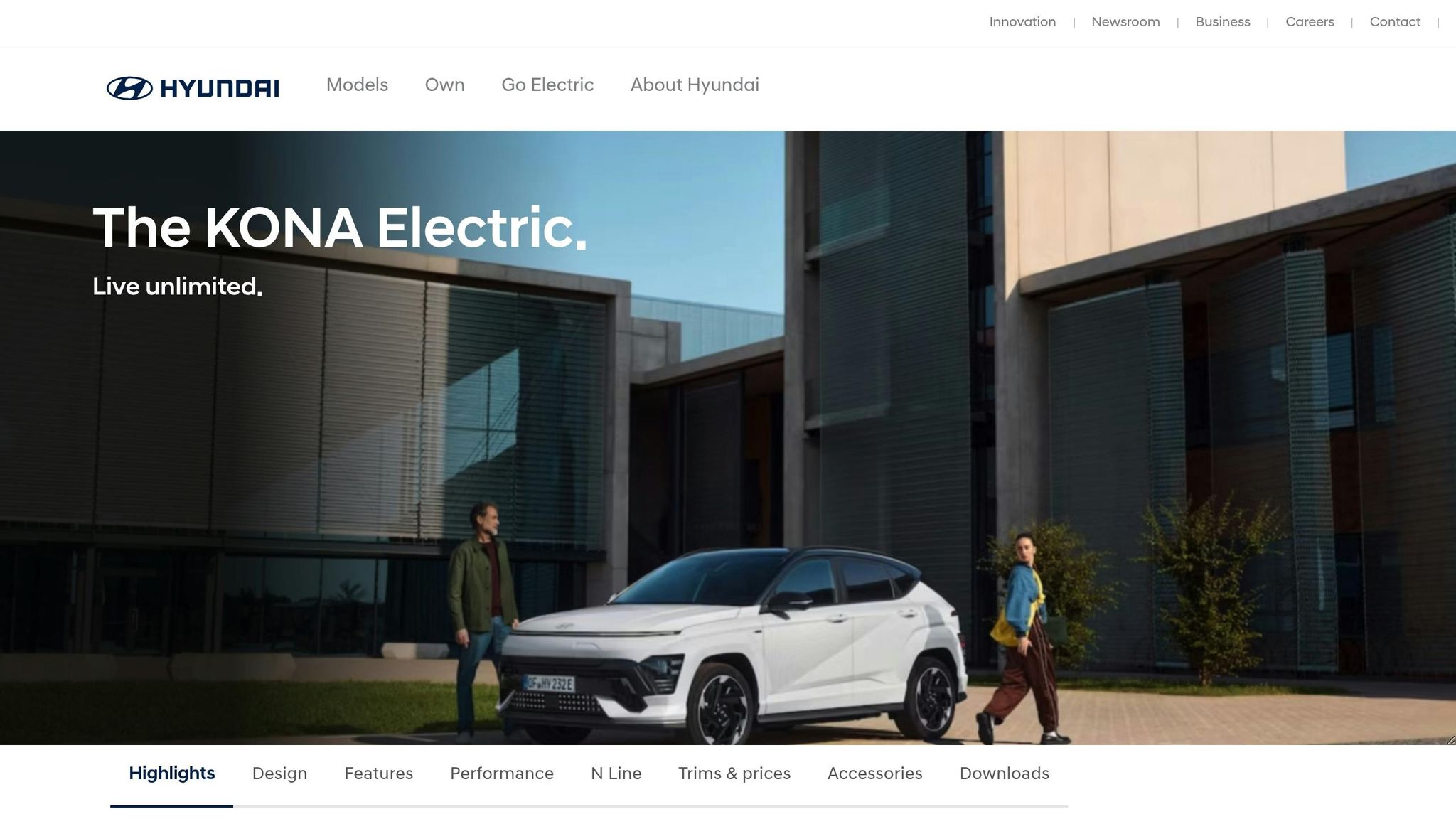
The Hyundai Kona Electric combines efficiency and practicality, making it a smart choice for drivers looking to switch to electric vehicles.
Affordability
The 2025 Hyundai Kona Electric starts at $32,875 for the Standard Range model and $36,875 for the Long Range SEL/Limited. While the initial cost is higher compared to gas-powered cars, the savings on fuel can improve overall cost-effectiveness. The Long Range version delivers 201 horsepower and features a 64.8 kWh battery. It also comes with a 5-year/93,205-mile warranty and a 5-year/46,603-mile service plan for added peace of mind.
Range and Charging
The Long Range model offers an impressive 304 miles per charge, making it suitable for long-distance trips. Charging is efficient, with the ability to go from 10% to 80% in just 43 minutes at 100 kW DC fast-charging stations. The Kona Electric also features battery preconditioning, which optimizes the battery’s temperature before arriving at a charging station, ensuring quicker and safer charging. Plus, its Vehicle-to-Load (V2L) system allows you to charge small devices directly from the car.
Maintenance Costs
An Uber driver who logged 93,205 miles in a Hyundai Kona EV over two years reported spending just $50 on gear oil changes every 31,069 miles. The car’s design eliminates the need for traditional maintenance like oil changes, spark plugs, and clutch replacements, while regenerative braking reduces wear on brake components. However, some drivers have noted a "whining" noise from the reduction gear unit bearings, which can be resolved with timely gear oil changes. Repairs for this issue cost about $550 if addressed early. Impressively, the Kona Electric retains 85–90% battery capacity even after 248,000 miles.
Passenger Comfort
Inside, the cabin is quiet and outfitted with supportive artificial leather seats, making long drives more enjoyable. The ride remains smooth even on uneven roads. A 12.3-inch infotainment system supports both Android Auto and Apple CarPlay, while wireless phone charging adds convenience. The compact SUV design allows for easy entry and exit, and the 466-liter boot capacity provides plenty of room for luggage. Safety features like blind-spot detection, lane-keeping assist, and automatic emergency braking enhance the overall driving experience. Additionally, the climate control system offers powerful cooling, keeping passengers comfortable even during sweltering summer days.
Pros and Cons
When choosing a ride-hailing vehicle, it’s all about balancing upfront costs with long-term savings. The table below highlights how different models perform across key factors relevant to South African drivers.
| Vehicle | Upfront Cost (ZAR) | Fuel/Charging Cost per 100km | Maintenance | Passengers/Boot | Best Service Category | Key Advantage | Main Drawback |
|---|---|---|---|---|---|---|---|
| BYD Seagull | ~R350,000 | ~R15 (electricity) | Minimal maintenance | 4 passengers / 300L | Uber Go, Bolt Go | Lowest running costs | Small boot limits airport trips |
| Suzuki Swift GLX | ~R280,000 | ~R70 (4–5 L/100km) | Low; widely available parts | 4 passengers / 265L | Uber Go, Bolt Go | Fuel-efficient and city-friendly | Limited rear space |
| Toyota Corolla | ~R400,000 | ~R75 (5.5 L/100km) | Moderate; reliable brand | 4 passengers / 470L | UberX, Bolt | Spacious boot and comfortable ride | Higher purchase price than hatchbacks |
| Tesla Model 3 | ~R900,000 | ~R20 (electricity) | Low; fewer moving parts | 5 passengers / 425L | Uber Comfort, Uber Electric | Premium appeal and zero fuel costs | High upfront cost and limited charging spots |
| Hyundai Kona Electric | ~R650,000 | ~R25 (electricity) | Very low maintenance | 5 passengers / 466L | Uber Comfort, Bolt Comfort | Long range and efficient battery | Expensive initial investment |
For drivers starting out or focusing on short city trips, budget-friendly hatchbacks like the Suzuki Swift and BYD Seagull are great options. They keep costs down with efficient fuel or electricity use, but their limited boot space can make airport runs less appealing. The Toyota Corolla, on the other hand, offers a roomier boot and a more comfortable ride, making it suitable for both city trips and airport transfers.
Electric cars like the Tesla Model 3 and Hyundai Kona Electric stand out with their low running costs and premium passenger appeal. However, their high purchase prices and South Africa’s limited charging infrastructure can pose challenges.
Before making a purchase, check your city’s vehicle age requirements for ride-hailing services. Also, ensure your insurance policy explicitly covers "commercial e-hailing use", as standard private insurance likely won’t protect you during paid trips.
Conclusion
Compact sedans, such as the Toyota Corolla Quest and Honda Amaze, remain a top choice for South African ride-hailing drivers, thanks to their balance of affordability, comfort, and cargo space. As Group1 Cars highlights:
"Compact sedans are a popular choice among South African Uber and Bolt drivers because they provide an effective balance between economy and passenger comfort".
For those focusing on low running costs, models like the Suzuki Swift GLX and BYD Seagull are worth considering. Keep in mind, though, that the BYD Seagull’s smaller trunk might not suit airport transfers or larger luggage needs.
Premium electric vehicles offer the potential for lower long-term operating costs, despite their higher initial price. That said, South Africa’s limited charging infrastructure makes home charging a necessity, which is an essential factor to weigh.
Sticking with trusted brands like Toyota, VW, and Suzuki can also provide advantages, including better resale value and easier access to spare parts. Additionally, double-check that your insurance policy covers commercial e-hailing and confirm your city’s vehicle age restrictions before committing to a purchase.
Finally, take the time to calculate your monthly fuel or charging expenses alongside the vehicle’s purchase price. This will help you identify the best option for maximizing your earnings, based on your budget, typical trip distances, and service goals.
FAQs
Which car earns the most after fuel or charging costs?
Electric vehicles (EVs), such as the BYD Seagull, can be a game-changer for ride-hailing drivers. One of their biggest perks? Lower fuel or charging costs. By cutting down on fuel expenses, EVs can boost a driver’s net income by an impressive 15–25%, especially in regions like Africa. For drivers looking to maximize their earnings, EVs are a smart and efficient option.
Can an electric car work without reliable public charging?
Electric cars can operate without a reliable public charging network if they offer enough range and the driver has access to private or alternative charging solutions. That said, a dependable public charging infrastructure makes owning an electric vehicle much more practical and convenient – especially for longer road trips or for those living in areas where private charging isn’t an option.
What insurance and permits do I need to drive legally?
To legally drive for Uber or Bolt in South Africa, you’ll need to have the proper documentation in place. This includes a South African driver’s license, a Professional Driving Permit (PrDP), and valid vehicle registration. Each platform may have its own specific requirements, so it’s important to review their guidelines carefully to ensure you meet all necessary criteria.
Related Blog Posts
- Top 5 Cars for South African Roads
- Bolt & M-KOPA explore electric ride-hailing options in SA
- Best sedans for South African drivers: Safe, affordable and reliable
- How to Become a Bolt Driver in Cape Town: Tips and Tricks