
South Africa’s used car market follows predictable seasonal patterns, offering opportunities for buyers and sellers to optimize their transactions. Here’s a quick breakdown:
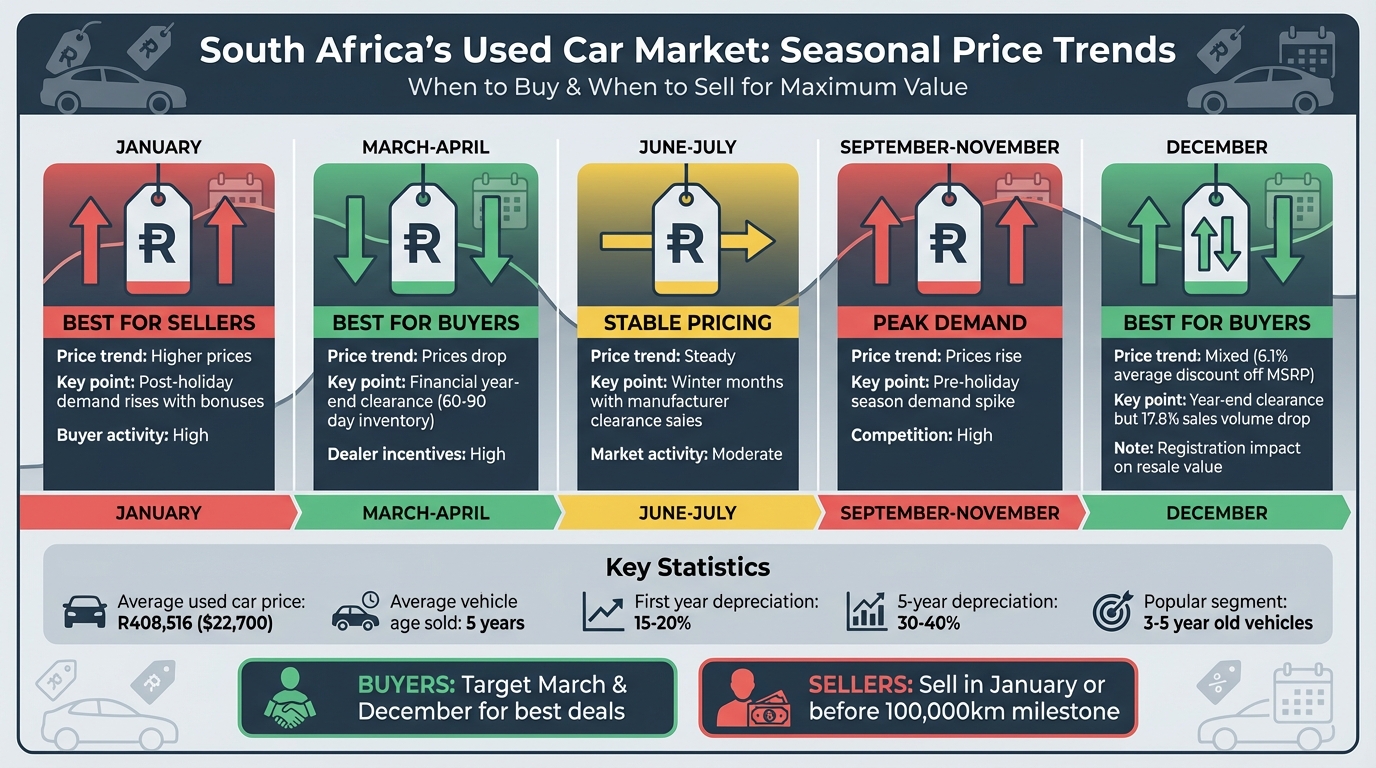
- Best Months for Buyers: March and December often feature discounts due to dealership sales targets and inventory clearance.
- Best Months for Sellers: January sees higher prices as demand rises after the holidays.
- Key Factors: Financial year-end in March, holiday season demand spikes, and interest rate changes all impact pricing trends.
- Depreciation Insights: Cars lose 15-20% of value in the first year and 30-40% by year five, making timing critical for sellers.
Understanding these trends can help buyers secure better deals and sellers avoid steep depreciation losses. Timing matters, whether you’re buying or selling.
South Africa Used Car Price Trends by Month: Best Times to Buy and Sell
How Prices Change Throughout the Year
January: Prices Rise After the Holidays
In January, used car prices often climb as buyers with fresh bonuses and budgets enter the market to address new commuting needs. While dealerships continue to clear out last year’s inventory, strong demand drives prices higher, creating more competition among buyers. This sets the tone for the seasonal price shifts that follow.
March-April: Prices Drop as Dealers Clear Inventory
March, coinciding with South Africa’s financial year-end, sees dealerships eager to move older stock – cars that have been on the lot for 60–90 days or more. Sales teams, focused on hitting quarterly goals, offer better deals and additional incentives. This trend often extends into April as dealers prepare to make room for incoming models.
June-July: Stable Pricing in the Winter Months
During the winter months, prices tend to remain steady. Manufacturers frequently hold clearance sales in July and August to clear out older models and make way for new arrivals. This creates a balanced market, with pricing stability standing in contrast to the busier, higher-demand months ahead.
September-November: Demand and Prices Peak
As the holiday season draws near, demand spikes, leading to higher prices. Dealerships ramp up their promotional efforts to meet quarterly sales targets, and increased buyer activity adds to the upward pressure on pricing.
December: Mixed Pricing Dynamics
December presents a mix of pricing trends. According to George Mienie, CEO of AutoTrader:
Despite the seasonal slowdown in December, the used car market continues to demonstrate resilience, with year-on-year sales remaining steady.
On average, dealers offer a 6.1% discount off the MSRP to meet annual quotas. However, sales volumes drop significantly, with a 17.8% month-on-month decline recorded in December 2024. Additionally, cars purchased in December are registered for that year, which may slightly impact their future resale value compared to vehicles registered in January. These mixed dynamics highlight the importance of timing when making a purchase.
sbb-itb-09752ea
South Africa’s Used Car Market Boom in 2026 | Smile FM
What Drives Seasonal Price Changes
Economic factors play a major role in shaping seasonal pricing trends in South Africa’s used car market. Here’s a closer look at how market dynamics influence these shifts.
How Interest Rates Affect Prices
Interest rate changes have a direct impact on what buyers can afford monthly. Adjustments to the repo rate affect borrowing costs and monthly installment payments. When rates rise, fewer buyers qualify for loans or can handle the increased payments, which usually reduces demand and pushes prices down. On the flip side, lower interest rates make financing more accessible, bringing more buyers into the market and driving prices up. Even small rate changes can significantly affect long-term payment costs. While interest rates set the tone, the availability of vehicles adds another layer to the pricing equation.
New Car Sales Impact on Used Car Prices
The supply of new vehicles plays a big role in shaping used car prices. As new car production stabilizes, the demand for used cars has eased, leading to a price correction in the used car market. This recovery gives buyers more choices and reduces the pressure on used car prices. Over time, fleet vehicles also enter the used market as late-model options, further influencing pricing trends.
Buyer Preferences for 3-5 Year Old Vehicles
Vehicles aged 3–5 years are particularly attractive to buyers because they’ve already experienced the steepest depreciation. These cars strike a balance between affordability and warranty coverage, making them a popular choice. However, prices for these vehicles can temporarily dip during seasonal trade-in surges. For example, in December 2024, the average age of used vehicles sold was 5 years, with an average price of R408,516 (around $22,700). Models like the Ford Ranger (averaging R494,415 or $27,500 at 5 years old) and the VW Polo (averaging R263,447 or $14,600 at 6 years old) tend to hold their value well, creating a stable price floor even during tougher economic times.
Price Trends by Month
The monthly price trends in South Africa’s used car market are shaped by a mix of dealer cycles, financial goals, and consumer buying habits. These patterns provide a helpful guide for anyone looking to time their car purchase effectively.
In January, dealerships focus on restocking after clearing out inventory in December, which means you might find good deals on models from the previous year. By March, the pressure to hit financial year-end targets leads to competitive pricing, especially for demo models and trade-ins. June and July tend to be stable months, with dealers prioritizing quarterly sales volumes, keeping prices consistent. However, from September through November, prices typically rise as demand increases ahead of the festive season. Finally, December is a great time to snag discounts as dealerships clear out stock. Keep in mind, though, that cars purchased in December will be registered as the previous year’s model, which can slightly affect their resale value later on.
Monthly Price Comparison Table
Here’s a breakdown of how market trends and demand drivers influence pricing and vehicle segments throughout the year:
| Month/Period | Demand Driver | Market Pattern | Best Vehicle Segments |
|---|---|---|---|
| January | Post-holiday stock clearance | Dealers restock; deals on previous year models | Previous year models |
| March | Financial year-end targets | Incentives and promotions dominate | Demo models and trade-ins |
| June-July | Quarter-end targets | Prices remain steady; focus on sales volume | Mid-range SUVs and sedans |
| September-November | Peak seasonal demand | Prices rise as demand peaks before holidays | Popular models (Hilux, Polo, Ranger) |
| December | Year-end clearance | Discounts to clear stock; registration impact | Budget vehicles (<R250,000 or ~$13,900) |
Budget-friendly vehicles priced under R250,000 (around $13,900) tend to hold steady compared to luxury models. Additionally, brands like Toyota show slower depreciation, keeping their prices consistently higher in the used car market, no matter the season.
Conclusion
Seasonal patterns in South Africa’s used car market offer opportunities for both buyers and sellers to make the most of their transactions. March and December are prime months for buyers looking for deals, while January is ideal for sellers aiming to get the best returns.
But timing isn’t just about picking the right month. Wihaan Robertse, Sales Consultant at Intertoy Toyota, highlights the advantages of year-end shopping:
Definitely, the best time is at the end of the year, the last 3 months of the year. Many people are buying new vehicles… they’re getting bonuses, and often have a budget for a new car.
For sellers, avoiding major depreciation milestones is crucial. Selling before your car reaches 62,137 miles (100,000 km) or before the calendar year turns can help retain its value.
Preparation is equally essential. Buyers should secure pre-approved financing and shop during quieter times, while sellers should gather service records and roadworthy certificates to attract better offers. Ultimately, success in the used car market comes down to thoughtful planning and understanding market dynamics. Those who align their strategy with these rhythms are better positioned to achieve their goals.
FAQs
How can I predict whether prices will rise or fall next month?
To get a sense of whether car prices might rise or fall next month, keep an eye on a few important factors. Seasonal trends, economic conditions, and supply and demand dynamics are crucial. Additionally, market indicators like inflation rates or overall price stability can heavily impact price changes. These elements work together to shape the ups and downs of car pricing.
Does buying in December hurt my resale value later?
Buying a car in December doesn’t automatically lower its resale value. Factors like market trends, buyer demand, and smart timing – such as trading in at the end of the year – can play a big role in maintaining or even improving trade-in value. With thoughtful planning, you can better manage depreciation and get the most out of your car when it’s time to sell.
What’s the best time to sell before depreciation hits hard?
The ideal time to sell your car is early in the year, as vehicle values are generally higher during this period. By selling before your car’s depreciation accelerates – particularly for dependable brands and models – you can secure a better price.
Related Blog Posts
- Factors That Influence Used Car Prices in South Africa
- How Exchange Rates Affect Car Prices in South Africa
- Used Car Prices in SA: What You’ll Pay in 2025
- New Car Sales in Summer vs Winter: Key Differences