Buying or selling a used car? Here’s what you need to know:
Used car prices are shaped by several factors, from the car’s age and mileage to economic trends and brand reputation. Here’s a quick breakdown:
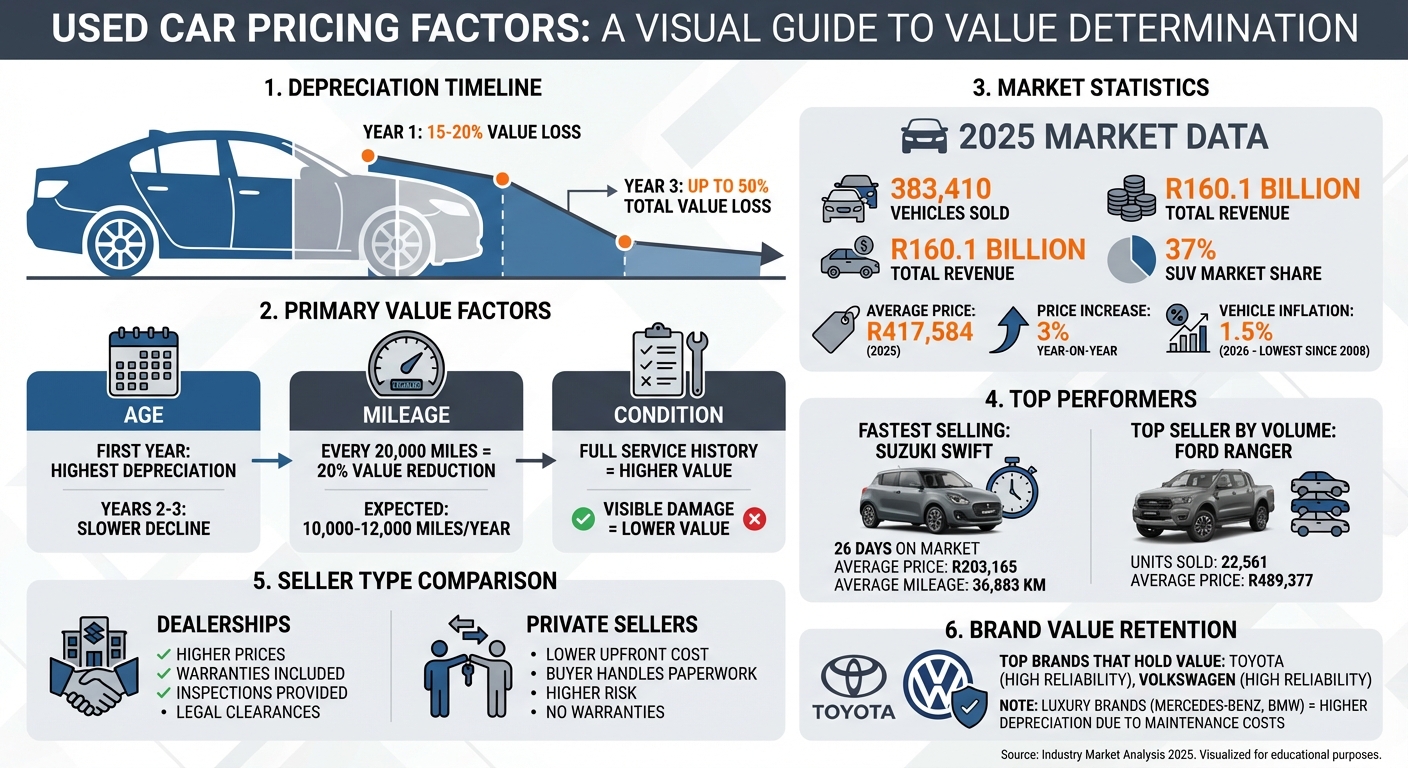
- Depreciation: Cars lose 15–20% of their value in the first year and up to 50% within three years.
- Condition & Mileage: Lower mileage and a full service history boost value. Visible damage reduces it.
- Economic Factors: Inflation, interest rates, and fuel costs affect pricing trends.
- Brand Reputation: Reliable brands like Toyota and Volkswagen hold value better, while high maintenance costs hurt luxury brands.
- Market Trends: SUVs and fuel-efficient cars are in demand. Regional preferences matter too.
- Seller Type: Dealerships charge more but offer warranties and inspections. Private sellers are cheaper but riskier.
Key tip: Always research thoroughly, inspect the car, and use valuation tools to determine a fair price. Whether you’re buying or selling, understanding these factors gives you the upper hand.
Key Factors Affecting Used Car Prices and Depreciation Rates
Drive the Deal: Understanding Used Car Prices and Negotiation
sbb-itb-09752ea
Primary Factors That Determine Used Car Value
When it comes to figuring out the value of a used car, three main factors take center stage: age, mileage, and physical condition. Each one plays a distinct role, but together, they paint a clear picture of the car’s market value.
Age tends to have the most noticeable effect, especially in the early years of a car’s life. Depreciation hits hardest in the first year, particularly in markets like South Africa. After that, the rate of depreciation slows down. Mark Ridgway, Chief Technical Officer at getWorth, puts it this way:
"If you buy a car that’s one year old, you’ll only experience about half the depreciation that the first owner faced".
Mileage is another critical piece of the puzzle. It reflects the wear and tear a car has endured. On average, every 20,000 miles reduces a car’s value by around 20%. Buyers generally expect annual mileage to fall between 10,000 and 12,000 miles. However, mileage isn’t the only story – maintenance matters too. A well-maintained car with higher mileage can often be more appealing than a low-mileage vehicle that hasn’t been properly cared for.
The physical condition of the car, along with its service history, also carries a lot of weight. A full service history can significantly boost a car’s value by providing peace of mind to potential buyers. Brazen Auto highlights this point:
"A complete and transparent service history is a key factor in securing a higher value for your car. Regular maintenance records give buyers confidence in the vehicle’s reliability and lower the risk of unexpected repairs".
On the flip side, visible issues like dents, scratches, or rust can drag down the price, even if the car runs perfectly.
What’s important to remember is how these factors often work together. For instance, a five-year-old truck with 80,000 miles and a complete service history might fetch a higher price than a three-year-old sedan with 40,000 miles, no maintenance records, and visible body damage. By understanding how age, mileage, and condition interact, you’ll be better equipped to assess and negotiate a used car’s value.
Economic and Market Forces
External economic factors play a key role in shaping used car prices, alongside internal elements like age and mileage. Recent changes in South Africa’s economy and automotive market have significantly influenced the used car sector. This context is crucial for both buyers and sellers when determining a vehicle’s value.
Market Demand and Popular Vehicle Types
Economic pressures and shifting lifestyle needs are driving changes in buyer preferences. In 2025, the used car market leaned heavily toward practical and affordable options, with 383,410 vehicles sold, generating R160.1 billion in sales. SUVs continued to dominate the market, accounting for 37% of all used car sales. At the same time, compact, fuel-efficient hatchbacks, such as the Suzuki Swift, saw a surge in demand. The Swift, in particular, became the fastest-selling used car, spending an average of just 26 days on the market. A three-year-old Suzuki Swift averaged a price of R203,165, with around 36,883 km on the odometer.
Chinese vehicle brands also saw a 49% increase in used sales during 2025, as buyers were drawn to their higher specifications and extended warranties at competitive prices. George Mienie, CEO of AutoTrader, highlighted this trend:
"Buyers are still active, but they are more deliberate and value-driven than ever before. The brands gaining traction are those aligning product offering, pricing and perceived quality with real-world affordability constraints".
Interestingly, search trends don’t always align with actual sales. BMW was the most-searched brand, and the VW Polo was the most-searched model in 2025. However, the Ford Ranger emerged as the top-selling used vehicle by volume, with 22,561 units sold at an average price of R489,377. Additionally, the 3-to-5-year-old vehicle segment became highly competitive, making up nearly 44% of all used car listings in 2026. This shift was largely fueled by a strong new car market in 2025, which saw nearly 600,000 units sold. The resulting influx of trade-ins increased inventory and gave buyers more leverage in negotiations.
These trends highlight how market forces are shaping the used car landscape and set the stage for understanding the broader economic influences on pricing.
Inflation and Economic Conditions
Macroeconomic factors like inflation and interest rates also have a significant impact on the market. In 2025, four interest rate cuts totaling 100 basis points were implemented throughout the year, reducing borrowing costs and boosting activity in the automotive sector. This contributed to a financing ratio of 1.56 used cars for every new car in 2026, alongside a modest 3% year-on-year rise in average used car prices, reaching R417,584 in 2025. Meanwhile, vehicle inflation dropped to 1.5% in 2026, marking its lowest point since 2008.
Currency fluctuations have further increased the cost of imports, enhancing the relative value of used cars. High fuel prices have also played a role, driving a 73% year-on-year growth in New Energy Vehicle (NEV) sales, with hybrids making up 76% of that segment. Hybrids offer a middle ground for buyers seeking fuel efficiency without relying entirely on charging infrastructure.
Economic pressures have created clear divides in the market. Vehicles offering long-term affordability through low running costs, strong fuel efficiency, and manageable maintenance expenses are retaining their value. On the other hand, models with higher running costs are experiencing weaker demand and slower price growth.
Brand Reputation and Certification
Brand reputation plays a key role in shaping resale value, especially when combined with certifications. These factors reassure buyers about quality, encouraging them to pay more for trusted brands and certified vehicles.
Brand Recognition and Model Demand
Some car manufacturers are synonymous with reliability, and this reputation directly impacts resale values. For example, Toyota and Volkswagen are known for their dependability, which helps their used vehicles retain higher prices in the market. Models like the Toyota Hilux and Volkswagen Polo often sell above their "book value" due to high demand and slower depreciation rates.
Another factor influencing resale value is the availability of spare parts. Brands with readily available, affordable components tend to hold their value better. On the other hand, vehicles with expensive or hard-to-find parts – especially rare or discontinued models – depreciate more quickly. For instance, while luxury brands like Mercedes-Benz and BMW may carry prestige, their higher maintenance costs often lead to steeper depreciation compared to economy brands. By contrast, high-volume models benefit from easier maintenance and lower ownership costs, making them more appealing to buyers.
Certified Pre-Owned Programs and Warranties
Certifications and warranties offer peace of mind to buyers, making them willing to pay a premium. Certified Pre-Owned (CPO) programs address common concerns about used cars, such as unexpected repair costs for critical components like brakes, suspension, or engines. These programs include thorough inspections that cover mechanical systems, accident history, and legal documentation. As a result, CPO vehicles often command higher prices by reducing buyer uncertainty.
Vehicles with certifications, transferable warranties, and clear service records stand out in the used market. Dealerships affiliated with organizations like the Retail Motor Industry (RMI) or the National Automobile Dealers Association (NADA) may charge more upfront, but they offer protections that private sellers cannot. Buyers who choose these options often avoid unexpected costs and administrative hassles, making the higher initial price a worthwhile trade-off.
Location and Seller Type Impact on Pricing
Price Differences by Region
When it comes to used car prices, location plays a key role. Beyond the age of the vehicle and market trends, where you make your purchase can significantly affect the price. Regional demand often shapes these differences. For instance, four-wheel-drive trucks and SUVs tend to fetch higher prices in areas with rugged terrain or harsh weather, while convertibles are more sought-after – and therefore more expensive – in sunny coastal regions. In densely populated urban centers, compact cars are in high demand and usually retain their value better. On the flip side, suburban and rural buyers tend to prioritize larger SUVs and family vehicles, driving up their prices in those areas.
Another factor is the availability of spare parts. Cars from less common brands or discontinued models are often cheaper in regions where finding replacement parts locally is a challenge. Fuel costs also influence regional pricing. When gas prices go up, smaller, fuel-efficient cars often see a boost in value compared to larger, less efficient models. But location isn’t the only factor – who you’re buying from also matters.
Dealership vs. Private Seller Pricing
The type of seller you choose – dealership or private seller – has a big impact on what you’ll pay. Private sellers typically offer lower prices upfront, but these savings may come with added responsibilities. Buyers often need to cover costs like roadworthy certificates, registration fees, and clearing any outstanding fines – expenses that dealerships usually include in their pricing.
Colin Windell, an automotive journalist, sheds light on this pricing gap:
"Typically, cars are bought at retail prices but sold at trade or wholesale values. The difference, often the dealer’s margin, further reduces the amount you receive".
Dealerships tend to charge more because they offer additional services. Certified pre-owned programs, mechanical inspections, legal clearances, and warranties are often part of the package. They also handle administrative tasks that private buyers need to manage themselves. While private sales might save you money initially, dealerships provide added security through quality guarantees and legal assurances. The choice boils down to this: save money upfront and take on more risk, or pay more for peace of mind and fewer surprises down the road.
Summary and Action Steps
This guide brings together key factors that influence used car pricing, offering practical advice for both buyers and sellers.
When it comes to used car pricing, the balance often lies in factors like age, mileage, condition, and maintenance history. A well-maintained record of service is considered a major asset in the used car market. It’s like a badge of honor, showing the car has been cared for and boosting its resale value significantly. Brand reputation also plays a big role – vehicles from manufacturers like Toyota and Volkswagen tend to hold their value better due to their reliability and easier access to spare parts.
But the price tag isn’t the only cost to think about. There are ongoing expenses to consider:
"The real cost of a car isn’t just the sales price. You need to factor in fuel consumption, upcoming services, tyres, brake pads and, of course, insurance".
For Buyers:
- Always get an independent mechanical inspection to uncover any hidden issues.
- Use professional valuation tools like TransUnion or Eurotax to determine a fair price [3,5].
- Verify the VIN to ensure the car is legitimate and not stolen or tampered with [2,3].
For Sellers:
- Pricing your car accurately is essential for attracting buyers.
- Invest in reconditioning to improve the car’s presentation.
- Keep detailed service records and disclose any accident history.
- Limiting annual mileage to below 10,000–12,000 miles can help reduce depreciation.
Timing and location also matter. Fuel-efficient cars are more appealing when gas prices are high, while SUVs and trucks often sell better in areas with harsh weather or rugged terrain [1,4]. Use book value reports to strengthen your negotiations. Keep in mind that dealerships offer added security and warranties, while private sellers often provide lower upfront prices but require more effort with paperwork [2,3].
FAQs
How do I estimate a fair price for a used car?
To figure out a fair price for a used car, pay attention to important details like its age, mileage, overall condition, and service history. Look at current market listings for similar models to get a sense of what others are paying. Don’t forget to factor in any extra features or modifications that could influence the car’s value. Trusted platforms like AUTO24.co.za can be a great resource for finding a realistic and competitive price range.
What mileage is considered “too high” for a used car’s age?
High mileage for a used car usually refers to driving more than 9,300 to 12,400 miles per year. For instance, a 5-year-old car with over 46,500 to 62,000 miles on the odometer would fall into the high mileage category. This often affects the vehicle’s resale value and may increase the likelihood of required maintenance.
Is it worth paying extra for a certified pre-owned car?
When considering a certified pre-owned (CPO) car, the higher price tag – usually $1,000 to $3,000 more than a standard used car – can be worth it. Why? Because CPO vehicles come with perks like comprehensive inspections, reconditioning, and warranty coverage that regular used cars often lack. These benefits not only provide peace of mind but also reduce the risk of costly repairs, especially during the initial years of ownership. If reliability and warranty protection are priorities for you, spending a bit extra on a CPO car might be a wise choice.
Related Blog Posts
- Factors That Influence Used Car Prices in South Africa
- Used Cars vs New Cars: Cost Breakdown
- How to Calculate Car Depreciation in South Africa
- Seasonal Price Trends in South Africa’s Used Car Market