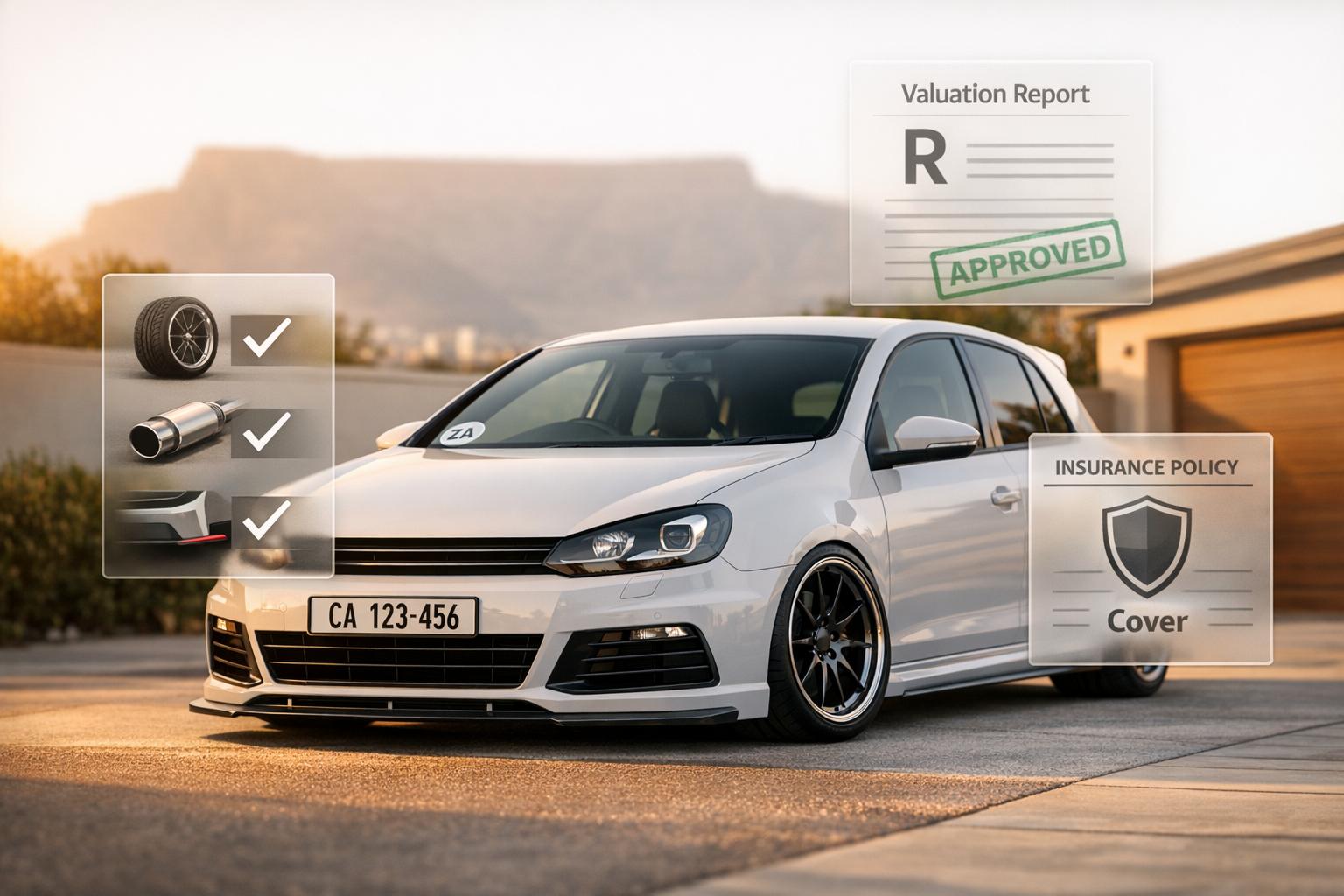
Insuring a modified car in South Africa can be tricky, but it’s essential to protect your investment. Here’s what you need to know:
- Understand Legal Requirements: Ensure all modifications comply with South Africa’s National Road Traffic Act and don’t compromise roadworthiness. Non-compliance can lead to denied claims or legal issues.
- Document Modifications: Keep a detailed record of all changes, including safety, cosmetic, and performance upgrades. This helps insurers assess risk and value.
- Disclose Everything: Always inform your insurer about any modifications. Undisclosed changes can void your policy or reduce claim payouts.
- Know Cost Impacts: Performance upgrades may increase premiums, while security features like tracking devices could lower them.
- Choose the Right Insurer: Look for providers experienced in covering modified vehicles and compare policies to ensure proper coverage for your upgrades.
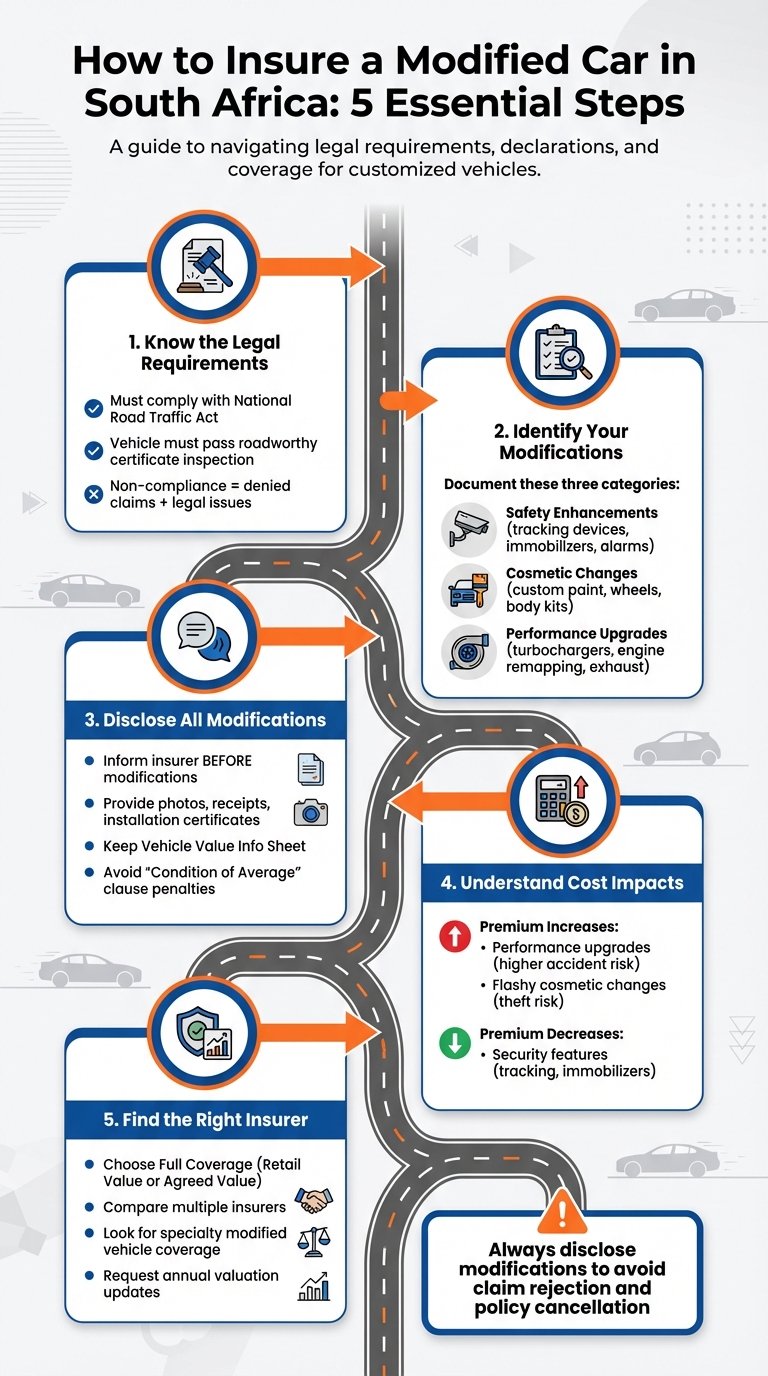
5-Step Process to Insure a Modified Car in South Africa
How Modifications Affect Car Insurance
sbb-itb-09752ea
Step 1: Know the Legal Requirements for Modified Vehicles
Before you insure a modified vehicle, it’s essential to understand which changes are allowed under South African law. The National Road Traffic Act sets the rules for vehicle modifications, and failing to follow these can result in hefty legal and financial consequences. Start by familiarizing yourself with how the Act defines legal modifications.
Understanding the Road Traffic Act
Any modifications to your vehicle must not compromise its safety or stray from the manufacturer’s standards. To legally drive, sell, or transfer ownership of your car, it must pass a roadworthy certificate inspection. This inspection ensures the vehicle complies with all safety and regulatory standards. Generally, modifications approved by the manufacturer are more likely to meet these requirements, while custom aftermarket changes must adhere to strict regulations.
Knowing these legal guidelines is critical because failing to comply can lead to severe repercussions.
Penalties for Illegal Modifications
If your vehicle doesn’t meet legal standards, you risk more than just voiding your insurance policy. Claims may be rejected, and traffic authorities can deem your car unroadworthy. An unroadworthy vehicle cannot be sold or transferred until it passes inspection and meets the necessary legal requirements.
Step 2: Identify Your Vehicle Modifications
After understanding the legal framework, your next move is to take stock of every modification on your vehicle. Insurers evaluate these changes based on how they affect risk and resale value. This evaluation directly impacts your premiums and coverage terms, so having a clear record of all modifications is key.
Modifications are generally grouped into three categories: safety enhancements, cosmetic changes, and performance upgrades. Each category affects your insurance differently, and in some cases, certain modifications might even help you save on costs. Sorting your modifications into these categories will give you a better sense of their impact.
Safety Enhancements
Safety modifications are designed to reduce theft risk and improve vehicle security. In regions like South Africa, where hijacking is a concern, insurers often prioritize features like tracking devices, immobilizers, alarm systems, parking sensors, and security cameras. These upgrades lower the chances of theft or total loss, which can translate to lower premiums or better coverage terms. This is especially true if you live in an area with higher crime rates. Be sure to document the installation of these systems thoroughly.
Cosmetic Changes
Cosmetic modifications, such as custom paint jobs or aftermarket wheels, primarily enhance your car’s appearance and resale value. These changes typically have little impact on your insurance premiums. Common examples include vinyl wraps, decals, body kits, custom upholstery, or dashboard modifications. However, it’s still important to disclose them, as high-value cosmetic work might increase the cost of replacing your vehicle if it’s damaged or stolen.
Performance Upgrades
Performance upgrades, unlike cosmetic changes, can significantly alter how your vehicle operates and are more likely to raise your premiums. Modifications like turbochargers, engine remapping, upgraded exhaust systems, suspension changes, and enhanced brakes can increase speed and affect handling, which insurers often see as higher risk. Make sure these upgrades comply with roadworthy standards. Extreme or illegal modifications can render your vehicle unroadworthy, void your insurance, and complicate its legal status for sale or transfer.
Step 3: Disclose All Modifications to Your Insurer
It’s essential to let your insurer know about every modification made to your vehicle. Failing to disclose changes can lead to serious consequences. If your insurer discovers an undeclared modification during a claim, they might refuse to cover the repair or replacement costs. This could leave you responsible for paying out of pocket. Additionally, if your policy is canceled due to non-disclosure, you’ll likely face higher insurance premiums in the future.
In South Africa, there’s an added financial risk tied to the "Condition of Average" clause. Proper disclosure helps you avoid this clause, which can reduce the amount paid out on claims. As the Insurance.co.za Content Team points out:
Failing to update or accurately state your vehicle value can result in overpaying premiums, delays in processing claims, or receiving insufficient payouts due to ‘Condition of Average’ clauses.
Information Insurers Require
When updating your policy, insurers need specific details to assess risk accurately and determine the correct insured value. Here’s what they’ll typically ask for:
- Type of modification: Whether it’s performance-related, aesthetic, or functional.
- Cost or value of the parts: The price of the installed components.
- Purpose of the modification: Whether the change improves security, enhances appearance, or boosts performance.
Insurers often request photographs showing the modifications from multiple angles, along with proof of installation, receipts, service records, and installation certificates where applicable.
To make things easier, keep all relevant documents organized in a "Vehicle Value Info Sheet." For heavily modified vehicles, you might also need an official valuation report from a trusted source like the Automobile Association (AA) or an authorized dealership to establish an accurate insured value. If security features like tracking devices or immobilizers are part of the modifications, document these as well – they can improve your risk profile and may even reduce your premiums.
When to Update Your Policy
Always contact your insurer before making any modifications. This allows you to confirm whether the changes will be covered and how they might impact your premium. It’s a good way to avoid surprises and ensures you’re not spending money on upgrades that won’t be insured.
If you’ve already completed the modifications or purchased a pre-modified vehicle, notify your insurer as soon as possible. MiWay emphasizes:
Not noting any alteration to your car could leave you with no cover for the modifications and frustrated at claims stage.
After updating your insurer, double-check your policy schedule to confirm that all non-standard additions are clearly listed in your coverage documents.
Step 4: Understand How Modifications Affect Insurance Costs
Once you’ve identified and disclosed your vehicle modifications, it’s time to dive into how these changes impact your insurance premiums. Not all modifications are treated equally – some can drive your costs up, while others might actually lower them. Knowing the difference can help you make smarter decisions about what upgrades are worth it.
Modifications That Increase Premiums
Adding performance upgrades, like a souped-up engine or a Cold Air Intake (CAI), can make your car faster and more powerful. But here’s the catch: insurers see these changes as increasing the risk of accidents. As Compare Guru puts it:
"With performance enhanced assembly parts, your car can reach high speeds far more rapidly than a standard manufactured car. This, in turn, makes you more of a risk when out on the roads."
Cosmetic changes can also bump up your premiums. Flashy additions like alloy wheels, custom body kits, or phone kits make your car more appealing to thieves. Compare Guru highlights this risk:
"Some modifications, such as phone kits or performance modifications, also increase the chance of your vehicle being stolen or broken into."
Another factor? Aftermarket parts often cost more to replace than factory-standard ones. If your insurer has to foot the bill for these pricier components, they’ll likely pass those costs on to you in the form of higher premiums.
Modifications That Lower Premiums
On the flip side, upgrades that enhance your car’s security can work in your favor. Adding features like tracking devices, immobilizers, or advanced alarm systems reduces the likelihood of theft, which could lead to lower premiums. The exact savings, however, depend on your insurer. To make sure you get credit for these modifications, document them thoroughly and confirm that your insurer recognizes them as risk-reducing measures.
Step 5: Find the Right Insurer for Your Modified Vehicle
When it comes to modified vehicles, not all insurers are created equal. Some specialize in high-value custom builds, while others cater to off-road enthusiasts or weekend show cars. The goal is to find an insurer whose expertise matches your vehicle’s unique modifications. This step builds on the disclosures you’ve already made, ensuring your coverage fits your vehicle like a glove.
Choose Full Coverage Options
Once you’ve disclosed all your vehicle’s modifications, the next step is to secure coverage that reflects its actual value. Retail Value coverage is a great choice for standard replacements, as it covers what a dealer would charge to replace your vehicle – often higher than private market value. However, if your car has undergone extensive modifications, you’ll want to consider Agreed Value coverage. This option lets you lock in a fixed amount that includes the value of your upgrades, minimizing disputes if you ever need to make a claim.
To secure this type of coverage, provide a detailed Vehicle Value Info Sheet along with proof of your modifications. This documentation ensures your insurer accurately values your car and protects you from penalties like the "Condition of Average", which can arise if upgrades are undervalued.
Compare Multiple Insurers
Not all insurers view modified vehicles the same way, so shopping around is a must. For example, in South Africa, King Price offers "Collectable Car Insurance", which is tailored for specialty and high-value cars, making it a solid pick for modified classics. Santam stands out for its extensive add-ons and support for high-end builds, with monthly premiums ranging from R1,661 to R2,489. If your car is equipped for off-road adventures, OUTsurance provides 4×4-specific coverage starting at R350 per month. On the other hand, MiWay caters to tech-heavy builds, like those with custom sound systems, with premiums starting at R840 per month.
Gather quotes from multiple providers, as each one evaluates risk and modifications differently. Make sure to ask how your specific upgrades will impact your policy and whether optional add-ons – like Sound System Protection or Tyre & Rim Guard – are available to cover all your modifications.
Lastly, opt for an insurer that offers annual valuation updates. This ensures your coverage keeps pace with market trends and any new modifications you add over time.
Conclusion
To insure a modified car in South Africa, you need to focus on legal compliance, transparency, and securing the right coverage. Make sure all modifications align with legal standards. Always inform your insurer about any performance upgrades, cosmetic changes, or functional additions before installation. This ensures your vehicle is properly insured for its updated value and helps avoid claim issues down the line.
Keep thorough documentation of all modifications, including a detailed Vehicle Value Info Sheet. Getting professional valuations, such as those from the Automobile Association (AA), is crucial. This not only helps establish an accurate insured value but also protects you from the "Condition of Average" clause, which could significantly reduce your payout if your car is underinsured.
Lastly, seek out insurers experienced in covering modified vehicles. Whether your car has performance upgrades, classic restorations, or off-road modifications, compare custom coverage options. Regularly review your policy to ensure it reflects your car’s current value. By following these steps, you can safeguard the time, effort, and money you’ve invested in your modified vehicle.
FAQs
Will my insurer cover mods made before I bought the car?
When you buy a car, any modifications made before your purchase usually aren’t automatically covered by insurers. These changes can influence your insurance policy, so it’s crucial to let your insurer know about them. If you don’t disclose pre-existing modifications, it could lead to denied claims or changes to your coverage. Make sure to check your insurer’s rules about modifications done before you owned the vehicle or started your policy.
Do I need an AA valuation for Agreed Value cover?
An AA valuation is often necessary for Agreed or Guaranteed Value coverage in South Africa. This assessment, usually carried out by trusted dealerships, determines a fixed insured value for your vehicle. It’s particularly crucial for modified or classic cars, ensuring their worth is properly assessed and acknowledged by insurance providers.
What proof do insurers want for my modifications?
Insurers often ask for proof of your vehicle’s modifications to ensure everything is clear and to assess risks accurately. This proof might include receipts, photographs, or inspection reports that confirm the updates you’ve made. Supplying detailed documentation allows insurers to decide on the right coverage and premium for your modified car.
Related Blog Posts
- Car insurance prices in South Africa
- How to Slash Your Car Insurance Costs in South Africa (Up to 30%)
- Cost of comprehensive car insurance in South Africa: What to expect
- Car Theft Insurance in South Africa: Key Requirements