Driving in South Africa can be challenging due to varying road conditions, high accident rates, and safety concerns like car hijackings. To stay safe, here are seven key tips:
- Follow Speed Limits: Adjust your speed based on road and weather conditions.
- Maintain Safe Distance: Use the three-second rule to avoid tailgating.
- Stay Alert for Pedestrians and Wildlife: Watch for unexpected crossings in cities and rural areas.
- Avoid Distractions: Focus on driving and limit night travel due to poor lighting.
- Use Turn Signals: Communicate your moves and navigate roundabouts carefully.
- Handle Taxis and Aggressive Drivers Cautiously: Stay calm and keep a safe distance.
- Check Your Vehicle Before Trips: Inspect tires, lights, fluids, and plan routes to avoid high-risk areas.
These straightforward steps can help you reduce risks and ensure a safer journey on South African roads. Safe driving starts with preparation and vigilance.
Staying Safe on South African Roads
1. Follow Speed Limits and Adjust to Road Conditions
Stick to the posted speed limits – they’re there to keep everyone safe. These limits are set with the idea that drivers will have enough time to react to unexpected situations. But remember, they’re based on ideal conditions.
In reality, South African roads can vary a lot. You’ll find everything from smooth highways to roads where the surface can be unpredictable. Add in challenges like rain or slippery patches, and even driving within the speed limit might not be enough to stay in control. Wet roads, for example, can make it harder to handle your car and increase the distance needed to stop.
The key is to adjust your speed based on what’s happening around you. Whether it’s the weather, road quality, or unexpected hazards, slowing down when needed can make all the difference in ensuring you get to your destination safely.
2. Keep a Safe Following Distance
Tailgating is a surefire way to put yourself at risk of an accident. When you’re too close to the car ahead, you leave little to no room to react if they slam on the brakes. This is especially risky on South Africa’s bustling highways or in stop-and-go traffic, where sudden stops are common.
To avoid this, maintaining a safe distance is key. A simple way to measure this is by using the three-second rule. Here’s how it works: pick a stationary object on the side of the road – like a sign, tree, or overpass. When the car in front passes that object, start counting: "one, two, three." If you reach the same object before finishing your count, you’re too close and need to back off.
This three-second buffer gives you enough time to spot potential hazards and react appropriately. It factors in the natural delay between noticing a problem and taking action. However, keep in mind that three seconds is the minimum for good driving conditions. If the weather is bad or visibility is poor, extend that gap to four or five seconds for added safety.
And don’t forget: every time another car merges into your lane, ease off the gas to restore your safe distance. Driving isn’t about being the fastest – it’s about staying prepared for the unexpected.
Up next, let’s talk about staying alert to other road users to minimize risks even further.
3. Watch for Pedestrians and Wildlife
Driving in South Africa requires a sharp eye, whether you’re navigating bustling city streets or quiet rural roads. In urban areas, pedestrians often cross the street in unexpected places, not always using designated crosswalks. Stay alert and ready to slow down, as sudden movements can happen at any time.
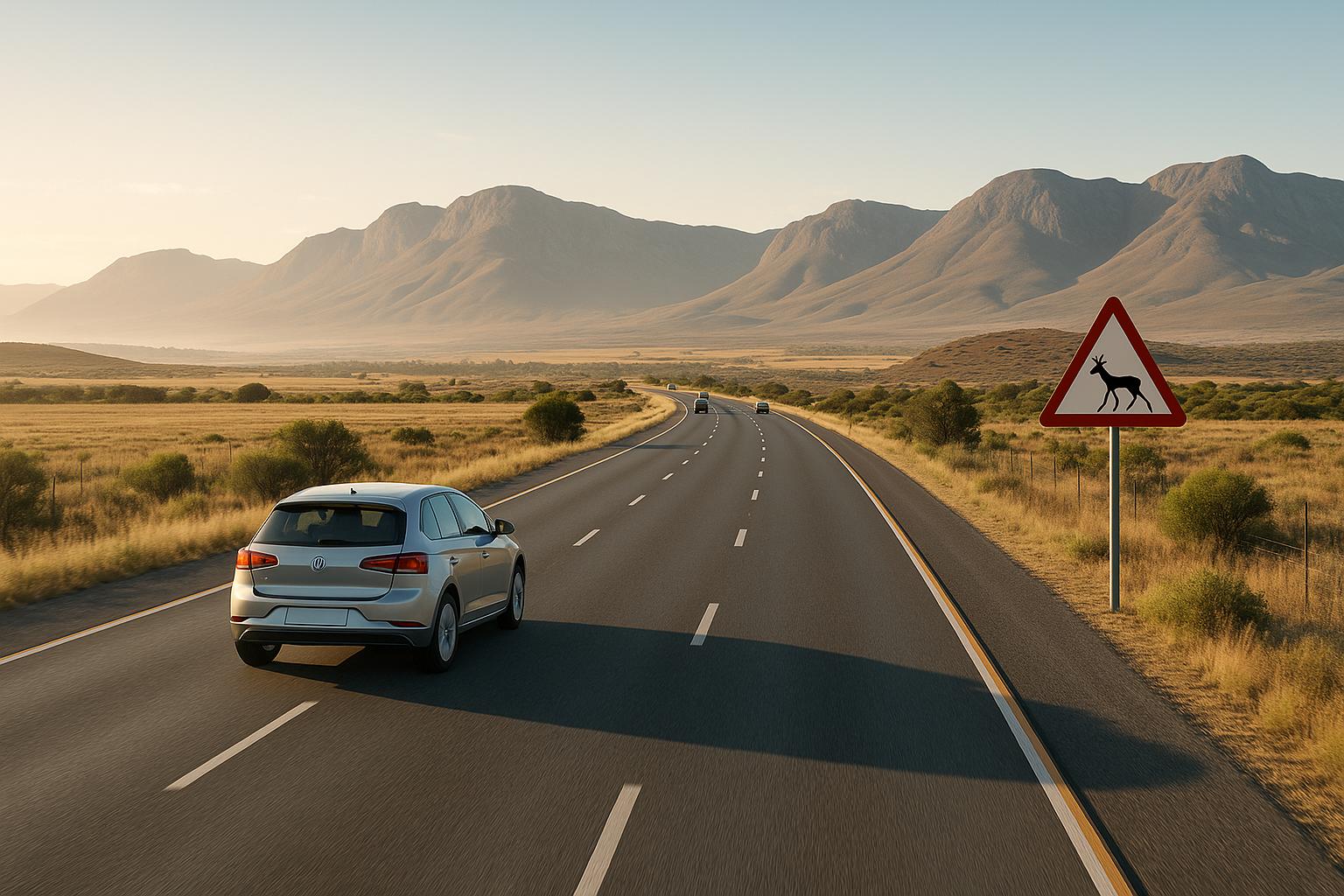
When you venture into rural areas, the challenges shift from pedestrians to wildlife. Animals can appear on the road without warning, so keep an eye out for wildlife crossing signs and adjust your speed accordingly. At night, reflective eyes in your headlights are a clear signal to slow down – there’s likely more wildlife nearby. Always drive cautiously to ensure both your safety and that of the animals.
4. Avoid Distractions and Limit Night Driving
Staying focused on the road is crucial for preventing accidents. Resist the urge to use your phone, adjust the radio, or fiddle with the GPS while driving. Instead, set up your navigation and any necessary devices before you hit the road. Activities like eating, drinking, or reaching for items should wait until you’re safely parked. Even conversations with passengers should be kept light and non-distracting.
Driving at night in South Africa comes with extra challenges. Many areas, particularly outside major cities, lack sufficient street lighting, which reduces visibility and makes it harder to spot hazards. This limited visibility also gives you less time to react to unexpected obstacles.
To stay safer during nighttime drives, reduce your speed to give yourself more time to respond to potential dangers. Ensure your headlights are clean and functioning properly for optimal performance. On empty roads, use your high beams to improve visibility, but switch to low beams when approaching other vehicles to avoid impairing their night vision.
Whenever possible, plan your trips to end before nightfall. For longer drives, start early in the day to make the most of daylight hours. Up next, we’ll cover how to signal effectively and handle roundabouts with confidence.
sbb-itb-09752ea
5. Use Turn Signals and Follow Roundabout Rules
Always use your turn signals before making a turn or switching lanes. This simple action communicates your intentions to drivers, cyclists, and pedestrians, making traffic flow more predictable and safer for everyone.
When approaching a roundabout, reduce your speed and yield to vehicles already inside. Properly navigating a roundabout not only keeps traffic moving but also reduces the risk of accidents. Don’t forget to signal when you’re about to exit – this helps others anticipate your next move. While inside the roundabout, stick to your lane and maintain a steady, safe speed.
Even if you technically have the right of way, stay cautious and practice defensive driving. Keep an eye out for unexpected moves from other drivers. Up next, we’ll discuss how to deal with minibus taxis and aggressive drivers.
6. Be Careful Around Minibus Taxis and Aggressive Drivers
Minibus taxis are a familiar sight on South African roads, and they often make sudden stops or unexpected lane changes. Always stay vigilant and keep a safe following distance to give yourself enough time to respond to their movements.
Aggressive drivers can also pose a challenge. If you encounter one, stay calm and avoid any form of confrontation. Keep a safe distance and focus on defensive driving techniques, like anticipating sudden changes in traffic, to ensure your safety.
7. Check Your Vehicle Before Trips and Plan Your Route
Before hitting the road, give your vehicle a quick but thorough check. Start with the basics: inspect your tire pressure (don’t forget the spare), and check all fluid levels, including engine oil, coolant, brake fluid, and washer fluid. Make sure your headlights, brake lights, and turn signals are working properly, and ensure your windshield wipers are in good shape. If your battery is over three years old or shows signs of corrosion, it’s a good idea to test it before your trip.
Once your car is ready to roll, take some time to plan your route carefully. South African insurers handle thousands of claims annually, and some areas are known for higher rates of accidents or crime. Do a little research to avoid these high-risk zones and opt for safer routes when possible.
Use trusted navigation apps or online tools to check for current road conditions and traffic updates. These resources can help you avoid construction zones, heavy congestion, and accident-prone areas, making your journey smoother and less stressful. This way, you can focus on driving safely without unnecessary distractions.
If you’re heading out on a longer trip, map out rest stops and fuel stations along the way. Running low on gas in an isolated area can leave you vulnerable, so knowing where to refuel or take a break can help you stay alert and refreshed throughout your drive.
Conclusion
Driving irresponsibly can lead to devastating outcomes. The seven tips we’ve covered – sticking to speed limits, keeping a safe distance, staying alert for pedestrians and wildlife, avoiding distractions, using signals correctly, handling aggressive drivers with care, and prepping your vehicle before trips – are straightforward steps that can make a big difference in reducing road dangers. By putting these into practice regularly, you not only protect yourself but also everyone else on the road.
On South African roads, staying vigilant is especially important. Beyond following traffic laws, keeping your vehicle in top condition with up-to-date safety features is essential, particularly during busy travel seasons like the festive period. A reliable, well-maintained car is just as important as adhering to safe driving practices – it’s a key part of your commitment to road safety.
For more tips on staying safe and maintaining your vehicle, check out ImotoNews South Africa.
Safe driving isn’t just a one-time effort – it’s a promise you make every time you turn the key. These habits might seem basic, but applying them consistently can be the difference between a safe arrival and unnecessary risks. Stay defensive, adjust to road conditions, and make safety your priority to protect everyone on the road.
FAQs
What precautions should I take when driving at night in South Africa?
Driving at night in South Africa comes with its own set of challenges, so taking extra precautions is key to staying safe. Stick to well-lit, busy roads whenever you can, as they’re generally safer and easier to navigate. In rural areas, be especially mindful of pedestrians and animals – they can be hard to spot in the dark and may appear suddenly.
Before heading out, check that your headlights and taillights are in good working order. On darker roads, use your high beams wisely, but remember to dim them when other vehicles are approaching. Slowing down at night is always a smart move, as it gives you more time to react to unexpected situations. Lastly, stay focused – avoid distractions like your phone and keep an eye on your surroundings to reduce potential risks.
What should I do if I encounter aggressive drivers or minibus taxis while driving in South Africa?
Driving in South Africa often means sharing the road with aggressive drivers or unpredictable minibus taxis. Handling these situations calls for a calm and focused approach. If you come across an aggressive driver, the best course of action is to avoid engaging with them. Don’t make eye contact, react to gestures, or respond in any way that could escalate the situation. Instead, keep your distance, allow them to pass if needed, and stay focused on protecting yourself and others on the road.
Minibus taxis, in particular, can be challenging to navigate around. They’re known for sudden stops or unexpected lane changes. To stay safe, always anticipate their movements and leave plenty of space between your vehicle and theirs. Stay alert, practice defensive driving, and keep in mind that your safety is what matters most.
How can I prepare my car for a safe road trip in South Africa?
Before hitting the road for your trip, it’s a good idea to give your car a proper check-up. Start by examining the tires – make sure they’re inflated to the correct pressure and have enough tread. Test the brakes to ensure they’re responsive, and double-check that all your lights – headlights, brake lights, and turn signals – are working as they should. Also, take a moment to check fluid levels like oil, coolant, and windshield washer fluid, topping them off if needed.
It’s also smart to pack an emergency kit. Include essentials like a first-aid kit, flashlight, jumper cables, and a set of basic tools. Toss in some water, snacks, and a spare tire, too. These simple preparations can go a long way in keeping you safe and making your trip more enjoyable.
Related Blog Posts
- Fuel-Saving Tips for Long South African Road Trips
- 5 Romantic Coastal Drives in South Africa
- Where to buy safe used cars in South Africa
- How to Prep Your Car for the December Holidays in SA