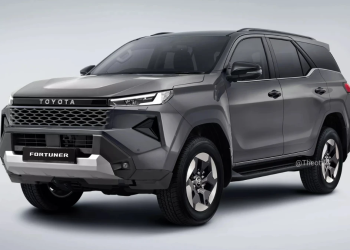
Plug-in Hybrid Electric Vehicles (PHEVs) are gaining traction in South Africa, but are they worth the investment? Here’s what you need to know:
- Costs: PHEVs are about 10–15% more expensive upfront than gas-powered cars. Entry-level models like the BYD Sealion 6 start at R639,900, while premium options like the Toyota RAV4 PHEV cost R980,000. Running costs, however, are about 70% cheaper per kilometer on electricity.
- Driving Range: PHEVs offer an electric-only range between 50–180 km, with backup from a gas engine for longer trips. Total ranges often exceed 1,000 km.
- Charging: South Africa has over 500 public charging stations, but many areas lack infrastructure. Home charging is crucial, especially with frequent power outages.
- Savings: Drivers covering 50 km daily could save around R26,827 annually on fuel.
- Challenges: High initial costs, limited government incentives, and sparse charging facilities in rural areas remain barriers.
Quick Comparison
| Model | Price | Electric Range | Charging Speed | Fuel Consumption | Total Range | Performance (0–100 km/h) |
|---|---|---|---|---|---|---|
| Toyota RAV4 PHEV | R980,000 | 80 km | 6.6 kW AC (No DC) | 1.2 L/100 km | 800+ km | 6.0 seconds |
| Haval H6 GT PHEV | R799,900 | 180 km (NEDC) | 48 kW DC Fast Charging | 0.8 L/100 km | 1,000+ km | 4.9 seconds |
PHEVs are a good option for those with access to charging and predictable commutes. They offer long-term fuel savings but require careful consideration of upfront costs and infrastructure availability.
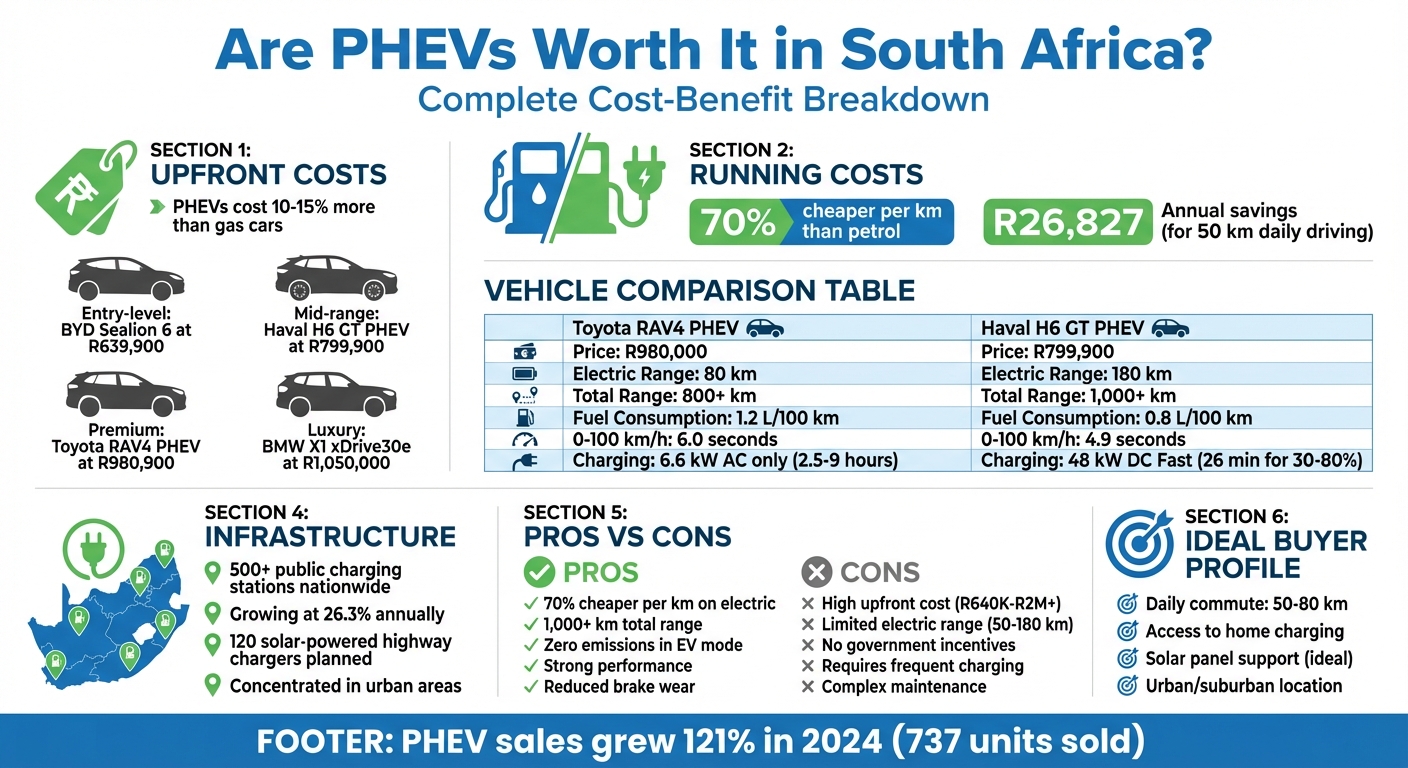
PHEV Cost-Benefit Analysis for South Africa: Pricing, Range and Savings Comparison
SA First Drive: Haval H6 GT PHEV Review – Over 1,000km Range and…it’s faster than a Golf 7 R
1. Toyota RAV4 PHEV
The Toyota RAV4 PHEV comes with a price tag of R980,000, placing it squarely in the premium segment. While it initially stood out as a more affordable option, its current pricing is notably higher than entry-level models like the Chery Tiggo 7 CSH (R599,900) and the BYD Sealion 6 (R639,900). That said, it remains R70,000 cheaper than luxury alternatives such as the BMW X1 xDrive30e (R1,050,000). Let’s take a closer look at how this model stacks up in terms of day-to-day cost-effectiveness.
Cost-effectiveness
Equipped with an 18.1 kWh battery, the RAV4 PHEV offers an electric range of 80 km and boasts a fuel consumption rate of just 1.2 l/100 km, making it a more economical choice compared to traditional gasoline-powered vehicles. Electricity costs approximately 70% less per kilometer than gasoline, further enhancing its affordability for daily driving. On top of that, its combined electric and petrol range exceeds 800 km, which means fewer stops for refueling or recharging on long journeys.
However, the charging system has its limitations. The RAV4 PHEV supports only 6.6 kW AC charging and lacks DC fast charging capability. This means a full recharge takes about 2.5 hours with a dedicated wallbox or between 7 and 9 hours when using a standard household outlet. By comparison, competitors like the BYD Sealion 6 offer 18 kW DC fast charging at a lower price point. These factors highlight some trade-offs that buyers need to weigh when considering this vehicle.
Suitability for South African Driving Conditions
Despite its charging limitations, the RAV4 PHEV’s dual powertrain is well-suited for South Africa’s diverse driving environments. Its E-Four all-wheel-drive system and 225-kW output (allowing it to go from 0 to 100 km/h in 6.0 seconds) make it capable of tackling varied road conditions. For areas where charging infrastructure is sparse, the "Charging Mode" feature lets the gasoline engine recharge the battery while driving, ensuring electric power is available for city traffic. Additionally, the vehicle can reach speeds of up to 135 km/h in pure electric mode, making it a practical choice for both urban commutes and highway travel.
This versatility helps to ease concerns about range anxiety, especially for drivers navigating rural areas where charging stations are harder to find. By combining strong performance with adaptability, the RAV4 PHEV addresses many of the challenges associated with plug-in hybrid vehicles in South Africa.
2. Haval H6 GT PHEV
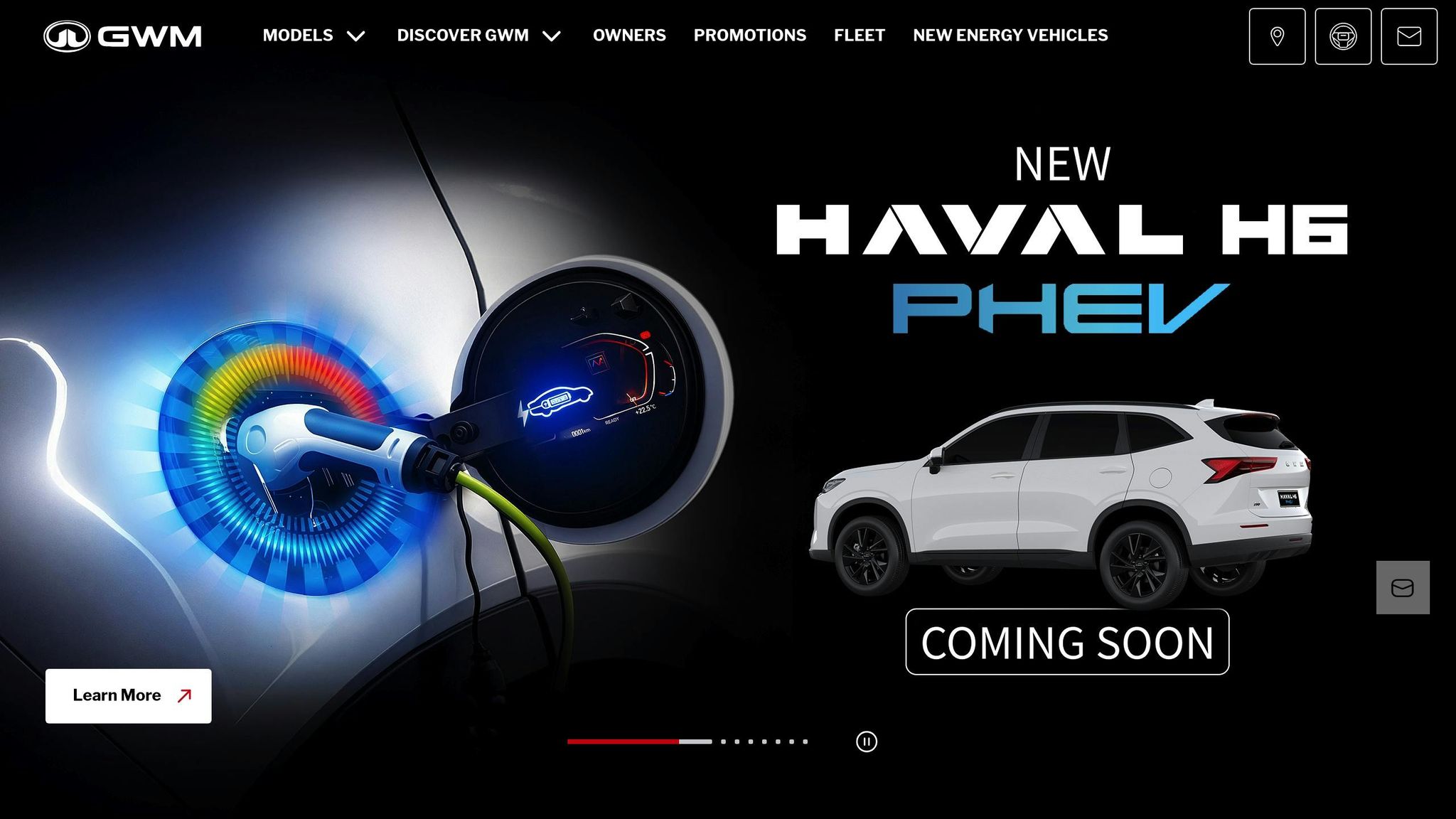
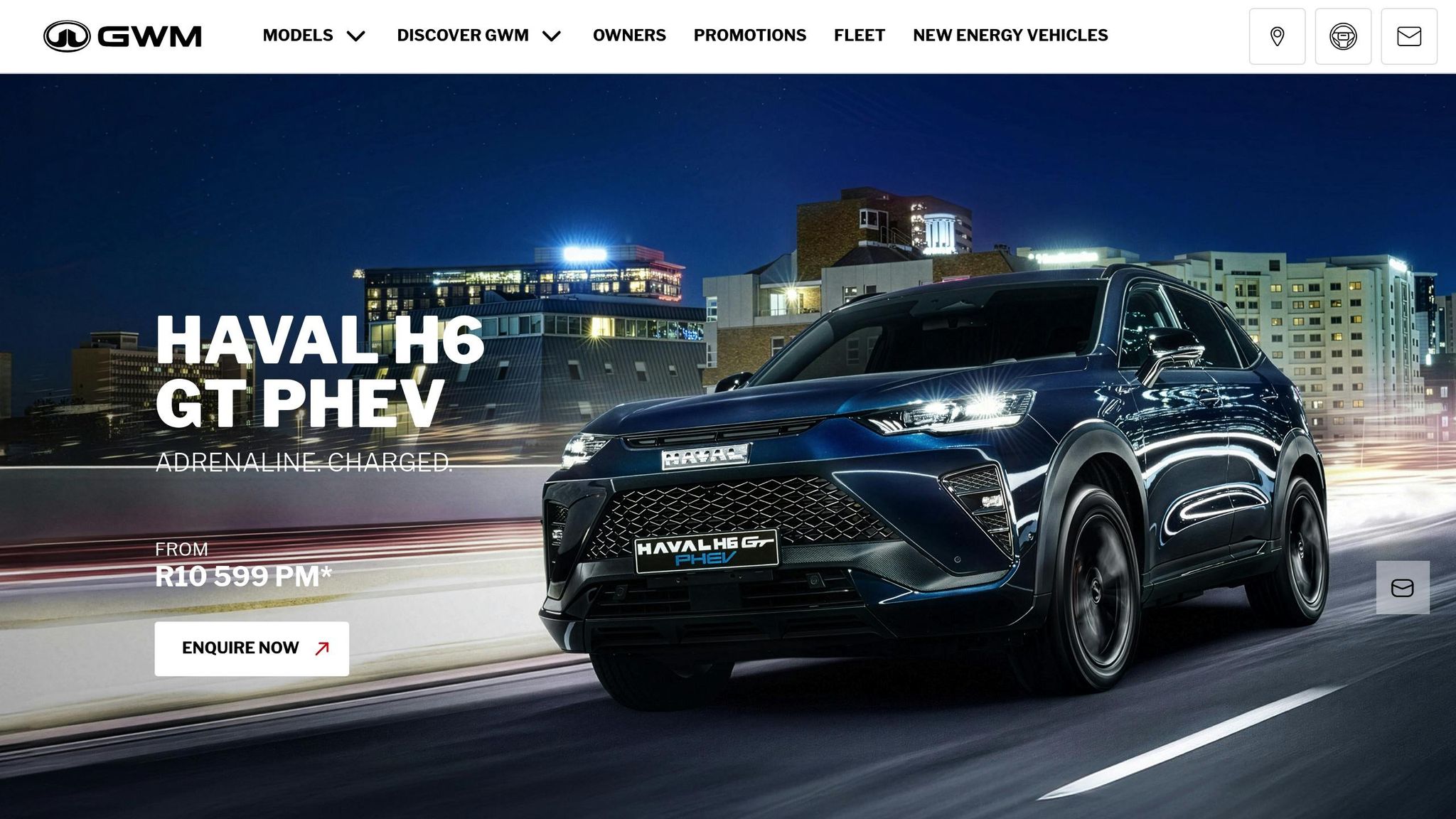
After looking at the RAV4 PHEV, the Haval H6 GT PHEV emerges as a budget-friendly yet powerful alternative. At R799,900, it’s priced R180,000 below the Toyota RAV4 PHEV and R250,000 less than the BMW X1 xDrive 30e. Despite its lower price tag, this plug-in hybrid packs a punch with 321 kW and 762 Nm, achieving 0–100 km/h in just 4.9 seconds.
Cost-effectiveness
The H6 GT PHEV features a 35.4 kWh battery, which is quite large for a plug-in hybrid. This translates to an electric-only range of up to 180 km (NEDC), with real-world estimates exceeding 100 km. For daily commutes, that means most trips can run on electricity, costing about 70% less per kilometer than petrol. Its combined fuel consumption of 0.8 L/100 km and total range of over 1,000 km reduce the need for frequent refueling stops.
Unlike many PHEVs that only support slower AC charging, the H6 GT PHEV offers 48 kW DC fast charging. This allows the battery to charge from 30% to 80% in just 26 minutes. Additionally, it comes with a 7-year/200,000 km warranty and an 8-year/150,000 km battery warranty, providing peace of mind for long-term ownership.
With its efficient battery, fast charging capability, and extended warranties, the H6 GT PHEV makes a strong case for itself in terms of everyday practicality.
Suitability for South African Driving Conditions
The H6 GT PHEV isn’t just about cost savings – it’s built to handle various terrains. Its 4WD system and 170 mm ground clearance make it capable on gravel roads and adaptable to many South African driving conditions, though it’s not designed for hardcore off-roading. Selectable drive modes like Sand, Snow, and Mud enhance its flexibility for different terrains. Plus, the instant torque from its dual electric motors ensures solid traction on slippery or loose surfaces, while its petrol engine eliminates range concerns on longer trips.
"The Haval H6 GT PHEV is a game-changer for GWM. It offers sporty styling, punchy performance, and impressive efficiency at a price that undercuts most rivals."
- Ciro De Siena, Motoring Journalist, Cars.co.za
That said, reviewers have pointed out a few practical issues. The coupe-like styling limits rearward visibility, there’s no rear window wiper, and the USB ports are awkwardly placed.
sbb-itb-09752ea
Advantages and Disadvantages
Plug-in Hybrid Electric Vehicles (PHEVs) come with a mix of benefits and trade-offs, often influenced by your driving habits and access to charging facilities. One of the standout perks is fuel savings – running on electricity costs about 70% less per kilometer compared to petrol, making daily commutes much cheaper. Plus, the combination of electric and petrol power gives these vehicles an impressive range, often exceeding 1,000 km.
However, the high initial cost can be a sticking point. While some new models, like the BYD Sealion 6, start at around R639,900, most PHEVs fall within the R800,000 to R2 million price range. Adding to this, South Africa offers no tax incentives or rebates for PHEV buyers, meaning you’ll pay the full price upfront. Charging infrastructure is another challenge – there are only about 350 public charging stations across the country as of early 2025. This makes home or workplace charging essential to fully benefit from the vehicle’s cost efficiency.
| Advantages | Disadvantages |
|---|---|
| Around 70% cheaper per km on electric power | High upfront cost (R640,000–R2 million+) |
| Petrol engine backup eliminates range anxiety | Limited electric-only range (50–180 km) |
| Zero emissions when in EV mode | No government incentives or tax breaks |
| Regenerative braking reduces brake wear | Frequent charging needed to maximize savings |
| Strong torque and acceleration | More complex systems than traditional ICE vehicles |
For those with reliable access to charging – especially if powered by solar – PHEVs can deliver incredibly low commuting costs. But if charging isn’t convenient, you might end up relying more on petrol, which diminishes the cost advantage.
Experts in the field highlight the role of PHEVs in bridging the gap to fully electric vehicles. Felipe Yagi, Head of Marketing and Communications at Volvo Car South Africa, explains:
"Plug-in hybrids play a key role in easing the transition to electric mobility, offering a practical solution for drivers looking to reduce fuel consumption and emissions without compromising on performance or convenience".
Maintenance is another area to consider. While regenerative braking reduces wear on traditional brakes and electric modes reduce engine strain, the dual systems – combining a petrol drivetrain with high-voltage batteries and electric motors – add complexity. This could translate to higher repair costs compared to standard internal combustion engine (ICE) vehicles.
Conclusion
Plug-in hybrid electric vehicles (PHEVs) present a compelling option for drivers seeking daily savings and enhanced performance. However, the decision to invest in a PHEV hinges on factors like upfront costs and the availability of charging infrastructure. For those with predictable commutes – ideally between 31 and 50 miles (50 to 80 km) – and access to home charging, especially with solar panel support, the potential for long-term savings is substantial. These savings can help offset the higher purchase prices over time.
That said, the biggest barrier remains the initial cost. Prices have dropped significantly, from over $55,500 in 2024 to around $35,500 by 2026. Yet, without government incentives, buyers must rely on fuel savings to justify the expense. Even with the price reductions, most PHEVs remain out of reach for 74% of local buyers.
Charging infrastructure is expanding, but progress is uneven. South Africa now boasts over 500 public charging stations, with plans for 120 solar-powered highway chargers. The network is growing at an annual rate of 26.3%. However, most stations are concentrated in wealthier urban areas, and frequent power outages complicate grid charging. For this reason, dependable home charging remains crucial.
Despite these challenges, the market is showing signs of growth. PHEV sales surged by 121% in 2024, reaching 737 units, and manufacturers are introducing more accessible models. Keletso Mpisane, Head of Blink by MiWay, highlights the broader potential of PHEVs:
"As NEV technology gets better, and carbon levies impact the market, these green alternatives will pay off for owners and the environment in the long run".
Looking forward, factors like future carbon levies and local production efforts could further enhance the appeal of PHEVs, solidifying their role as a forward-thinking option for South African drivers.
FAQs
Is owning a PHEV more cost-effective than a traditional car in South Africa?
Owning a plug-in hybrid electric vehicle (PHEV) in South Africa can save you money in the long run compared to sticking with a traditional gas-powered car. While PHEVs usually come with a hefty price tag – ranging from R1,000,000 to R2,000,000 – the savings on fuel can be a game-changer. Electricity costs significantly less per mile than gasoline, which means fewer trips to the pump and more cash in your pocket.
Maintenance is another area where PHEVs shine. Thanks to their electric components, they require less frequent servicing compared to conventional engines. Over time, these savings can help balance out the higher upfront cost, making them a solid choice for those thinking long-term.
That said, whether a PHEV is the right choice for you depends on a few key factors: the availability of charging stations, any government incentives that might be offered, and your personal driving habits. Each of these can influence how much you’ll actually save and how convenient owning a PHEV will be.
What are the biggest challenges of owning a PHEV in South Africa?
Owning a plug-in hybrid electric vehicle (PHEV) in South Africa comes with its fair share of hurdles. One of the biggest obstacles is the lack of charging stations, especially outside major urban centers. This makes it tough to depend on the electric-only mode for longer journeys. On top of that, load shedding and unreliable power supply can create challenges for charging at home or work, adding another layer of complexity.
The price tag of PHEVs is another sticking point. With many models costing over R1,000,000, they’re out of reach for a large portion of potential buyers. While these vehicles can save money on fuel in the long run, the steep upfront cost remains a significant barrier. Additionally, South Africa’s energy grid is largely coal-powered, which means the environmental benefits of charging a PHEV are not as impactful as they might be in countries using cleaner energy sources.
That said, for those living in cities with better charging infrastructure, PHEVs still offer a practical way to cut down on fuel use and emissions, making them a smart choice for urban driving.
Is South Africa’s charging network ready for PHEV owners?
South Africa’s charging network is steadily expanding, with public charging points increasing significantly in recent years. By 2025, projections suggest there will be over 500 public chargers across the country. This progress is driven by contributions from private companies, automakers, retail businesses, and government programs.
Even with this growth, PHEV owners should plan their routes carefully, especially in regions where charging stations are still sparse. For everyday use, most PHEV drivers depend on home charging. It’s a practical and budget-friendly solution for the majority of users.
Related Blog Posts
- Electric vs Hybrid: Fuel Costs Compared
- EVs vs Hybrids: Which is Better for South African Drivers?
- Do Electric Cars Save Money in South Africa?
- Plug-In Hybrid Cars in South Africa: What’s Available