Mobility-focused fintech company GoCab has announced a significant funding milestone, securing a total of $45 million in new capital to accelerate its mission of providing ethical, income-generating asset financing to gig-economy workers in emerging markets.
The financing package consists of $15 million in equity funding and over $30 million in committed debt, with the debt forming part of a broader $60 million Shariah-compliant facility currently being finalised. Additional lenders are in advanced discussions to complete the remaining portion of the facility.
The equity round was jointly led by E3 Capital and Janngo Capital, alongside participation from KawiSafi Ventures and Cur8 Capital, reflecting growing investor confidence in alternative financing models that combine commercial returns with social impact.
Building access to assets, not just credit
Established in 2024 by former investment bankers Azamat Sultan and Hendrick Ketchemen, GoCab was designed to tackle a core challenge facing millions of gig workers across Africa and other emerging regions: the inability to access fair, structured financing for productive assets such as vehicles, motorcycles, and essential digital tools.
After more than six years working together in asset management, the founders shifted their focus toward building a platform that connects stable income streams with responsible private credit.
“We wanted to move beyond abstract financial structures and build something rooted in everyday economic reality,” said Azamat Sultan, Co-founder and Chief Strategy Officer. “GoCab allows capital to flow directly into assets that generate income. This funding enables us to scale carefully, expand our footprint, and stay disciplined as we grow.”
He added that the company is targeting rapid but controlled growth, with ambitions to become a leading private-credit platform in emerging markets within the next two years.
A digital platform aligned with demand
GoCab’s technology platform brings together multiple financing solutions in one ecosystem. These include drive-to-own vehicle programmes for ride-hailing drivers, motorbike financing for last-mile delivery riders, and buy-now-pay-later options for mobile phones. All services are bundled through a single app and linked to partnerships with established ride-hailing and food-delivery platforms.
By aligning financing directly with contracted demand, GoCab reduces risk while helping drivers and couriers move toward asset ownership.
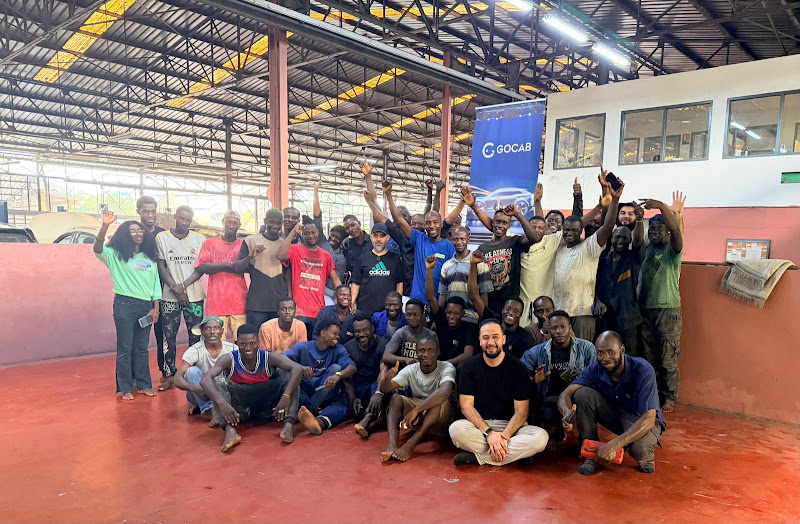
Since its launch, the company has expanded operations into five countries, built a workforce of more than 100 employees from 18 nationalities, and reached over $15 million in annual recurring revenue.
Expansion plans and African opportunity
The newly raised capital will be used to grow GoCab’s vehicle fleet and enter new markets, with the company aiming to reach 10,000 active vehicles and $100 million in annual recurring revenue within the next 24 months.
According to Fatoumata Bâ, Founder and Executive Chair of Janngo Capital, GoCab’s model is particularly relevant for African economies, including South Africa.
“In many parts of the continent, transport inefficiencies significantly increase the cost of moving goods and people, holding back productivity,” she said. “At the same time, Islamic finance has grown into a multi-trillion-dollar global industry, yet its potential to address real economic bottlenecks remains largely untapped. GoCab brings these two worlds together by using ethical, Shariah-compliant capital to finance productive assets at scale.”
Ethics and social impact at the core
GoCab operates entirely within a Shariah-compliant financing framework and has embedded social responsibility into its corporate governance. The company has created a dedicated waqf fund, pledging 1 percent of annual net profits to programmes that support children from disadvantaged backgrounds in the markets where it operates.
For Hendrick Ketchemen, Co-founder and Board Member, the company’s mission goes beyond financial performance.
“What motivates us is seeing people gain stability and a sense of ownership through their work,” he said. “In our previous careers, success was measured in figures on a screen. Today, success looks like families building better futures. That human impact is what drives us forward.”
As demand for inclusive mobility solutions continues to grow across Africa, GoCab is positioning itself as a key enabler of ethical finance, sustainable transport, and income creation, with South Africa emerging as a strategic market in its next phase of expansion.