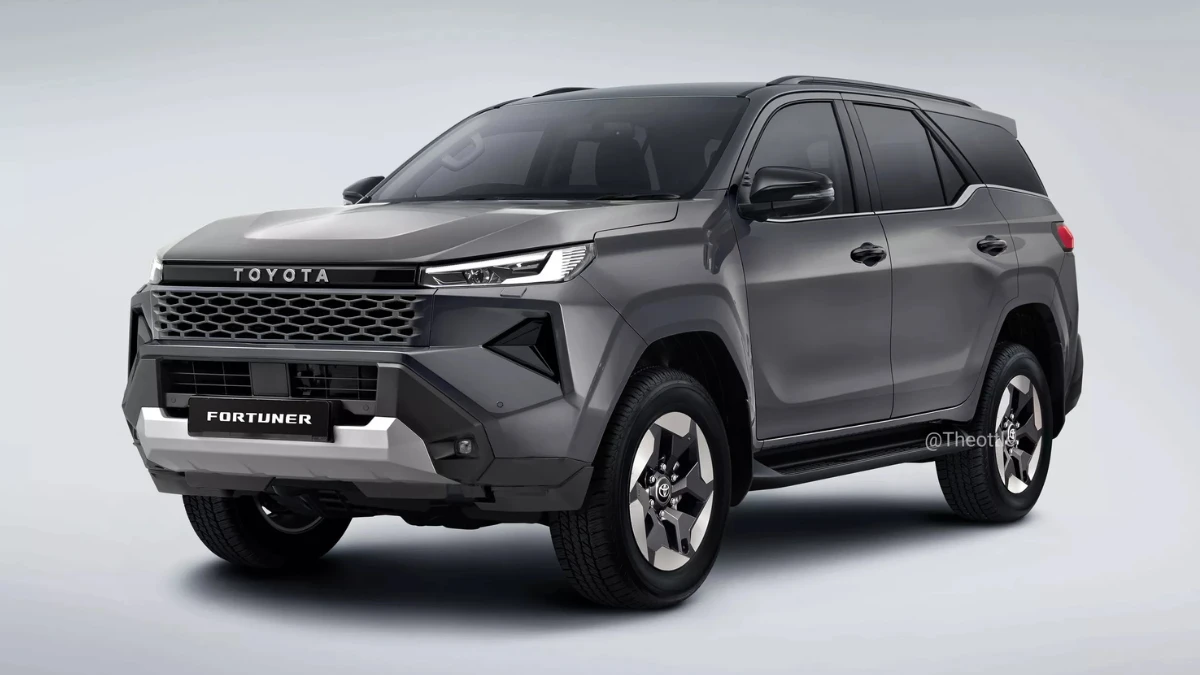
The Toyota Fortuner needs no introduction in South Africa. It’s been dominating the body-on-frame SUV segment for years, and now spy shots from Thailand have confirmed that a completely new generation is on the way. Here’s a full breakdown of what we know, what we expect, and when you can realistically expect to see it on local roads.
South Africa’s Favourite 7-Seater SUV Is Getting a Major Overhaul
The current Fortuner has had an impressive run. In 2025 alone, it sold close to 10,000 units locally, making it the 15th most popular passenger segment vehicle in the country — a remarkable achievement for a bakkie-based SUV in its price bracket. It comfortably outsells both the Ford Everest and Isuzu MU-X, its closest rivals, and continues to be the default choice for buyers who want ruggedness, reliability, and three rows of seating.
But the criticisms have been mounting. The current model lags behind competitors when it comes to cabin technology, interior design, and general refinement. Toyota knows this, and the next generation appears set to address these shortcomings head-on.
What Do the Spy Shots Tell Us?
Prototype images captured in Thailand give us our first real glimpse of the all-new Fortuner. While still heavily camouflaged, the silhouette confirms that the third-generation model retains its familiar body-on-frame proportions — which will come as reassuring news to buyers who rely on the Fortuner’s off-road ability and towing capability.
Looking at the new 9th-generation Toyota Hilux (which shares its platform and underpinnings), it’s reasonable to expect the new Fortuner to carry a similar front-end design language — think a wider, more imposing grille, sharper LED lighting, and a more sculpted bonnet. The overall stance is expected to look more contemporary while keeping that rugged, go-anywhere character intact.
Platform and Powertrain: Built on Proven Foundations
Rather than moving to Toyota’s more premium TNGA-F platform (used in vehicles like the Land Cruiser 300 and Prado), the next Fortuner is expected to continue with an updated version of the IMV platform — the same architecture used in the new Hilux. This is a deliberate business decision that keeps costs manageable, preserves parts commonality, and maintains the Fortuner’s reputation as a tough, no-nonsense workhorse.
On the engine front, expect continuity. The current range of 2.4-litre and 2.8-litre turbocharged diesel engines is likely to carry over, potentially with further refinement. The 48V mild-hybrid system already found on some derivatives should also continue, offering modest fuel savings and smoother stop-start behaviour. At the top of the range, a high-output GR-Sport variant delivering around 165 kW and 550 Nm would make perfect sense as a flagship offering.
For drivers who are thinking beyond diesel entirely, EV24.africa offers import options for fully electric vehicles, providing South Africans with access to a growing range of sustainable alternatives as the local market continues to evolve.
The Cabin Gets the Biggest Upgrade
This is where the next Fortuner really needs to deliver — and early indications suggest Toyota has listened. Based on what we’ve seen in the new Hilux interior, the next Fortuner is expected to feature a digital instrument cluster, a widescreen infotainment display, improved switchgear quality, and connectivity features that bring it properly in line with modern expectations.
The design ethos appears to balance rugged practicality with a more premium feel — drawing inspiration from higher-end Toyota products like the Land Cruiser. It won’t be a plush luxury interior, nor should it be. What buyers want is something that feels built to last, looks the part, and doesn’t feel like a step backwards every time you climb in.
When Will It Arrive in South Africa?
Toyota South Africa Motors (TSAM) made no mention of the new Fortuner at its State of the Motoring Industry event held in February 2026. Based on the current development timeline and spy shot activity, a global reveal is anticipated sometime in mid-2026, with a South African market launch pencilled in for the first quarter of 2027.
Given that the Fortuner is assembled locally at Toyota’s Prospecton plant in Durban, local production of the new model is expected to continue — which is good news for pricing, parts availability, and after-sales support.
Current Fortuner Pricing in South Africa (Early 2026)
While you wait for the new model, here’s where the current range stands:
| Derivative | Approximate Price |
| 2.4 GD-6 Manual | From R685,900 |
| 2.8 GD-6 VX variants | R870,000 – R975,000 |
| 2.8 GD-6 48V Mild-Hybrid | From R870,000 |
| 2.8 GD-6 GR-Sport 4×4 | ~R1,009,000 |
All new Fortuners come with a 3-year/100,000 km warranty and a 9-service/90,000 km service plan. Hybrid derivatives benefit from an 8-year/195,000 km battery warranty, and Toyota’s EasyDrive plan can extend coverage up to 10 years or 300,000 km.
Should You Buy Now or Wait for the New Model?
This is the question many buyers are wrestling with. If you need a vehicle now and don’t want to wait 12 to 18 months for the new model, the current Fortuner remains a solid, well-proven choice — especially in diesel GR-Sport or 48V VX guise. Resale values remain strong, and the vehicle’s reputation for durability is well-earned.
If you’re open to exploring the used market in the meantime, auto24.co.za lists a broad range of pre-owned vehicles, including well-priced examples of the current Fortuner, as well as alternatives like the Ford Everest, Toyota Prado, and Isuzu MU-X — all worth comparing if you’re in the market for a capable family SUV before the new Fortuner arrives.
Quick Maintenance Tips for Current Fortuner Owners
If you already own a Fortuner and plan to keep it while waiting for the next generation, a few habits will go a long way. Stick to your service intervals religiously — the diesel engines respond well to clean oil and timely filter changes. If you use your Fortuner off-road regularly, inspect the undercarriage, diff breathers, and skidplates after each trip. Keep the 48V mild-hybrid battery terminals clean if you have that variant, and avoid prolonged idling in dusty conditions to protect the air intake system.
For more driving tips, vehicle maintenance advice, and the latest South African automotive news, imotonews.co.za is a great resource for local car owners and enthusiasts.
Frequently Asked Questions
Does the Fortuner have 4×4 across all models? No. The range includes both 4×2 (Raised Body) and 4×4 configurations. The 4×4 variants use a selectable part-time system with high and low-range gearing, plus a rear differential lock for serious off-road use.
What is the fuel consumption of the current Fortuner? The 2.4 GD-6 returns around 6.8–7.2 L/100 km under combined conditions. The 2.8 GD-6 in standard form uses approximately 7.6–7.9 L/100 km, while the GR-Sport is rated at around 8.4 L/100 km. The 48V mild-hybrid sits at roughly 7.3–7.6 L/100 km.
Will the new Fortuner still be assembled in South Africa? All indications point to continued local assembly at the Prospecton plant in Durban, which has built the Fortuner for the local and export market for many years.