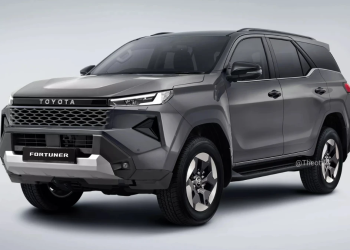
South Africans are turning to hybrid SUVs due to rising fuel costs, unreliable electricity, and new government incentives. By 2024, hybrid SUV sales hit 13,604 units – a massive 5,014% increase since 2015. Factors driving this shift include:
- Fuel Savings: Hybrids cut fuel costs significantly. For instance, the Toyota Corolla Cross Hybrid saves $35 per month compared to a conventional car.
- Load-Shedding Challenges: Unlike fully electric vehicles, hybrids don’t rely on charging infrastructure, making them practical during power outages.
- Government Support: Tax deductions for EV production and proposed import duty cuts are reducing costs for hybrids.
- Improved Efficiency: Models like the Toyota RAV4 Hybrid offer better mileage and lower maintenance costs through features like regenerative braking.
These vehicles balance cost savings, practicality, and reduced emissions, making them ideal for South African drivers facing economic and infrastructure challenges.
Problems with Conventional SUVs in South Africa
High Fuel and Maintenance Costs
Owning a conventional SUV in South Africa can quickly drain your wallet. By mid-2025, fuel prices were hovering around $1.38 per liter (R25), making the cost of running a petrol-powered SUV a significant financial burden. Take the Haval Jolion, for example – it consumes about 7.5 liters per 100 km (62 miles). If you drive 12,427 miles (20,000 km) annually, you’re looking at spending roughly $1,700 (R30,765) on fuel alone.
Maintenance costs pile on top of that. Without regenerative braking systems, these vehicles wear out brake pads and rotors much faster, leading to frequent and costly replacements. For the 40% of South African motorists who keep their cars for five to ten years, this can add up. The situation is even worse for drivers covering more than 19 miles (30 km) daily or navigating stop-and-go city traffic, where traditional engines are least efficient.
Carbon Emissions and Air Quality Issues
The environmental impact of conventional SUVs is another major drawback. These vehicles emit up to 40% more CO₂ compared to hybrid models. In cities like Johannesburg, Cape Town, and Durban, heavy traffic means constant idling and stop-start driving, which worsens local air pollution. Additionally, the lack of regenerative braking in conventional SUVs leads to higher levels of particulate matter from brake dust with every stop.
As South Africans face rising living costs and become more conscious of environmental issues, many are starting to reconsider their vehicle choices. These financial and environmental challenges are paving the way for hybrid alternatives, which offer a more sustainable solution.
sbb-itb-09752ea
How Hybrid SUVs Address These Problems
Fuel Efficiency and Cost Savings
Hybrid SUVs tackle the challenge of rising fuel costs by combining petrol and electric systems, which are particularly effective in stop-and-go traffic. Take the Haval Jolion Pro HEV, for example – it reduces fuel consumption from 7.5 to 5.1 liters per 100 km, translating to an annual savings of nearly $550.
As George Mienie, CEO of AutoTrader, noted, "Hybrids present a compelling option for motorists seeking to balance costs and sustainability. While the initial purchase price may be higher, the long-term fuel savings and resale value make them a prudent investment".
For the roughly 40% of South African drivers who keep their cars for five to ten years, these fuel savings can offset the higher upfront cost entirely.
Additionally, hybrid SUVs use regenerative braking, which captures energy from deceleration to recharge the battery. This not only improves fuel efficiency but also reduces wear and tear on the brakes. Another significant advantage is that self-charging hybrids don’t rely on external plug-in infrastructure. This feature is especially appealing in South Africa, where load-shedding and limited charging facilities in rural areas can pose challenges.
Beyond just saving on fuel, hybrid SUVs are designed to perform well across a range of terrains, making them a practical choice for South African drivers.
Performance on Different Terrains
South Africa’s diverse road conditions demand vehicles that can handle everything from smooth highways to rugged gravel paths, and hybrid SUVs rise to the challenge. The Toyota RAV4 Hybrid, for instance, combines a 2.5-liter engine with an electric motor to deliver 160 kW of power. This setup ensures quick throttle response, which is crucial for overtaking heavy vehicles on highways.
Motoring journalist Lance Branquinho described the RAV4 Hybrid as "so much more than a Prius with its ‘gravel travel’ ability", highlighting its capability on less-than-ideal secondary roads.
The combination of petrol and electric power enhances acceleration, making merging and overtaking safer and more efficient. With a range of 727 miles on a single tank, the RAV4 Hybrid is built for both city commutes and long highway drives.
In urban areas, the electric motor operates quietly at lower speeds, cutting down on noise pollution while producing zero emissions in stop-start traffic.
As Justin Govender from iMotoNews stated, "Hybrids offer more convenience for drivers outside urban hubs – especially in regions with unreliable power".
This versatility makes hybrid SUVs a smart choice for navigating everything from crowded streets to remote gravel roads, offering a balance of efficiency, power, and practicality.
2025 Toyota Corolla Cross HEV Review | SA’s Best Selling Hybrid
Top Hybrid SUV Models in South Africa
South Africa offers a variety of hybrid SUVs, each catering to different preferences and needs. Below, we delve into some standout models and their features, illustrating how they address the country’s specific driving challenges.
Toyota RAV4 Hybrid
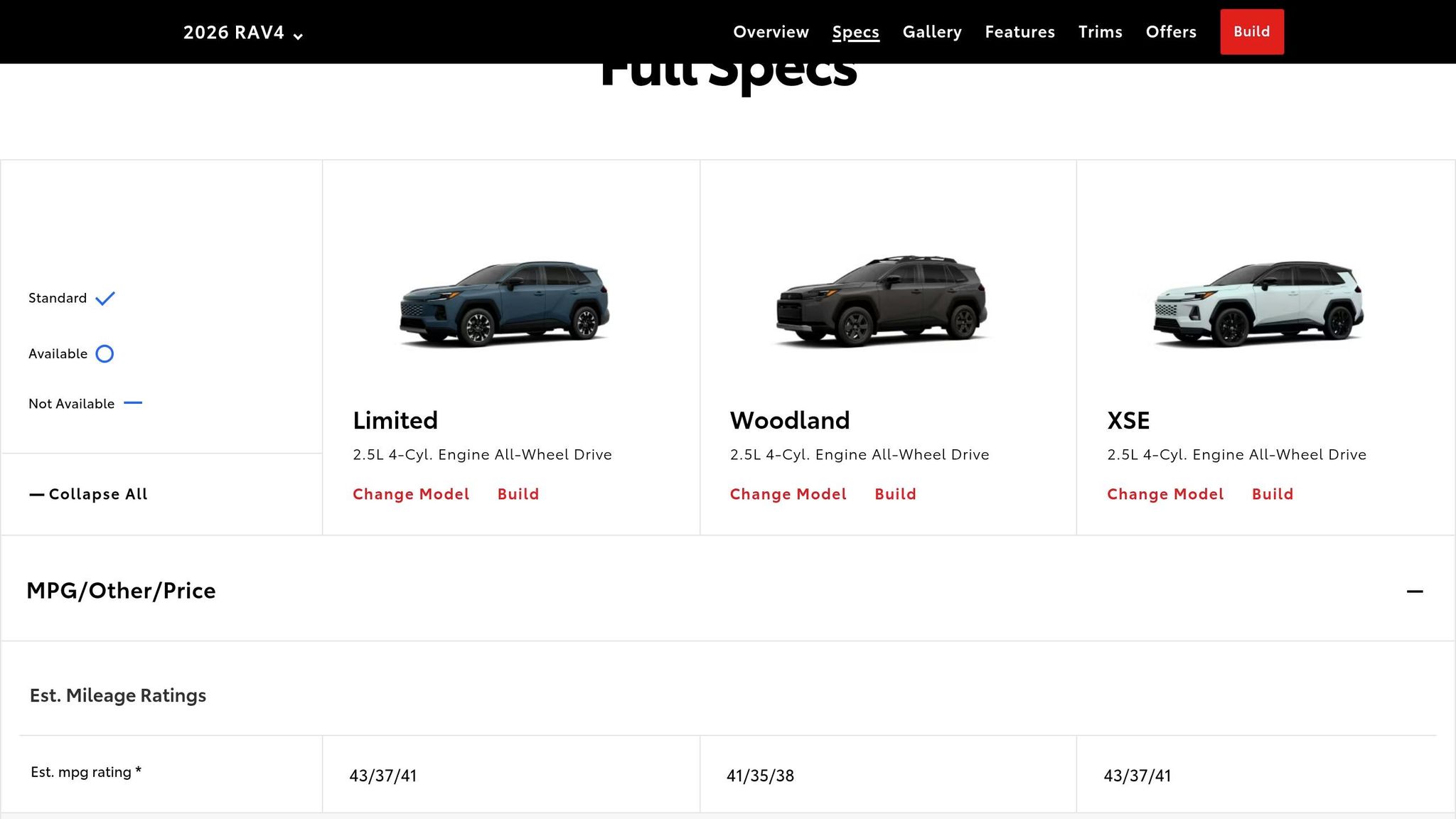
The Toyota RAV4 Hybrid has earned a reputation for reliability, strong fuel efficiency, and a solid presence in the market. Pricing starts at R748,700 for the GX-R E-Four trim, while the top-spec VX E-Four is available for R841,600. To further sweeten the deal, Toyota includes an 8-year/195,000 km warranty on the hybrid powertrain, offering peace of mind to buyers.
For those seeking even more power and range, the RAV4 Plug-In Hybrid is an exciting option. It delivers 225 kW, accelerates from 0–100 km/h in just 6.0 seconds, and boasts an 80 km electric-only range. However, this performance comes at a premium, with a price tag of R980,000.
"The dream of pure electric vehicles will remain clouded by Eskom’s inability to deliver reliable power. But hybrids offer a compelling alternative." – Lance Branquinho
Haval H6 Hybrid
The Haval H6 GT PHEV makes hybrid technology more accessible with a competitive price of R799,900. It appeals to buyers looking for a balance between affordability and the benefits of hybrid technology.
This model highlights the practicality of a plug-in system while addressing local driving challenges, such as the need for both self-charging convenience and extended range. The Haval H6 GT PHEV demonstrates how hybrid options can meet the diverse demands of South African drivers.
Government Incentives and Affordability
Tax Rebates and Import Duty Reductions
In March 2026, the government introduced a 150% tax deduction for manufacturers investing in electric and hydrogen vehicle production assets. This includes investments in buildings, plants, and machinery, with an estimated cost of $27.8 million (R500 million) for the 2026/27 fiscal year, according to the National Treasury.
To further boost local production of New Energy Vehicles (NEVs), the government has allocated $55.6 million (R1 billion) toward scaling up manufacturing by 2035. Additionally, $3.9 billion (R70 billion) has been set aside as part of the Just Energy Transition Investment Plan for 2023–2027. These efforts aim to reduce reliance on imports, which currently carry a hefty 25% duty – much higher than the 18% duty on conventional internal combustion engine vehicles.
Joubert Roux, Chair of Zero Carbon Charge, highlighted the disconnect in current policies, stating:
"South Africa cannot tax clean mobility as a luxury while claiming to prioritise decarbonisation and industrial growth".
To address this, proposals are being considered to reduce the 25% import duty on NEVs to 18%, a move that could significantly lower the cost of hybrid SUVs. These fiscal measures not only encourage local manufacturing but also make financing more competitive, helping to drive growth in the used hybrid market.
Financing Options and Used Hybrid Sales Growth
Government incentives, coupled with better financing options and a growing secondary market, are making hybrid SUVs more affordable. Recent data shows a remarkable 92% year-on-year increase in used New Energy Vehicle sales, with hybrids accounting for about 84% of these transactions. The Toyota Corolla Cross Hybrid has been a standout in this segment, with used models seeing a 14% price drop – from $48,454 (R872,180) to $41,561 (R748,096) – making them a more accessible alternative to new RAV4 Hybrids.
George Mienie, CEO of AutoTrader, emphasized this shift, saying:
"What’s happening in South Africa isn’t just a shift in vehicles, it’s a shift in mindset. Buyers are seeking solutions that balance practicality with sustainability".
Chinese automakers are also playing a key role in lowering entry costs for plug-in hybrids. In February 2026, BYD introduced the Sealion 5 PHEV at a price of $27,772 (R499,900), becoming the first plug-in hybrid SUV under $27,778 (R500,000). Shortly after, Chery and Geely launched models priced at $33,328 (R599,900) and $33,333 (R599,999), respectively, offering middle-income buyers more affordable access to PHEV technology.
These developments, from tax breaks to competitive pricing, are directly addressing affordability challenges, making hybrid SUVs a more attractive option for South African consumers.
Hybrid SUVs vs. Conventional SUVs: A Comparison
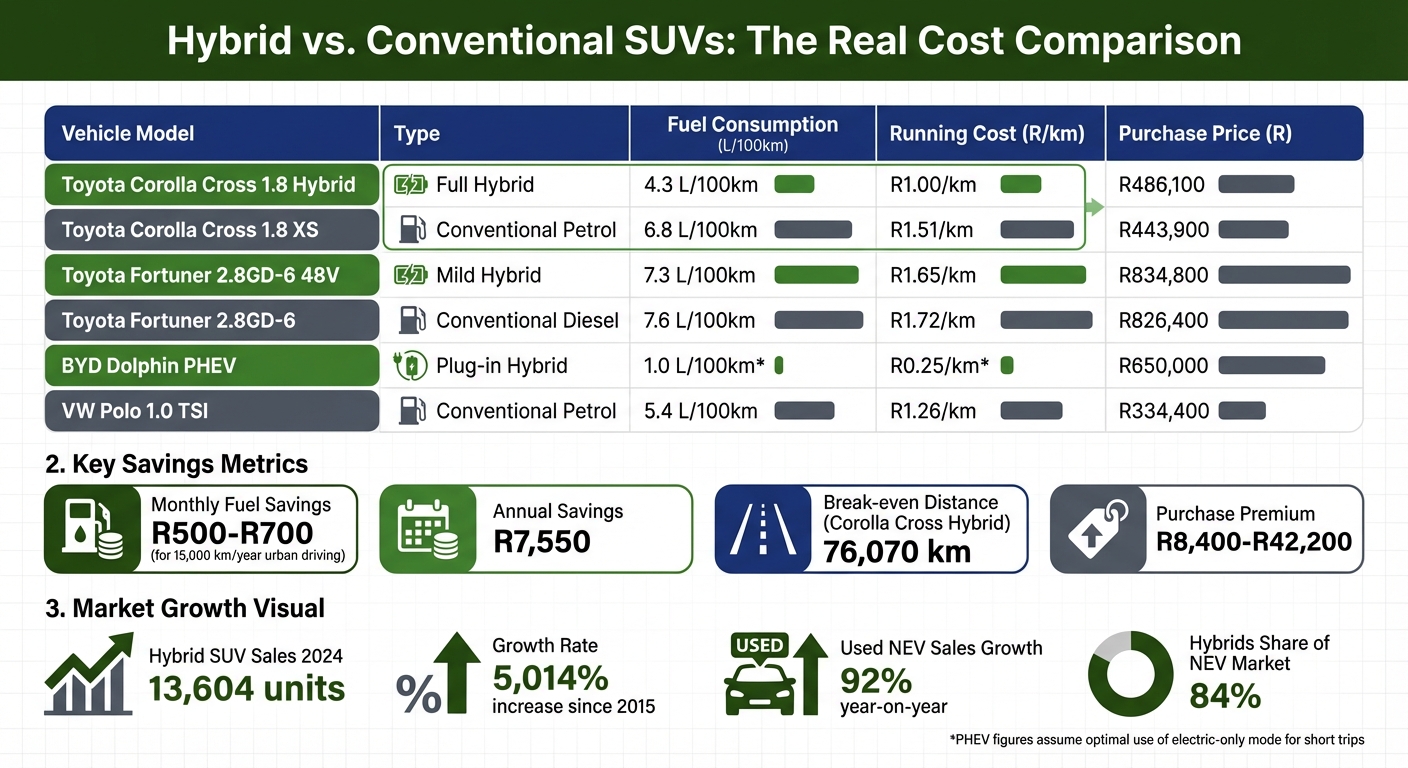
Hybrid vs Conventional SUV Cost Comparison in South Africa
When it comes to SUVs, hybrids are increasingly seen as a smart investment despite their higher initial cost. On average, hybrid SUVs come with an upfront price premium ranging between $467 and $2,344 (R8,400 to R42,200). However, they make up for this difference with long-term savings, especially for city drivers who encounter frequent stop-and-go traffic.
The distance needed to offset the higher purchase price varies depending on the model. For example, the Toyota Corolla Cross Hybrid, a full hybrid, recovers its $2,344 (R42,200) premium after approximately 47,257 miles (76,070 km), saving about $31 (R554.75) per 1,000 km. On the other hand, mild hybrids like the Toyota Fortuner take over 77,000 miles (123,893 km) to break even, making full hybrids a more appealing choice for most drivers.
Fuel efficiency is another area where hybrids shine. The Toyota Corolla Cross Hybrid achieves an impressive 54.7 mpg (4.3 L/100km) compared to the 34.6 mpg (6.8 L/100km) of its conventional petrol counterpart. This translates into monthly fuel savings of $28 to $39 (R500 to R700) for drivers covering 9,321 miles (15,000 km) annually in urban traffic. Meanwhile, the added financing cost is minimal, at just about $6 (R100) per month.
Hybrids also come with lower maintenance costs, thanks to features like regenerative braking, which reduces wear and tear on brake components. Additionally, some South African insurers are now offering discounts for hybrid vehicles, recognizing their lower environmental impact and typically reduced mileage rates.
Comparison Table: Hybrid vs. Conventional SUVs
| Model | Type | Fuel Consumption | Running Cost | Purchase Price |
|---|---|---|---|---|
| Toyota Corolla Cross 1.8 Hybrid | Full Hybrid | 54.7 mpg (4.3 L/100km) | $0.06/km (R1.00/km) | $27,006 (R486,100) |
| Toyota Corolla Cross 1.8 XS | Conventional Petrol | 34.6 mpg (6.8 L/100km) | $0.08/km (R1.51/km) | $24,661 (R443,900) |
| Toyota Fortuner 2.8GD-6 48V | Mild Hybrid | 32.2 mpg (7.3 L/100km) | $0.09/km (R1.65/km) | $46,378 (R834,800) |
| Toyota Fortuner 2.8GD-6 | Conventional Diesel | 30.9 mpg (7.6 L/100km) | $0.10/km (R1.72/km) | $45,911 (R826,400) |
| BYD Dolphin PHEV | Plug-in Hybrid | 235.2 mpg (1.0 L/100km)* | $0.01/km (R0.25/km)* | $36,111 (R650,000) |
| VW Polo 1.0 TSI | Conventional Petrol | 43.5 mpg (5.4 L/100km) | $0.07/km (R1.26/km) | $18,578 (R334,400) |
*PHEV figures assume optimal use of electric-only mode for short trips.
Conclusion
The move toward hybrid SUVs in South Africa reflects more than just a shift in car preferences – it’s a practical solution to pressing challenges. With fuel prices climbing and the ongoing strain of load-shedding, hybrids provide an appealing alternative. They don’t depend on a widespread charging network or a stable power supply. By mid-2025, sales of new energy vehicles had jumped 82% year-over-year, with hybrids accounting for a massive 84% of that growth.
Hybrids boast fuel efficiency ratings as low as 3.8 L/100 km (around 62 mpg), helping drivers avoid range anxiety and the high costs of charging infrastructure. On average, this translates to savings of approximately $70 (R629) per month, or $838 (R7,550) annually. These savings align with earlier reports highlighting reduced fuel and maintenance expenses. Features like regenerative braking also cut down on wear and tear, lowering maintenance costs even further.
"What’s happening in South Africa isn’t just a shift in vehicles, it’s a shift in mindset." – George Mienie, CEO of AutoTrader
The growing appeal of hybrids is reshaping consumer behavior. Used hybrid sales surged by 95% in 2023 compared to the previous year, making these vehicles more accessible to cost-conscious buyers. On top of that, government-backed tax incentives for local manufacturing starting in 2026 and insurance discounts from certain providers are making the transition even more attractive. Together, these factors are driving a significant transformation in South Africa’s automotive landscape.
FAQs
Should I buy a full hybrid or a plug-in hybrid in South Africa?
Full hybrids (HEVs) offer a lower upfront cost and recharge themselves using regenerative braking and the engine. They work well for city or mixed driving and don’t rely on external charging stations. On the other hand, plug-in hybrids (PHEVs) can operate solely on electric power for short trips, reducing fuel use. However, they are more expensive and depend on charging infrastructure, which is less available in South Africa. For many drivers, full hybrids might be the more practical option.
Do hybrids still work well during load-shedding?
Hybrids are a smart choice when dealing with load-shedding, thanks to their combination of an internal combustion engine and an electric motor. This setup ensures they can keep running without depending entirely on external power sources, which is especially handy during blackouts. That said, extended outages could pose a challenge if the battery charge gets low, particularly for those who don’t use their vehicle frequently. Even so, hybrids offer a dependable solution for getting through power interruptions.
How long until a hybrid SUV pays for itself?
The time it takes for a hybrid SUV to offset its higher upfront cost depends on factors like fuel savings and driving patterns. While hybrid models often come with a steeper initial price tag, their improved fuel efficiency can save drivers hundreds of dollars each year on gas. On average, most drivers can recover the price difference within 2 to 3 years, though this timeline can vary based on gas prices, annual mileage, and individual driving habits.
Related Blog Posts
- Electric vs Hybrid: Fuel Costs Compared
- Electric vs Petrol: Trends in South Africa
- EVs vs Hybrids: Which is Better for South African Drivers?
- Load Shedding’s Impact on EV Adoption in SA