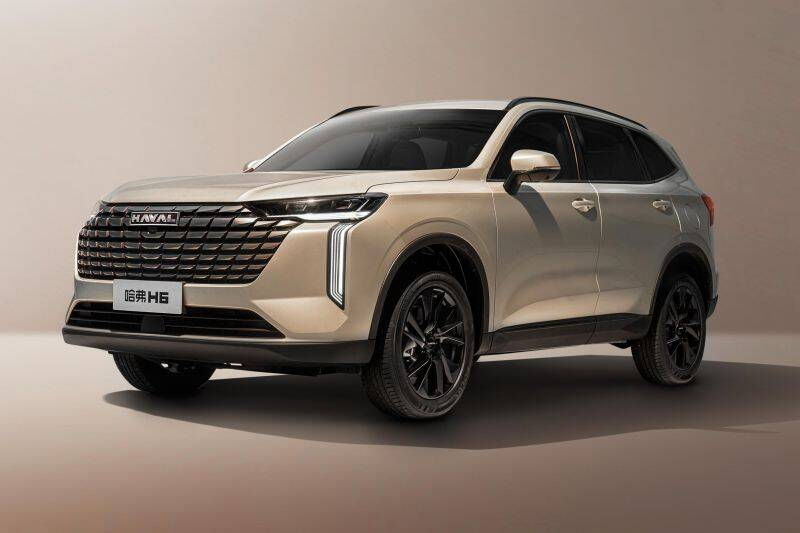
The plug-in hybrid SUV segment in South Africa just got a lot more interesting. The Haval H6 PHEV has officially landed in Mzansi, bringing with it a claimed total range of over 1 000 km, up to 268 kW of system power, and a price tag that makes it one of the more accessible PHEVs on the local market. Here’s a full breakdown of what this Chinese-built plug-in hybrid offers — and whether it’s worth your attention.
Background: GWM’s Growing Electrified Ambitions in SA
GWM — the Chinese automotive group behind the Haval brand — has been quietly but steadily building an electrified vehicle portfolio in South Africa. The H6 GT PHEV arrived in mid-2025 as the brand’s first plug-in hybrid locally, and now the standard-body H6 PHEV has joined it, available in both front-wheel-drive and all-wheel-drive configurations.
This launch is significant because it gives South African buyers a more conventional SUV body style alternative to the coupé-roofed GT, while still delivering the efficiency and performance benefits of plug-in hybrid technology.
For drivers curious about what else is available in the plug-in and full-electric space locally, EV24.africa offers import options for electric cars, expanding the choices for South African buyers beyond what’s currently stocked at traditional dealerships — well worth exploring if sustainable mobility is a priority for you.
Two Variants, Two Very Different Performance Profiles
H6 1.5T PHEV Ultra Luxury 2WD — R699 900
The front-wheel-drive variant combines a turbocharged 1.5-litre four-cylinder petrol engine with a single electric motor and a 19.09 kWh battery pack. Combined system outputs reach 240 kW and 540 Nm, with GWM claiming a 0–100 kph sprint time of 7.8 seconds.
To put that in context, the 2WD PHEV sits only marginally above the conventionally powered H6 1.5T HEV Ultra Luxury (a traditional hybrid, not a plug-in) which retails for R686 500. The R13 400 premium for the PHEV buys you a larger battery, plug-in charging capability, and meaningfully more power.
H6 1.5T PHEV Ultra Luxury 4WD — R749 900
The all-wheel-drive version wears Haval’s “Hi-4” badge and adds a second electric motor — one on each axle — pushing total system outputs to a substantial 268 kW and 760 Nm. The 0–100 kph time drops to just 4.8 seconds, which is genuinely quick for a family SUV of this size.
At R749 900, it sits R50 000 below the more powerful H6 GT 1.5T PHEV Ultra Luxury 4WD (priced at R799 900), making it a compelling alternative for buyers who prefer the conventional roofline.
| Derivative | Price |
| Haval H6 1.5T PHEV Ultra Luxury 2WD | R699 900 |
| Haval H6 1.5T PHEV Ultra Luxury 4WD | R749 900 |
Both variants are covered by a 7-year/200 000 km vehicle warranty, an 8-year/150 000 km battery pack warranty, and a 7-year/75 000 km service plan — one of the most comprehensive aftersales packages currently offered on any vehicle in South Africa.
How Does It Achieve Over 1 000 km of Range?
This is one of the H6 PHEV’s headline claims, and it’s worth understanding how it works. The 1 000 km figure is a combined range that draws on both the 19.09 kWh battery pack and the petrol fuel tank.
In practice, the system operates intelligently: it prioritises pure electric driving for short daily trips and urban commuting, then seamlessly switches to the turbocharged petrol engine for longer distances — where the engine also acts as a generator to maintain battery charge. The result is a vehicle that can handle a week of typical urban commuting on electric power alone, but won’t leave you stranded on a Johannesburg-to-Cape Town road trip.
Car care tip: To get the best out of a PHEV like the H6, plug it in every night using a standard home socket or a dedicated wall-box charger. Keeping the battery topped up means you’ll do far more of your daily driving on cheaper, cleaner electricity rather than petrol — maximising both fuel savings and the vehicle’s environmental benefit.
What Equipment Do You Get as Standard?
Both “Ultra Luxury” variants arrive generously equipped. You won’t find a stripped-down base spec here — GWM has clearly positioned these as premium offerings. Standard features across both derivatives include:
- 19-inch alloy wheels
- Powered tailgate
- Panoramic sunroof
- Faux-leather upholstery
- Electrically adjustable front seats
- Wireless smartphone charging
- 14.6-inch touchscreen infotainment system
- 540-degree surround-view camera
- Head-up display
- Six airbags
- A comprehensive suite of advanced driver assistance systems (ADAS)
One practical point to note: like the HEV variants in the H6 range, both PHEV derivatives do not include a spare wheel. Instead, they come fitted with run-flat tyres, which can be driven for a limited distance at reduced speed after a puncture.
Car care tip: Run-flat tyres require careful monitoring via the tyre pressure monitoring system (TPMS). Check your tyre pressures at least monthly — run-flats can lose pressure gradually without obvious visual signs of deflation, and driving on an under-inflated run-flat can damage the tyre beyond repair quickly.
How Does the H6 PHEV Compare to Its Rivals?
The South African PHEV SUV market is still relatively young, but it’s growing quickly. The H6 PHEV’s pricing positions it competitively, particularly given the depth of standard equipment and the comprehensiveness of the warranty package.
For up-to-date comparisons between the H6 PHEV and competing models like the Chery Tiggo 8 Pro PHEV, BYD Song Plus, or the MG HS PHEV, imotonews.co.za offers detailed local car reviews and comparisons tailored specifically for South African buyers — a valuable resource when making a decision of this size.
If you’re considering a pre-owned alternative while the PHEV market matures locally, auto24.co.za lists a broad selection of second-hand SUVs — including Haval H6 models, Chery Tiggo variants, and other popular Chinese-brand crossovers — at prices that may suit buyers not yet ready to commit to new-car pricing.
Is the Haval H6 PHEV Worth It?
For the right buyer, absolutely. If you have access to home charging — even a standard 220V domestic plug — the H6 PHEV makes a compelling case: substantial electric-only range for daily use, strong performance figures (especially from the 4WD Hi-4 version), an impressively equipped cabin, and a warranty package that puts most European rivals to shame.
The caveat, as with any PHEV, is that buyers who cannot charge at home or work regularly will largely be driving a heavier petrol-electric vehicle without fully exploiting its electric capabilities — and fuel consumption will reflect that.
Frequently Asked Questions
Q: What is the key difference between the 2WD and 4WD variants? A: The 4WD version adds a second electric motor on the rear axle under Haval’s “Hi-4” system, lifting total outputs from 240 kW/540 Nm to 268 kW/760 Nm and cutting the 0–100 kph time from 7.8 to 4.8 seconds.
Q: How does the H6 PHEV achieve over 1 000 km of claimed range? A: The figure combines the range available from the 19.09 kWh battery pack and the petrol fuel tank. The system intelligently switches between electric and petrol power depending on driving conditions, with the engine also acting as a generator to help sustain battery charge on longer trips.
Q: What warranty does the H6 PHEV come with? A: It includes a 7-year/200 000 km vehicle warranty, an 8-year/150 000 km battery pack warranty, and a 7-year/75 000 km service plan.
Q: Does the H6 PHEV have a spare wheel? A: No — like the HEV variants in the H6 range, the PHEV derivatives come with run-flat tyres instead of a spare wheel.