
Owning a luxury car is about more than just the upfront price – it’s the long-term costs like servicing, fuel, and repairs that can add up. Here’s a quick breakdown of five luxury brands with the lowest running costs, focusing on their maintenance, fuel efficiency, and warranty support:
- Lexus: Known for reliability and affordability, Lexus boasts the lowest 5-year maintenance costs at just $2,377. Hybrid models deliver great fuel efficiency, and Toyota‘s parts network keeps servicing costs low.
- Porsche: While servicing costs are high, Porsche offsets this with strong resale value. Extended warranties and maintenance plans are key to managing expenses.
- BMW: Offers dynamic performance but comes with high servicing costs due to specialized parts and limited independent workshop options.
- Audi: Maintenance costs are lower than many competitors, but fuel efficiency varies widely by model. Extended maintenance plans are essential for cost predictability.
- Mercedes-Benz: Delivers prestige and performance but has higher running costs, with limited independent servicing options driving up expenses.
Quick Comparison
| Brand | 5-Year Maintenance Cost | Fuel Efficiency (L/100km) | Notes on Servicing Costs |
|---|---|---|---|
| Lexus | $2,377 | 6.0 – 9.6 (Hybrid/Non-Hybrid) | Low due to Toyota’s parts network |
| Porsche | High | Varies | High, but resale value offsets depreciation |
| BMW | High | Varies | Specialized parts drive up costs |
| Audi | $3,347 | Varies | Lower than most European brands |
| Mercedes-Benz | High | Varies | High due to limited independent workshops |
If affordability and reliability matter most, Lexus is the clear winner. For those prioritizing performance and prestige, European brands like Porsche or Mercedes-Benz may still be worth the extra expense.
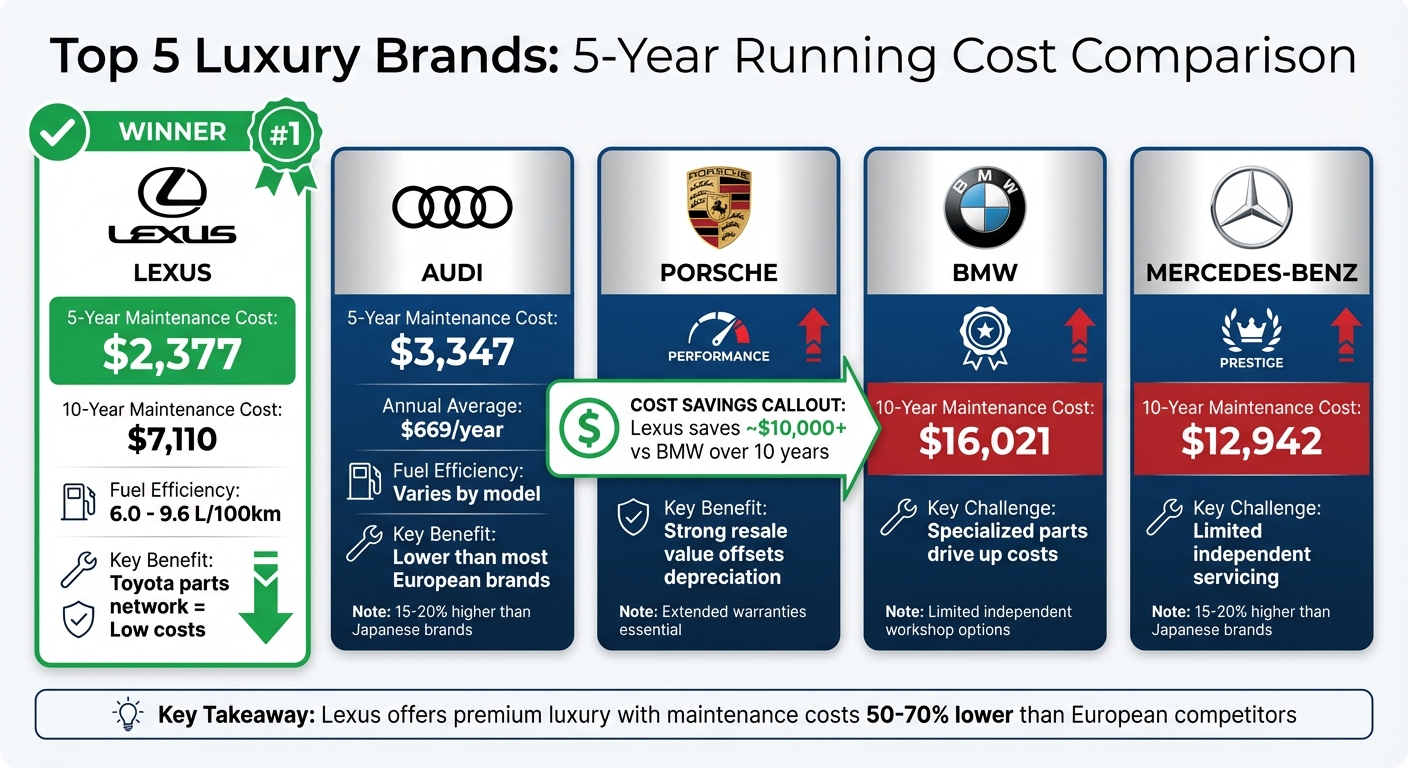
5-Year Running Costs Comparison: Top Luxury Car Brands
The Hidden Costs of Luxury Cars
sbb-itb-09752ea
1. Lexus
Lexus stands out in the luxury vehicle market with a 10-year maintenance cost of just $7,110. To put that in perspective, this is nearly half of BMW’s $16,021 and significantly less than Mercedes-Benz’s $12,942 over the same period. As Toyota’s luxury arm, Lexus benefits from Toyota’s legendary reliability and the availability of parts, which is especially advantageous in South Africa.
Fuel Efficiency (L/100km)
Lexus hybrid models offer impressive fuel savings. Take the UX 300h, for example – it achieves 6.0 L/100km, while the non-hybrid IS 300 uses 9.6 L/100km. For comparison, the Audi Q3 averages 9.9 L/100km. Lexus hybrids also shine in city driving, where they can run solely on electric power, further reducing fuel consumption.
"Lexus consistently ranks at or near the top in reliability surveys. This translates to fewer headaches and potentially lower long-term ownership costs." – Ben Steffler, Author
Servicing Costs
Thanks to its exceptional reliability, Lexus keeps unexpected repair bills low. For example, maintaining a Lexus IS costs just $5,782, while the electric Lexus RZ comes in even lower at $4,566. These costs are supported by Toyota’s extensive parts network, which ensures affordability and accessibility.
Warranty or Maintenance Plans
Lexus’s commitment to durability means fewer major repairs over time. Sharing Toyota’s parts network in South Africa enables Lexus to provide quick service and competitive pricing, whether you’re at a dealership or an independent service center.
Next, let’s take a closer look at Porsche’s running costs.
2. Porsche

Porsche stands out for its strong resale value, offering a more budget-conscious luxury option in South Africa by helping to offset depreciation costs.
Servicing Costs
Maintaining European luxury cars typically comes with a hefty price tag, thanks to their specialized parts and intricate engineering. Porsche is no exception. If you’re considering a pre-owned Porsche, prioritize models with a complete service history or those covered under Certified Pre-Owned (CPO) programs, which often include extended warranties.
Insurance Premiums (ZAR/year)
Insurance for a Porsche varies based on factors like your age, location, and driving record. To put it into perspective, insuring a compact hatchback worth about R250,000 costs roughly R12,000 annually. Given Porsche’s higher value, premiums are naturally steeper. However, pre-owned Porsche models can benefit from reduced insurance rates tied to their lower market value. This makes manufacturer maintenance plans even more essential.
Warranty or Maintenance Plans
Porsche’s factory maintenance plans are crucial for managing the high costs of performance parts and specialized servicing. Without a plan, routine maintenance and wear-and-tear items like brake pads and tires can quickly add up, often exceeding R6,000 annually – and Porsche’s figures tend to be even higher. Investing in these plans helps keep costs more predictable and manageable.
3. BMW
BMW is known for blending dynamic performance with everyday usability, but it does come with its own set of challenges, especially when it comes to maintenance and fuel efficiency. Like other European luxury brands in South Africa, the reliance on specialized parts and the limited availability of independent workshops contribute to higher long-term costs.
Fuel Efficiency (L/100km)
Fuel consumption is a key factor in BMW’s overall ownership costs. The lineup includes models that prioritize efficiency as well as those built for high performance, meaning fuel costs can vary significantly. Regardless of the model, fuel expenses remain a consistent and notable part of owning a BMW.
Servicing Costs (ZAR/year)
Maintenance is another area where BMW owners face higher expenses. The use of specialized parts, dealership service rates, and the durability of components all play a role in driving up servicing costs in South Africa. For anyone considering a BMW, it’s wise to research the reliability of specific models and factor in these servicing costs when evaluating the total cost of ownership.
4. Audi
Audi holds the 7th spot among luxury brands worldwide when it comes to the lowest maintenance and repair costs over five years. The estimated total is $3,347 – or about $669 annually – which makes it less expensive to maintain than many American luxury vehicles.
Fuel Efficiency (L/100km)
Fuel efficiency for Audi models varies significantly depending on the engine and model type. While specific figures for South Africa aren’t available, it’s clear that fuel consumption plays a major role in overall ownership costs. This highlights the importance of factoring in long-term fuel expenses alongside service fees.
Servicing Costs (ZAR/year)
In South Africa, Audi’s servicing costs align with the typical pricing for European luxury brands, which are generally 15–20% higher than those of comparable Japanese models. For instance, a minor service for a Toyota Corolla might cost between R1,500 and R2,000, whereas Audi owners can expect to pay between R1,875 and R2,500 for similar services. This price difference reflects the use of specialized parts, intricate engineering, and limited options for independent workshop repairs. Once the warranty period ends, exploring quotes from independent workshops can help reduce repair expenses.
Warranty and Maintenance Plans
With Audi’s higher servicing costs, extended maintenance plans become an essential consideration. They offer predictable expenses and added reassurance as your vehicle gets older. Extending your maintenance plan beyond the standard warranty can save you from unexpected repair bills down the road.
5. Mercedes-Benz
Mercedes-Benz stands out for its prestige and performance, but owning one comes with higher running costs compared to brands like Lexus and Audi.
Servicing Costs ($/year)
European luxury brands, including Mercedes-Benz, typically have servicing costs in South Africa that are 15% to 20% higher than similar Japanese models. This price difference is largely due to the intricate engineering of these vehicles and the reliance on specialized parts. For instance, while minor services for Japanese models are relatively affordable, routine maintenance for a Mercedes-Benz can be significantly pricier. Another factor driving up costs is the limited availability of independent workshops equipped to handle European brands. Once the warranty period ends, comparing quotes from trusted independent workshops with dealer prices can help keep expenses under control.
Proper maintenance is essential for Mercedes-Benz vehicles. Skipping or delaying service can lead to even higher costs, making proactive maintenance planning a smart move.
Warranty and Maintenance Plans
Given the higher maintenance costs, sticking to the manufacturer’s recommended service schedule and opting for extended maintenance plans can help avoid unexpected repair bills. Ignoring the service schedule can result in expensive repairs down the line.
5-Year Running Cost Comparison
When comparing five-year running costs, including fuel, insurance, and servicing, the differences among luxury brands in South Africa become quite apparent. Lexus leads the pack with the lowest overall costs, boasting a five-year maintenance expense of just $2,377. This figure highlights Lexus’s reputation for reliability and affordable upkeep, a benefit largely supported by Toyota’s extensive parts network.
On the other hand, European brands like BMW, Mercedes-Benz, and Porsche come with higher service fees. This is largely due to their more complex engineering and the need for specialized parts. Additionally, these brands often lack strong support from independent workshops, which further pushes up maintenance costs compared to their Japanese counterparts.
Insurance and fuel costs can vary depending on the model and driving habits, but the most striking cost differences lie in servicing and maintenance. Choosing Lexus over European brands could save you thousands of dollars across five years. That said, brands like Porsche and Mercedes-Benz still deliver outstanding performance and prestige, though their higher running costs demand careful financial planning.
Ultimately, Lexus offers a clear financial edge, while European brands require a closer look at your budget if you’re prioritizing performance and luxury over affordability.
Conclusion
Lexus stands out for its premium quality paired with impressively low running costs. With a five-year maintenance expense of just $2,377 and a solid 9/10 reliability rating, it offers a level of value that European brands struggle to rival. This combination of affordability and dependability secures Lexus’s top position in this category.
On the other hand, brands like Porsche, BMW, Audi, and Mercedes-Benz excel in performance and prestige but come with steeper maintenance costs. Ultimately, the choice depends on your priorities: if keeping costs manageable and ensuring reliability matter most, Lexus is the go-to option.
To make the best decision, compare quotes from official dealers and trusted independent workshops for post-warranty maintenance. Sticking to the manufacturer’s service schedule can help you avoid costly repairs, and purchasing extended service plans upfront may lead to further savings.
For more advice on luxury car ownership costs, check out ImotoNews South Africa.
FAQs
What costs are considered ‘running costs’ for a luxury car?
Running a luxury car involves more than just the upfront purchase price. The ongoing expenses – often referred to as "running costs" – can add up quickly. These include:
- Fuel: High-performance engines often require premium gasoline, which can significantly increase your fuel expenses.
- Insurance: Luxury cars typically come with higher insurance premiums due to their value and repair costs.
- Servicing and Repairs: Routine maintenance and unexpected repairs can be pricier, as luxury brands often require specialized parts and expertise.
- Parts Replacement: Components like tires, brakes, or batteries may need replacing more frequently and at a higher cost compared to standard vehicles.
These recurring costs are essential to factor in when calculating the total cost of owning a luxury car.
How can I estimate my 5-year ownership cost for a specific model in South Africa?
To get a clear picture of your 5-year ownership costs, you’ll need to think about several factors: maintenance, fuel, insurance, and possible repairs. Start by looking into service costs and how easily parts can be sourced. The reputation of the brand for reliability also plays a big role.
Next, calculate fuel expenses based on your vehicle’s efficiency and your driving patterns. Don’t forget to include insurance premiums, as they can vary widely depending on the car and coverage. Once you’ve gathered all this information, add it up for a detailed estimate that reflects the specific conditions of the South African market.
Are extended maintenance plans worth it after the factory warranty ends?
Extended maintenance plans can be a smart choice once your factory warranty runs out, providing consistent costs and added peace of mind. Brands like Toyota, Suzuki, and Honda – known for their reliability and cost efficiency – often make these plans appealing by helping to minimize unforeseen repair expenses.
These plans usually include scheduled maintenance and some repair coverage, shielding you from inflation and unexpected bills. Plus, they help keep your vehicle running smoothly and in top shape for the long haul.
Related Blog Posts
- Top 5 Cars for South African Roads
- Toyota vs. Volkswagen: Maintenance Cost Comparison
- Best Cars Under R300K in South Africa (2025 Update)
- Top 5 Cars to Buy in South Africa for Less Than R 150 000