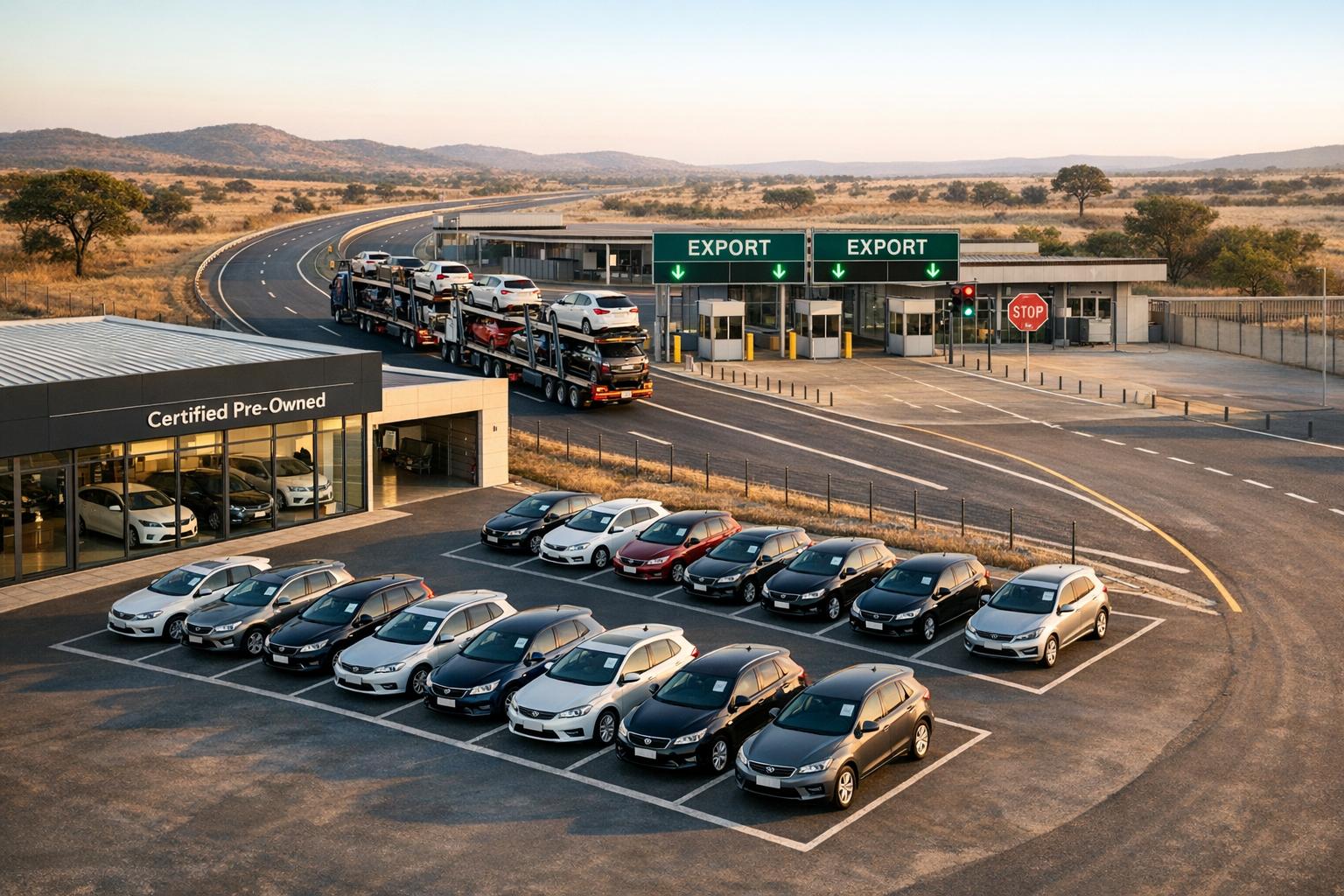
SADC trade agreements have reshaped South Africa’s used car market by prioritizing local manufacturing and restricting imports. These policies protect domestic industries but limit cross-border trade and affordable options for buyers. Here’s a quick breakdown:
- South Africa’s Approach: Strict import rules allow used cars only under specific conditions (e.g., for immigrants or vintage models). This supports local manufacturing but keeps prices high.
- Impact on Availability: Other SADC countries rely heavily on imported used cars, often from Japan, while South Africa focuses on exporting new vehicles.
- Pricing Trends: Tariff reductions under SADC agreements have lowered costs in some areas, but importers still face markups and varying tariffs.
- Market Growth: By 2025, South Africa held 28.4% of Africa’s used car market, driven by digital platforms and structured trade systems.
For buyers, this means navigating a market that balances affordability with quality and regulatory hurdles. Platforms like AUTO24.co.za help ensure reliable options with verified histories.
SADC Used Car Market: Before vs After Trade Agreements
1. Used Car Market Before SADC Trade Agreements
Pricing
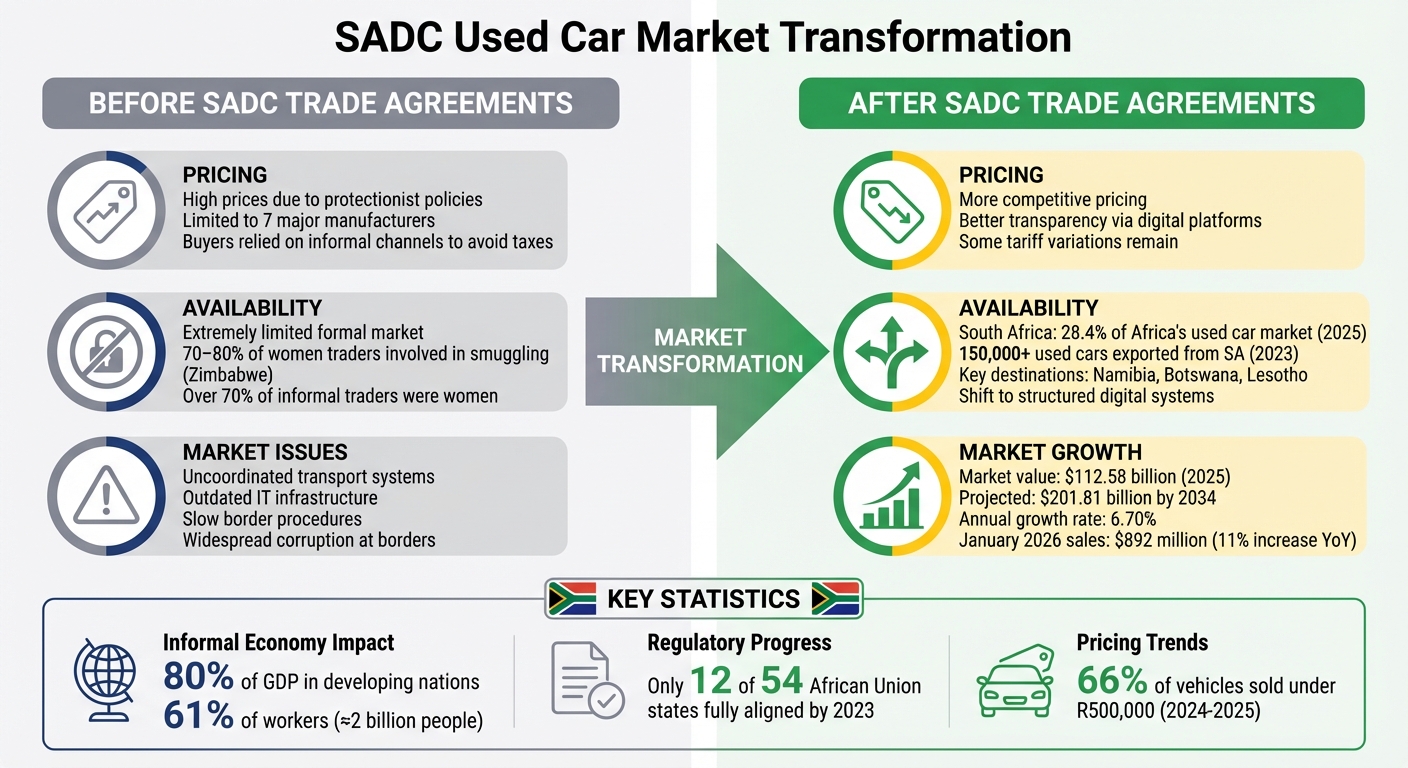
The used car market in the region was heavily influenced by seven major manufacturers: BMW, Ford, Isuzu, Mercedes-Benz, Nissan, Toyota, and Volkswagen. These companies operated under policies like the Automotive Production and Development Programme, which prioritized domestic production and limited formal vehicle imports. This protectionist approach kept used car prices relatively high, making them inaccessible for many. As a result, buyers often turned to informal channels to avoid taxes and regulations. This reliance on informal trade became a defining feature of the market.
Availability
High prices weren’t the only challenge. The formal market for imported used vehicles was extremely limited before the implementation of effective SADC agreements. Regional trade frameworks often ignored the needs of small-scale traders, leaving a gap that informal cross-border trade filled. In Zimbabwe, for instance, an estimated 70–80% of women involved in informal trade smuggled various goods, including vehicles. This lack of formal options made informal networks essential for many buyers.
Market Impacts
The pre-agreement market faced more than just pricing and availability issues. Structural problems like uncoordinated transport systems and outdated IT infrastructure created significant logistical hurdles. Border procedures were slow and inefficient, compounded by inadequate port facilities. Corruption was another major challenge; poorly paid border officials frequently accepted bribes to expedite trade. Women, who made up over 70% of informal traders, were particularly vulnerable, facing risks like harassment, confiscation, and long delays at borders. These systemic issues underscored the need for change, setting the stage for the reforms introduced by SADC trade agreements.
sbb-itb-09752ea
2. Used Car Market After SADC Trade Agreements
Pricing
Government incentives aimed at easing customs have helped lower cross-border costs, making used cars more affordable across borders. With the rise of digital platforms, cross-border sales have become simpler, leading to better pricing transparency and efficiency. However, some regions still impose varying tariffs based on engine size or model year, which can drive up costs for certain types of vehicles. Overall, prices are more competitive than they were before these agreements, encouraging a stronger supply of used cars in the market.
Availability
The SADC agreements have significantly expanded the formal used car market. By 2025, South Africa accounted for 28.4% of Africa’s used car market share. In 2023 alone, over 150,000 used cars were exported from South Africa, with key destinations including Namibia, Botswana, and Lesotho. The market has shifted from informal sales to more structured digital systems that offer better vehicle verification and post-sale services. However, challenges persist – only 12 out of 54 African Union member states had fully aligned their automotive regulations with regional trade policies by 2023, creating some regulatory inconsistencies.
Market Impacts
The used car market has experienced significant growth and transformation since the agreements went into effect. By 2025, the African used car market was worth $112.58 billion and is projected to grow to $201.81 billion by 2034, with an annual growth rate of 6.70%. Fintech solutions have played a key role, offering tailored loan packages and mobile-based credit scoring systems to make car ownership more accessible. In May 2024, Renault South Africa introduced a refurbishment program aimed at budget-conscious buyers, providing used cars with extended warranties and servicing options. These developments have encouraged buyers to adopt more strategic approaches when purchasing vehicles.
Buyer Strategies
With the improvements brought about by SADC trade reforms, buyers are now adopting smarter strategies to maximize value. For example, many focus on purchasing during January and February, when trade-ins are more abundant, or shop midweek to avoid crowds and improve negotiation opportunities. Getting pre-approved for auto loans before visiting dealerships has also become a popular tactic, giving buyers more leverage in price discussions. Additionally, consumers are increasingly turning to established vendors like AutoTrader South Africa and We Buy Cars to ensure they get vehicles with verified histories and reliable quality.
The Loophole That Could Destroy South Africa’s Car Market
Pros and Cons
SADC policies have shaped the regional market significantly, bringing both benefits and challenges. Here’s a closer look at how these agreements impact affordability, selection, quality, and competition.
| Feature | Benefits (Pros) | Drawbacks (Cons) |
|---|---|---|
| Affordability | Makes second-hand vehicles and parts more accessible for low-income populations. | Leads to a substantial loss in government tax revenue due to widespread tax evasion. |
| Selection | Expands market variety by enabling the flow of diverse goods and car parts. | Encourages the dumping of discarded parts, contributing to increased solid waste. |
| Quality | Provides functional options for those priced out of the new car market. | Weak regulation means goods might be of poor quality or harmful to the environment. |
| Competition | Supports the livelihoods of many small-scale traders and porters. | Undermines the growth and sustainability of local formal industries. |
The informal cross-border trade that thrives under these policies presents unique challenges, particularly in enforcement and consumer protection. Globally, informal economies contribute about 80% of GDP in developing nations and employ around 61% of workers – roughly 2 billion people.
This dynamic highlights a trade-off between formal and informal systems. Formal trade ensures oversight but often struggles with delays and infrastructure issues. On the other hand, informal trade provides quicker access to affordable goods, including used cars, but lacks the rigorous quality and safety checks that consumers need. While buyers benefit from lower prices in the short term, the absence of strong regulations raises concerns about long-term safety and quality. These factors play a critical role in shaping purchasing decisions in the SADC region today.
Conclusion
SADC trade agreements have reshaped South Africa’s used car market, shifting it from bargain-driven transactions to a focus on long-term value. In January 2026 alone, used vehicle sales reached approximately $892 million, marking an 11% increase compared to the previous year. This growth reflects a broader range of available models and price adjustments tied to new 2026 export regulations aimed at curbing "grey market" dumping.
Pricing trends have also taken a turn. While 66% of vehicles sold in 2024 and 2025 were priced under R500,000, the once-common R150,000 rebates are becoming less frequent. Instead, buyers are gravitating toward models that offer reliable after-sales support. As motoring journalist Sean Nurse explains:
"While the days of R150,000 rebates may be fading, the industry expects a more stable environment where Chinese brands compete on technology and after-sales service, rather than just offering ‘impossible’ price tags".
This shift benefits buyers prioritizing reliability and service over short-term discounts.
For those navigating today’s market, the emphasis should be on brands that provide solid local after-sales support and certified warranties. New regulations now require manufacturer guarantees and destination seals within 180 days of registration, making verified platforms more critical than ever. AUTO24.co.za stands out in this space, offering a transparent and reliable platform for buying, trading, and selling used cars, complete with thorough local verification processes.
These changes, driven by SADC initiatives, have transformed the market from informal cross-border trading to a more structured, service-focused model. While this evolution presents challenges, it also opens doors for buyers who prioritize transparency, warranty coverage, and trusted dealer networks, ensuring better value and peace of mind.
FAQs
Why does South Africa restrict used car imports so much?
South Africa has put stringent restrictions on used car imports. The goal? To shield its domestic automotive industry while upholding safety and environmental standards. These controls are designed to stop a flood of cheaper, lower-quality vehicles, which could undercut local manufacturers and destabilize the market.
By limiting imports, the country ensures better vehicle quality, curbs illegal smuggling, and keeps the market steady. This not only protects consumers but also aligns with environmental objectives and fosters the growth of the local automotive sector.
Do SADC trade rules make used cars cheaper across borders?
SADC trade rules are designed to encourage regional economic integration, which can play a role in lowering prices and boosting the availability of used cars across Southern Africa. By simplifying cross-border trade processes, these rules aim to make buying and selling second-hand vehicles within the region easier and more affordable.
What paperwork do I need to buy a used car from another SADC country?
If you’re planning to purchase a used car from another SADC country, you’ll need to navigate a few administrative steps. However, specific details about the required paperwork aren’t outlined here. To ensure you’re on the right track, it’s best to consult the local regulations or get in touch with the relevant authorities in your region. They’ll provide the most accurate and up-to-date guidance for completing the process smoothly.
Related Blog Posts
- Factors That Influence Used Car Prices in South Africa
- Age-Based Import Taxes for Used Cars in South Africa
- South Africa’s Vehicle Import Tariffs Explained
- Debate grows around banning used car imports in South Africa