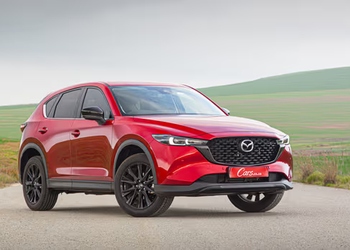
South Africa’s ride-hailing market has grown into a serious business — and for drivers operating on platforms like Uber, choosing the right vehicle is not just a lifestyle decision. It is a commercial one. Get it right and you have a car that earns reliably, costs little to run, and survives the unique demands of South African roads. Get it wrong and you are facing unexpected repair bills, downtime, and frustrated passengers.
The good news? There are some excellent options purpose-suited to fleet life in Mzansi. Here is what to look for — and which vehicles make the cut.
What South African Uber Drivers Need (That Other Markets Don’t)
Before diving into the vehicles themselves, it is worth understanding why South Africa’s ride-hailing requirements differ from those in other parts of the world.
Theft risk is the biggest differentiator. South African Uber drivers overwhelmingly prefer compact sedans with a lockable, separate boot — it keeps passenger luggage secure and makes the vehicle a less attractive target than an open hatchback. Crucially, imported vehicles tend to carry a lower theft risk than locally assembled models simply because they are less prevalent and parts are less easily resold. This is why so many Uber drivers gravitate toward imported budget sedans.
Altitude and engine performance is another South Africa-specific issue, particularly for Gauteng operators. Johannesburg sits at approximately 1 750 metres above sea level. Naturally aspirated (non-turbocharged) engines lose meaningful power at altitude — typically around 10–15% compared to sea level. Add a full passenger load and luggage, and an underpowered engine can turn a Gauteng highway run into a stressful experience.
Road conditions also play a role. South African roads — from Soweto side streets to Cape Town’s potholes — are hard on tyres and wheels. Steel wheels handle pothole impacts significantly better than alloys, making them a practical advantage for high-mileage fleet vehicles.
With these factors in mind, here are the five best vehicles for ride-hailing fleet operations in South Africa.
1. Toyota Corolla Quest — The Gold Standard for Uber Sedans
If South African Uber drivers could choose any fleet vehicle without budget constraints, most would pick a Toyota Corolla Quest. It is, in many ways, the definitive ride-hailing sedan for the local market — and with good reason.
The Quest is based on Toyota’s proven 11th-generation Corolla platform, which means a spacious cabin, excellent ergonomics, and a boot that stretches to an impressive 450 litres. For airport runs and long-distance transfers with luggage-heavy passengers, that is a major advantage. Better still, the Quest features a 60/40-split folding rear seat — a rarity in the sedan class — allowing unusually long items to be accommodated when needed.
The 1.8-litre petrol engine produces 103 kW, which is adequate rather than exciting. Like all naturally aspirated engines, it loses some punch at Gauteng altitudes, particularly when fully loaded. But in the broader context of Uber sedans — where turbocharged options are rare — this is an accepted trade-off for the Quest’s exceptional reliability and durability.
Theft risk is real for any locally built Toyota, and the Quest is no exception. For fleet buyers, the base trim with 15-inch steel wheels is the recommended specification. Avoid the Prestige and Exclusive trims, which feature larger alloy wheels that are far more vulnerable to South Africa’s road surface realities.
Although the Corolla Quest was retired in 2025, a well-maintained used example remains one of the best fleet investments available. You can browse quality used Corolla Quests and comparable sedans at auto24.co.za, where models like the Corolla, Kia Pegas, and Suzuki Dzire regularly appear at competitive prices.
Practical tip: When buying a used Corolla Quest for fleet use, prioritise service history over mileage. A Quest with 180 000 km and a complete Toyota dealer service record will outlast a lower-mileage vehicle with no documented maintenance history. These engines are built to last well beyond 300 000 km with proper care.
2. Honda BR-V — Best Engine Integrity for 3-Row Operations
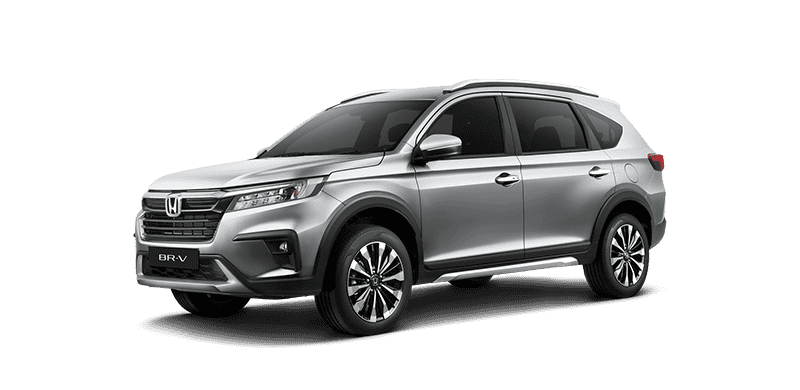
For Uber drivers who need to carry seven passengers, the Honda BR-V is the most mechanically sound option in the class — even if it is not the cheapest.
The BR-V’s 1.5-litre, 4-cylinder petrol engine produces 89 kW, which is strong enough to handle highway cruising with a full passenger load under most conditions. The engine is not turbocharged, so altitude will cost some performance on steep Gauteng inclines when fully laden. But Honda’s 1.5-litre units are legendary for durability — they handle the relentless high-mileage cycles of fleet life better than most competitors.
The critical mechanical advantage is the chain-driven timing system, which eliminates the need for timing belt replacements. On a belt-driven engine, skipping a belt service can result in catastrophic (and expensive) engine damage. With a chain-driven system, this is one less maintenance item to track and one less potential failure point over a fleet vehicle’s working life.
Safety specification is strong for the class: ABS, ESP (electronic stability programme), and decent ground clearance of 207 mm make the BR-V a composed, safe people mover on varied South African surfaces — including the occasional dirt road detour to reach a rural destination.
The BR-V was discontinued locally in 2025, but used examples remain excellent fleet purchases. For the latest information on Honda and other Japanese fleet vehicles in South Africa, imotonews.co.za provides regular updates and buyer guides.
Practical tip: Chain-driven engines still need regular oil changes to stay healthy — in fact, they are more dependent on clean oil than belt-driven units because the chain is lubricated by the engine oil. For a high-mileage fleet BR-V, stick to 10 000 km oil change intervals using the manufacturer-specified viscosity grade.
3. Kia Pegas — Unbeatable Boot for Airport Runs
The Kia Pegas is not going to win any design awards. But if your primary fleet requirement is luggage capacity and low long-term running costs, it makes an exceptionally strong argument.
The Pegas offers a 475-litre boot — a figure that rivals many mid-size SUVs and is simply extraordinary in a compact sedan at this price point. For airport transfers and hotel pickups where passengers routinely travel with large suitcases, no comparable vehicle in this price bracket comes close.
The 1.4-litre petrol engine at 69 kW is modest and will feel slow on longer Gauteng inclines with a full load, but it is easy and affordable to maintain — a key consideration for fleet operators watching cost per kilometre.
One important note on specification: despite spending more on higher Pegas grades not unlocking better safety features — there is no ESP on any variant — the base LX trim is actually the recommended choice for fleet buyers. Here is why: the LX rides on steel wheels, which are significantly more durable against South Africa’s pothole-laden roads than the alloy wheels on higher grades. And despite being the entry-level trim, it still includes a 7-inch touchscreen with Apple CarPlay and Android Auto — essential for efficient navigation during a busy shift.
Practical tip: The Pegas boot lid uses a conventional key lock rather than a touch sensor. For fleet use, this is a durability advantage — one less electronic component to develop faults over high-mileage cycles. Keep the lock mechanism lubricated with a light spray lubricant every six months to prevent corrosion in humid coastal cities like Durban.
4. Suzuki Dzire — The Compact Champion
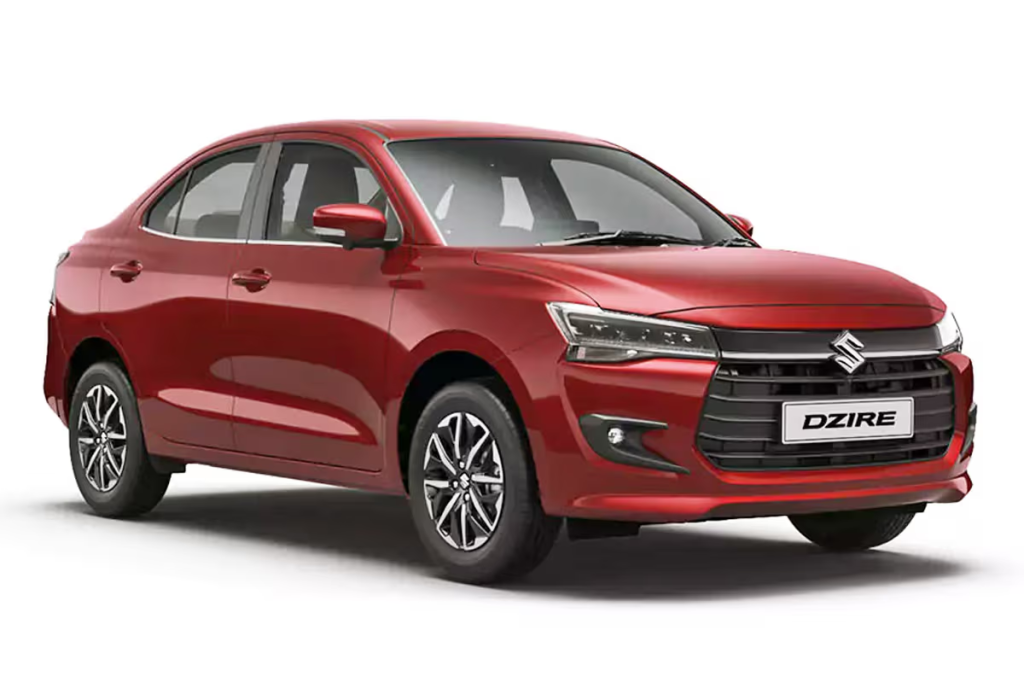
Think of the Suzuki Dzire as a Swift hatchback with a proper boot bolted on — and all the practical benefits that come with it. It is compact, highly manoeuvrable in tight urban traffic, and astonishingly affordable to maintain.
Suzuki’s 1.2-litre, 3-cylinder engine produces a modest 60 kW, which is the honest trade-off for running costs that are among the lowest of any new vehicle in South Africa. Three-cylinder Suzuki engines are simple, proven, and frugal — the kind of powertrain that costs very little to service and rarely causes problems with diligent maintenance.
Boot space of 378 litres is generous for the platform and handles standard airport luggage comfortably. The cabin is tight compared to the Corolla Quest or Pegas, but for solo rides and couples, it is entirely adequate.
Safety specification includes both ABS and ESP — a meaningful combination that provides genuine protection on South Africa’s higher-risk urban roads and highways, particularly in wet conditions.
At high Gauteng altitudes with a full passenger load, the Dzire will not be the fastest vehicle on the N1. But for Cape Town and Durban operators, or Johannesburg drivers doing shorter urban trips, the combination of affordability, reliability, and running costs makes the Dzire one of the most efficient fleet vehicles available.
5. Renault Triber — Maximum Space per Rand
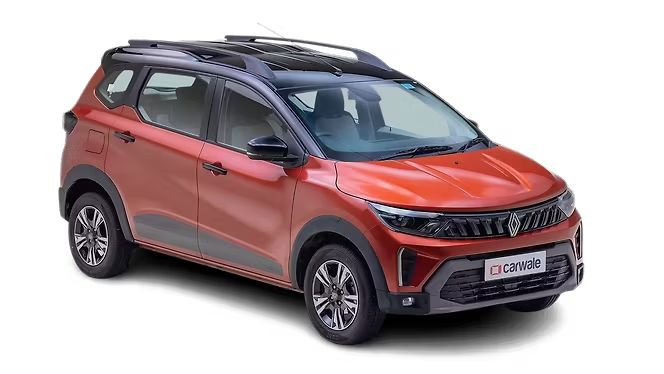
The Renault Triber occupies a unique position in this list: it is the vehicle that offers the most interior versatility and three-row seating at the lowest possible entry price. It is, in simple terms, the most Uber car for the least money.
Renault’s engineers have managed to package 405 litres of boot space alongside a functional third row of seating in a vehicle that is not much larger than a typical B-segment hatchback. The cabin architecture is a genuine achievement in space efficiency — passengers in all three rows are accommodated without the claustrophobia that afflicts some other compact seven-seaters.
The significant limitation is the 1.0-litre, 3-cylinder naturally aspirated engine producing just 53 kW. At sea level and with lighter loads, it manages adequately. At Gauteng altitude with six passengers and luggage, the Triber’s performance becomes genuinely challenging on inclines and highway on-ramps. Highveld Uber operators need to factor this in seriously.
One standout standard feature across the Triber range is tyre pressure monitoring (TPMS). For fleet operators, this is more valuable than it might seem. A slow puncture that goes unnoticed can become a blowout at highway speed — a safety incident and a guaranteed loss of earnings. With TPMS standard, Triber drivers receive a warning before minor tyre issues escalate into operational emergencies.
A Note on Electric Vehicles for Ride-Hailing
The conversation around fleet electrification is growing in South Africa, even if it has not yet reached mainstream adoption. For Uber drivers curious about the long-term economics — where fuel savings and lower maintenance costs can significantly improve profitability over a vehicle’s working life — EV24.africa offers import options for electric vehicles in South Africa, expanding access to EV choices for buyers who want to explore sustainable and cost-efficient mobility ahead of the curve.
Comparing the Five Fleet Options
| Vehicle | Boot Space | Seats | Engine | Key Advantage |
| Toyota Corolla Quest | 450 litres | 5 (+ fold) | 1.8L, 103 kW | Proven durability, huge boot |
| Honda BR-V | — | 7 | 1.5L, 89 kW | Chain-driven engine, 3-row |
| Kia Pegas | 475 litres | 5 | 1.4L, 69 kW | Largest boot, steel wheels |
| Suzuki Dzire | 378 litres | 5 | 1.2L, 60 kW | Lowest running costs |
| Renault Triber | 405 litres | 7 | 1.0L, 53 kW | Best value 3-row |
Final Advice for South African Fleet Buyers
Choosing a fleet vehicle is a business decision, and the metrics that matter are different from those of a private buyer. Running costs per kilometre, durability over 200 000+ km, tyre replacement frequency, and theft risk all matter more than aesthetics or brand prestige.
For most Gauteng-based operators who need a sedan, the Toyota Corolla Quest (used) or Kia Pegas LX (new) represent the most compelling cases. For operators needing three rows, the Honda BR-V is the most mechanically sound choice — and the Renault Triber the most affordable entry into seven-seat capability.
Whichever vehicle you choose, buy base spec, stick to steel wheels where possible, maintain it religiously, and treat every service interval as non-negotiable. In the ride-hailing business, downtime is lost income — and a well-maintained fleet vehicle is the most reliable investment you can make.