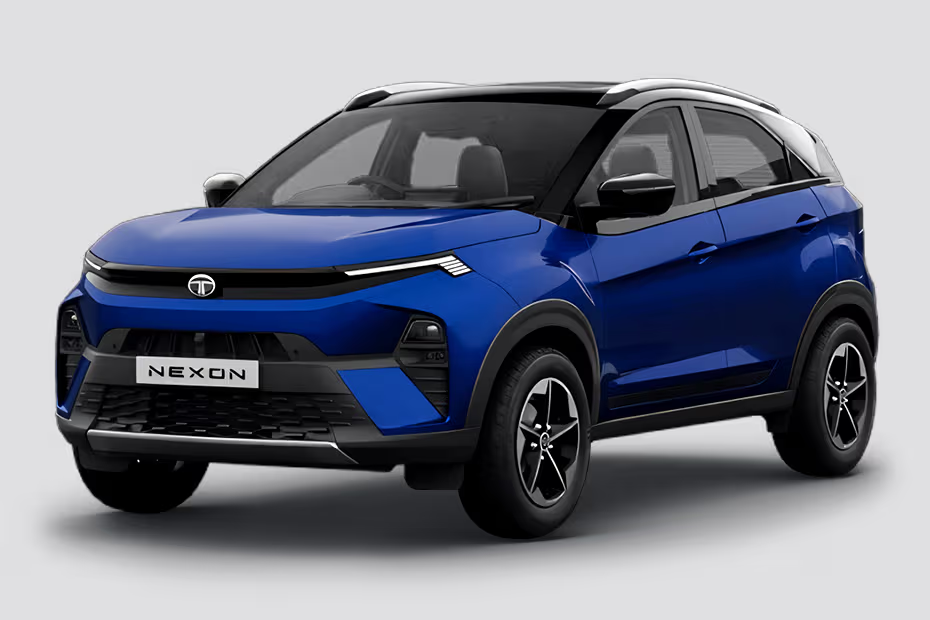
Tata’s India-market best-seller, the Nexon, arrives in South Africa during Q3 2026 under a new name: the Tata Osprey. Here’s what to expect.
Tata Confirms Its Nexon Is Landing in South Africa as the ‘Osprey’ in Q3 2026
Tata Motors Passenger Vehicles South Africa has confirmed that its India-market best-seller, the Nexon, will launch locally during the third quarter of 2026 — but South African buyers won’t see the Nexon badge anywhere on it. The compact SUV arrives instead as the Tata Osprey, named after the bird of prey found across parts of the country.
Why the Name Change, and Why It Matters
This isn’t a rebadge born of confusion — Tata says the Osprey name was chosen deliberately to build a stronger local identity for the model, leaning on the bird’s associations with agility and strength rather than simply importing the Nexon name unchanged. It’s a genuine localisation strategy rather than a cosmetic afterthought, and one that fits a broader pattern: Tata Motors’ passenger vehicle exports grew 45% year-on-year in June 2026 alone, with the Osprey positioned to build on that overseas momentum.
Underneath the new badge, this is mechanically the same vehicle sold in India, where it’s been in production since 2017 and has racked up more than one million cumulative global sales, repeatedly ranking as India’s top-selling passenger car.
Where the Osprey Fits in Tata’s South African Lineup
The Osprey will become Tata’s fifth passenger vehicle in South Africa, joining the existing Tiago, Punch, Curvv, and Harrier — expected to slot into the range between the smaller Punch and the larger Curvv. That positioning puts it in direct competition with other Indian-built compact crossovers already established locally, including the Nissan Magnite, Renault Kiger, and Kia Sonet.
Safety Credentials Worth Knowing About
One of Tata’s strongest selling points here is genuinely well-earned: the Nexon platform was the first Indian-built car to achieve a five-star adult occupant rating from Global NCAP, and it also holds a five-star rating from Bharat NCAP, India’s own vehicle safety assessment body. For a segment where safety credentials vary wildly between budget-focused rivals, that’s a meaningful point of difference for the Osprey to lean on locally.
What We Know About Specs So Far
Tata hasn’t yet confirmed South African powertrain details, but the Indian-market Nexon offers a front-wheel-drive layout with a turbocharged 1.2-litre, three-cylinder petrol engine producing 88kW and 170Nm — shared with the Curvv — alongside a 1.5-litre turbodiesel option (85kW and 260Nm) and a fully electric variant. Dimensionally, the Nexon measures 3,995mm long on a 2,498mm wheelbase, with 208mm of ground clearance and 382 litres of boot space in Indian spec.
Expected local equipment includes a 10.25-inch infotainment display paired with a matching 10.25-inch digital instrument cluster, a 360-degree camera system, front parking sensors, faux-leather upholstery, a panoramic sunroof, electronic stability control, and six airbags — a genuinely well-specced package if South African pricing lands competitively against its rivals.
Should You Wait for It?
If you’re currently shopping the Magnite, Kiger, or Sonet segment, the Osprey’s safety pedigree and generous standard equipment list make it worth holding out for once local pricing and final specifications are confirmed closer to its Q3 2026 launch.
In the meantime, it’s worth browsing auto24.co.za for current pricing on the Osprey’s established rivals while you wait for confirmed details. And with an electric Nexon variant already available in India, EV24.africa is a useful resource to track whether that option eventually makes its way to South Africa too. For the latest confirmed pricing and specs the moment Tata releases them, keep checking imotonews.co.za.