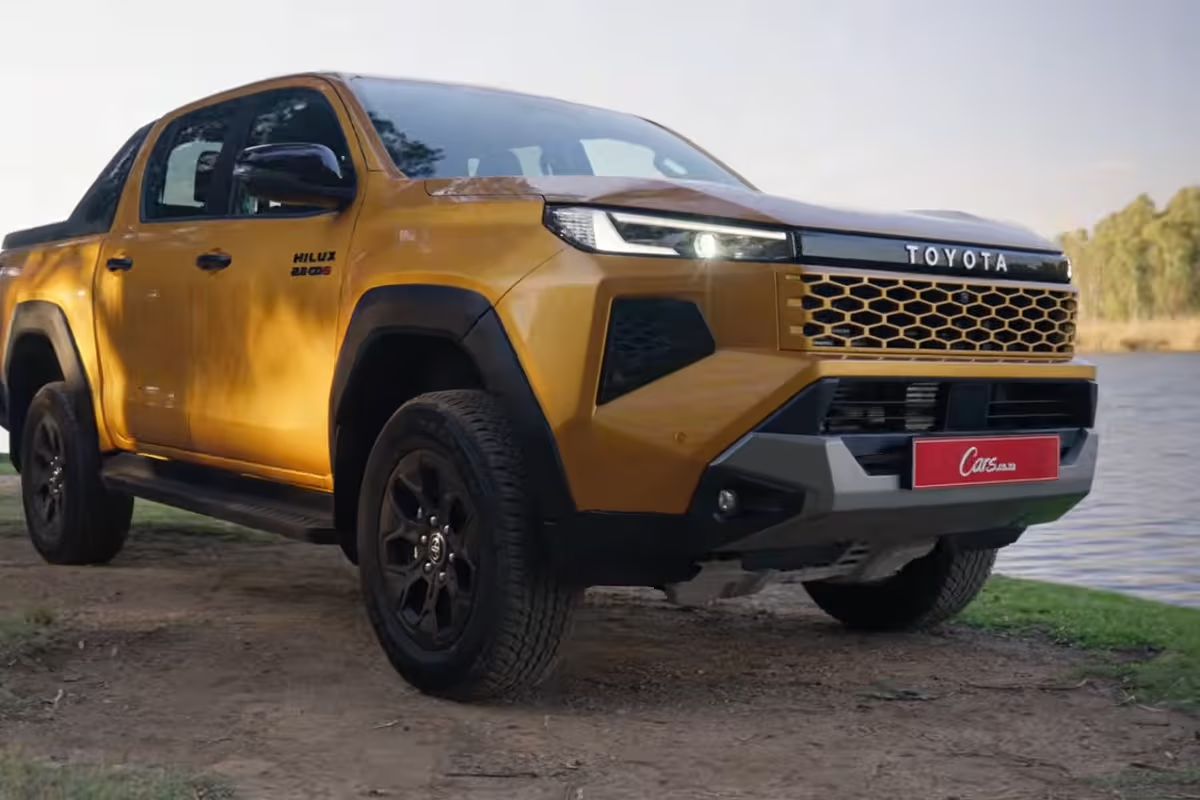
South Africa’s best-selling bakkie is set to get another engine option, and it’s one that plenty of loyal Hilux owners will recognise. Toyota SA Motors has confirmed that the workhorse 2.4GD-6 turbodiesel engine will live on in the new 9th-generation Hilux range, with a planned rollout early in 2027. Here’s a full breakdown of what’s coming, when, and what it means for buyers.
Why This Announcement Matters
When the 9th-generation Toyota Hilux launched in South Africa back in June 2026, all seven derivatives available at the time were fitted exclusively with the more powerful 2.8GD-6 turbodiesel engine, with the range-topping Legend grade adding mild-hybrid assistance on top. For a lot of value-focused buyers and fleet operators, however, the smaller and more affordable 2.4GD-6 engine has long been the go-to choice, so its confirmed return will come as welcome news.
When Is the 2.4GD-6 Engine Arriving?
According to Toyota SA Motors, the 2.4-litre four-cylinder turbodiesel engine is scheduled to join the new 9th-generation Hilux line-up in the first quarter of 2027. There is one notable change in how it will be offered, though. While the current 2.8GD-6 derivatives come exclusively paired with a 6-speed automatic transmission, the incoming 2.4GD-6 unit looks set to be offered only with a 6-speed manual gearbox.
It’s not yet confirmed whether the engine itself will carry over completely unchanged from the outgoing model, or whether Toyota has any updates planned before it reaches the new generation. In its current 8th-generation application, the 2.4-litre oil-burner produces 110 kW and 400 Nm, although base single-cab derivatives fitted with a 5-speed manual gearbox (rather than the 6-speed unit used elsewhere) see torque dip slightly to 343 Nm.
A Staggered Rollout Strategy
Toyota SA Motors isn’t launching the full 9th-generation Hilux range all at once. Instead, the brand has opted for a staggered approach, meaning only two extended-cab and five double-cab derivatives were available when the new generation first launched. In the meantime, a number of 8th-generation variants remain in production to fill the gaps, including as many as 13 different derivatives currently powered by the very same 2.4GD-6 engine set to join the new range.
This gradual rollout means buyers currently shopping for a Hilux may still find both generations sitting side by side on dealer floors for some time, giving plenty of choice depending on budget and specification needs.
Single-Cab Production Starts Soon
For buyers waiting on a new-generation single-cab Hilux, there’s good news on the horizon too. Toyota SA Motors has confirmed that production of the 9th-generation single-cab variants is set to begin in August 2026 at the brand’s Prospecton facility in KwaZulu-Natal.
Initial single-cab models are expected to launch in SRX trim, with both a 2.8GD-6 SRX 6AT 4×2 and a 2.8GD-6 SRX 6AT 4×4 derivative likely to be offered. In line with the SRX and Raider grades already available in double-cab form, these single-cab models are expected to retain traditional hydraulic steering rather than adopting the newer electric power-assisted steering (EPAS) system reserved for the higher-specification Raider X and Legend grades.
At launch, the extended-cab body style remains available exclusively in Raider X trim for now.
Platform and Engineering Updates
Originally revealed in Thailand in November 2025, the new Hilux continues to use Toyota’s well-proven IMV platform rather than starting from a clean sheet. However, it does gain new hydraulic engine mounts and shear-type cabin mounts, both aimed at reducing vibration and improving overall ride comfort, a welcome refinement for a vehicle that spends much of its life working hard on rough roads.
A Legacy Worth Protecting
It’s worth remembering just how significant the outgoing Hilux has been for Toyota locally. The 8th-generation model first launched globally in 2015, before arriving in South Africa in February 2016. By the end of 2025, Toyota SA Motors had registered 36 525 units of the 8th-generation Hilux in a single year, comfortably retaining its position not just as SA’s best-selling bakkie, but as the country’s overall top-selling vehicle, a title it has now held for more than fifty years.
Practical Ownership Tip
If you’re considering a diesel bakkie like the Hilux for regular towing, off-road use, or long commutes, it’s worth sticking closely to the manufacturer’s recommended service intervals, particularly for fuel filter changes. Diesel engines are more sensitive to fuel quality, and a clean fuel system goes a long way toward preserving both performance and long-term reliability.
Exploring Your Options While You Wait
With the 2.4GD-6-powered Hilux still around a year away, some buyers may prefer to explore what’s already available on the used market in the meantime. For a solid selection of second-hand bakkies, including older-generation Hilux models suited to South African work and leisure use, it’s worth browsing the listings on auto24.co.za, where you’ll find a wide range of options to compare against the wait for the new model.
For those curious about how the wider vehicle market is evolving beyond diesel power, EV24.africa offers import options for electric vehicles, expanding the range of choices available to South African drivers exploring more sustainable alternatives to traditional combustion-powered workhorses.
Final Thoughts
Toyota’s decision to bring the 2.4GD-6 engine back into the 9th-generation Hilux fold shows the brand isn’t abandoning the value-conscious end of the bakkie market, even as it rolls out its newest, more premium-focused derivatives. With single-cab production starting in August 2026 and the 2.4GD-6 engine following in early 2027, there’s plenty still to look forward to for Hilux fans over the next year.
Discover additional tips and read more here on the latest Toyota news and bakkie buying guides for South African drivers.