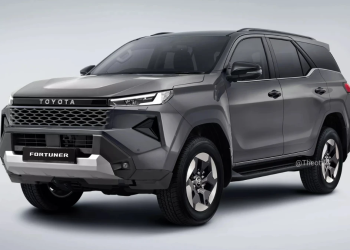
Toyota confirmed a R10.4 billion investment at its Durban plant on 16 July 2026 as the new Hilux enters production. Here’s what the money is actually for.
Toyota’s Biggest-Ever Local Investment Just Went Into Production
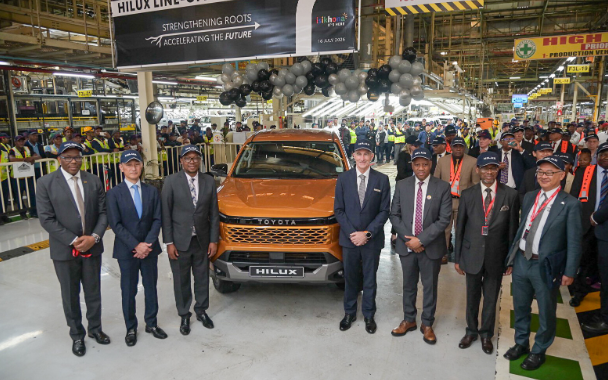
Toyota South Africa Motors committed R10.4 billion to its Prospecton manufacturing plant in Durban, marking the single largest product investment in the company’s South African history. The announcement coincided with the ceremonial line-off of the ninth-generation Hilux at the plant on 16 July 2026, an event attended by Trade, Industry and Competition Minister Parks Tau and Japanese Ambassador Fumio Shimizu, with President Cyril Ramaphosa addressing the gathering via video after last-minute flight issues kept him away in person.
Where the R10.4 Billion Is Actually Going
The investment splits into two clear buckets: R7.2 billion has gone toward production preparation for the new Hilux, covering advanced manufacturing technology, production equipment and supplier tooling, while a further R3.2 billion has been directed at local supplier development to strengthen domestic value chains and localisation.
That funding covers three specific infrastructure projects at Prospecton: a new 29,300m² logistics centre, a state-of-the-art chassis frame coating facility, and a new chassis frame welding facility, all scheduled for completion by June 2027. According to Toyota SA president and CEO Andrew Kirby, the investment reflects “Toyota’s enduring confidence in South Africa, its people and its manufacturing future,” framing the ninth-generation Hilux as “not simply the next Hilux” but “the next chapter in South African manufacturing.”
Why This Matters Beyond One Bakkie
Established in 1961, Prospecton is Toyota’s oldest manufacturing facility outside Japan, and Hilux production there has run for 56 years, producing more than 2.9 million units destined for local buyers and export markets across 74 countries in Africa, Europe, and Latin America. Once fully ramped up, the plant will have the capacity to build around 140,000 new-generation Hiluxes annually.
The ripple effect extends well beyond the factory floor. Hilux production supports 101 Tier One suppliers, generates annual supplier spending exceeding R15 billion, and sustains close to 27,000 jobs across the supplier network, alongside more than 4,300 direct employees at Prospecton itself. Kirby has been candid that South Africa’s competitiveness as a manufacturing base has come under pressure over the past decade due to rising labour, tax, and logistics costs, alongside increased competition from lower-priced imports — making this investment a deliberate bet on keeping local production viable against that backdrop.
What Comes With This, Beyond the Factory Upgrades
Toyota has also allocated resources toward employee training and skills development through initiatives like the Toyota Manufacturing Academy, aimed at building the next generation of manufacturing talent locally rather than relying purely on imported expertise. It’s a detail that underscores this investment isn’t purely about equipment — it’s about sustaining South Africa’s broader automotive manufacturing capability at a moment when global carmakers are reshaping their operations around new-energy vehicle demand.
If You’re in the Market for a New Hilux
With production of the ninth-generation model now underway at Prospecton, expect updated Hilux stock to filter through South African dealerships over the coming months. If you’d rather explore your options across the current and outgoing generations, auto24.co.za is a solid place to compare pricing on both new and used Hilux listings. And as the broader industry continues shifting toward electrified and new-energy vehicles, EV24.africa remains a useful resource for tracking how that transition is playing out locally. For more coverage of South Africa’s automotive manufacturing sector, keep checking imotonews.co.za.