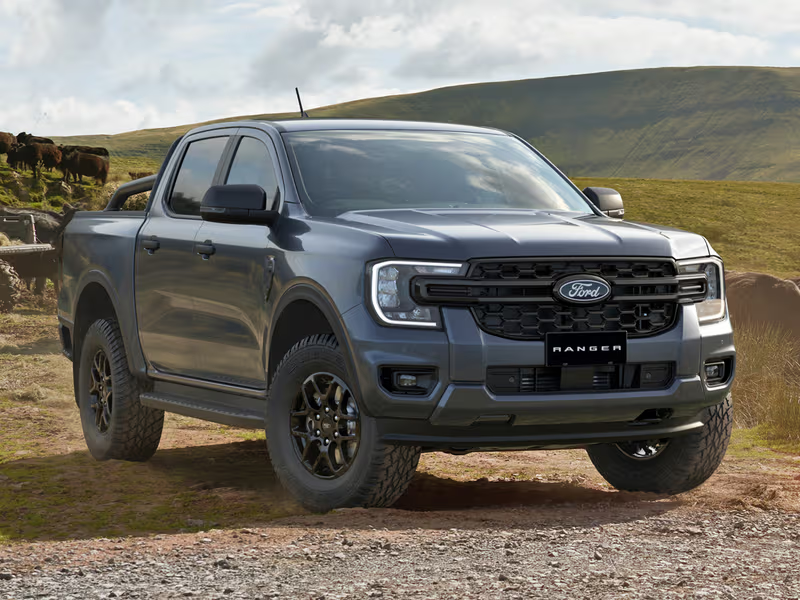
South Africa’s best-selling bakkie is getting a significant shake-up. The revised 2026 Ford Ranger is set to launch locally in April 2026, and it brings with it a new turbocharged petrol engine, an expanded V6 diesel lineup, a fresh “Sport” grade, and a number of powertrain refinements that have been a long time coming. We’ve got the full SA pricing ahead of the official launch — here’s everything you need to know.
What’s Changing on the 2026 Ford Ranger?
This isn’t a ground-up redesign, but the changes are meaningful and wide-ranging. Here’s a quick summary of the key updates:
- The 2.0 BiT (bi-turbo diesel) engine has been dropped from the local lineup entirely
- The 2.0 SiT single-turbo diesel has been upgraded — gaining a timing chain in place of the previous wet timing belt, and a 10-speed automatic gearbox on auto variants (replacing the old 6-speed unit)
- A brand-new 2.3-litre EcoBoost turbocharged petrol engine (222 kW/452 Nm) joins the range across three variants
- The 3.0-litre V6 turbodiesel expands from 2 to 6 derivatives
- A new Sport grade slots into the lineup between the XLT and Wildtrak
- The Super Cab range grows from 5 to 7 derivatives
- The Double Cab range trims from 15 to 13 variants
These are the kinds of changes that South African bakkie buyers — who demand versatility, reliability, and long-term running cost confidence — will want to understand carefully before making a purchase decision.
For those who aren’t ready to wait for the April launch and want a quality used Ranger right now, auto24.co.za lists a wide selection of pre-owned bakkies, including previous-generation Ford Rangers, Toyota Hilux models, and Isuzu D-Max options — all worth considering while the new lineup beds in.
The Big Mechanical News: Timing Chain and a New Petrol Engine
2.0 SiT Gets a Major Reliability Upgrade
The switch from a wet timing belt to a timing chain on the 2.0 SiT engine is arguably the most significant under-the-bonnet story here. The previous “wet belt” system — where a rubber belt runs submerged in engine oil — was effective but required specialised maintenance and raised durability questions over high mileage. A timing chain is a far more durable solution, typically lasting the life of the engine without replacement.
Combined with the upgrade to a 10-speed automatic transmission on auto-spec derivatives (replacing the old 6-speed unit), the 2.0 SiT now feels like a meaningfully more modern and refined offering — even though its outputs remain unchanged at 125 kW and 405 Nm.
Car care tip: Even with a timing chain, regular oil changes at the correct intervals remain critical. Using the manufacturer-specified oil grade (typically 5W-30 or 0W-30 for modern Ford turbodiesels) protects the chain tensioners and helps prevent premature wear, especially in SA’s varying temperature conditions.
The New 2.3T EcoBoost Petrol — What to Know
The 2.3-litre EcoBoost turbocharged petrol engine is not new to the Ranger family globally — it’s already used in the related Volkswagen Amarok. But its arrival in the South African Ranger lineup opens up a genuinely compelling option for buyers who prefer petrol power or do mixed tarmac/light off-road driving rather than heavy-duty work use.
With 222 kW and 452 Nm on tap, the 2.3T is considerably more powerful than the 2.0 SiT it effectively replaces at the Sport and Wildtrak petrol variants. It’s available only in rear-wheel-drive configuration in the current lineup.
Car care tip: Turbocharged petrol engines benefit greatly from a short “cool-down” idle period of 60–90 seconds after hard driving before switching off. This allows the turbocharger to cool properly and prevents oil coking in the turbo bearing housing — a common cause of premature turbo failure.
For the latest in-depth coverage of the Ford Ranger’s full spec details and road test impressions once it launches, imotonews.co.za is a go-to resource for South African automotive news, reviews, and driving tips.
Single Cab Pricing: Workhorses Stay the Course
The single-cab range sees no structural changes — it remains a trio of XL-grade derivatives using the updated 2.0 SiT engine. Ford has opted not to introduce a more affordable single-cab entry point, keeping the XL grade as the starting position for fleet and commercial buyers.
| Derivative | Price |
| Ranger 2.0 SiT Single Cab XL 10AT 4×2 | R590 000 (up R15 000) |
| Ranger 2.0 SiT Single Cab XL 6MT 4×4 | R635 200 (up R6 700) |
| Ranger 2.0 SiT Single Cab XL 10AT 4×4 | R666 000 (up R17 000) |
These derivatives remain the most practically focused in the range — built for serious work use with minimal lifestyle frills.
Super Cab Pricing: Biggest Growth in the Range
The Super Cab segment sees the most significant structural expansion, growing from 5 to 7 derivatives. Notably, this is where the new Sport grade makes its debut, and where the V6 diesel now makes an appearance in the extended-cab format for the first time.
| Derivative | Price |
| Ranger 2.0 SiT Super Cab XL 10AT 4×2 | R599 500 (up R13 000) |
| Ranger 2.0 SiT Super Cab XLT 10AT 4×2 | R655 000 (up R32 000) |
| Ranger 2.0 SiT Super Cab XL 10AT 4×4 | R675 500 (up R41 000) |
| Ranger 2.0 SiT Super Cab XLT 10AT 4×4 | R731 000 (new derivative) |
| Ranger 2.3T Super Cab Sport 10AT 4×2 | R735 000 (new derivative) |
| Ranger 3.0TD V6 Super Cab Sport 10AT 4×4 | R825 000 (new derivative) |
| Ranger 3.0TD V6 Super Cab Wildtrak 10AT 4×4 | R865 000 (new derivative) |
The Ranger 3.0TD V6 Super Cab Wildtrak at R865 000 is a particularly interesting proposition — it brings the full V6 diesel experience into the Super Cab body style for the first time locally.
Double Cab Pricing: Trimmed but More Focused
While the double-cab range shrinks slightly from 15 to 13 variants, it’s arguably a more coherent lineup than before. The biggest news here is the arrival of the 2.3T petrol in the Sport and Wildtrak double-cab guises, plus the broad expansion of V6 diesel availability.
| Derivative | Price |
| Ranger 2.0 SiT Double Cab XL 6MT 4×2 | R621 000 (unchanged) |
| Ranger 2.0 SiT Double Cab XL 10AT 4×2 | R651 500 (up R6 000) |
| Ranger 2.0 SiT Double Cab XLT 10AT 4×2 | R699 500 (up R17 000) |
| Ranger 2.0 SiT Double Cab XL 6MT 4×4 | R704 000 (unchanged) |
| Ranger 2.0 SiT Double Cab XL 10AT 4×4 | R735 000 (up R4 500) |
| Ranger 2.0 SiT Double Cab XLT 10AT 4×4 | R788 500 (up R21 500) |
| Ranger 2.3T Double Cab Sport 10AT 4×2 | R839 600 (new derivative) |
| Ranger 2.3T Double Cab Wildtrak 10AT 4×2 | R899 000 (new derivative) |
| Ranger 3.0TD V6 Double Cab Sport 10AT 4×4 | R995 000 (new derivative) |
| Ranger 3.0TD V6 Double Cab Tremor 10AT 4×4 | R1 039 000 (new derivative) |
| Ranger 3.0TD V6 Double Cab Wildtrak 10AT 4×4 | R1 070 000 (down R18 000) |
| Ranger 3.0TD V6 Double Cab Platinum 10AT 4×4 | R1 179 500 (up R28 500) |
| Ranger Raptor 3.0T V6 10AT 4×4 | R1 299 000 (up R28 000) |
It’s worth noting that the V6 Wildtrak double cab has actually become R18 000 cheaper than the outgoing model — a welcome move in the current economic climate.
What About the Ranger Raptor and PHEV?
The flagship Ranger Raptor — the only Ranger variant not built in South Africa but imported from Thailand — carries over with its 292 kW/583 Nm twin-turbo V6 petrol engine essentially unchanged mechanically. Its price rises by R28 000 to R1 299 000.
Interestingly, there’s still no sign of a plug-in hybrid (PHEV) Ranger for the South African market, despite this variant being available in Europe and being built at Ford’s Silverton plant in Pretoria. The Super Duty also remains absent locally.
For South African drivers curious about electrified and plug-in vehicles more broadly, EV24.africa offers import options for electric cars, expanding the choices available to local buyers beyond what’s officially on dealer floors — a useful avenue to explore as the electrification wave slowly reaches Mzansi.
What’s the New Sport Grade All About?
One of the more interesting additions to the 2026 Ranger lineup is the new Sport grade, which slots between the XLT and Wildtrak in the hierarchy. It’s aimed squarely at lifestyle-oriented buyers who want a more visually aggressive Ranger without paying full Wildtrak money.
Expect darkened exterior trim, blacked-out elements, unique wheel designs, and premium interior touches. It’s available with both the 2.3T petrol and the 3.0TD V6 diesel, making it one of the more interesting choices in the updated range for buyers who prioritise aesthetics alongside performance.
Warranty and Service Plan
All variants in the updated Ranger range include Ford’s 4-year/120 000 km warranty and a 6-year/90 000 km service plan — the latter being optionally excludable at the buyer’s discretion if they wish to reduce the upfront purchase price.
Car care tip: Given the Ranger’s widespread use for towing and off-road driving in SA, it’s worth considering keeping the service plan in place. Ford’s trained technicians are equipped with proprietary diagnostic tools, particularly important for the Ranger’s complex terrain management and traction control systems.
Frequently Asked Questions
Q: Why was the 2.0 BiT engine dropped? A: The bi-turbo diesel has been phased out as part of a global powertrain simplification strategy. It’s effectively replaced by the more powerful 2.3T EcoBoost petrol (222 kW) and an expanded V6 diesel offering — giving buyers a cleaner choice between high-performance petrol or high-torque diesel.
Q: Is the timing chain upgrade on the 2.0 SiT significant? A: Yes — moving from a wet timing belt to a chain is a meaningful long-term reliability improvement. Timing chains are generally more durable and don’t require the specialised maintenance intervals that the previous wet belt system demanded.
Q: When does the 2026 Ranger launch in South Africa? A: The local launch is expected in April 2026, with full specification details anticipated closer to the official reveal.
Q: Is the Ranger PHEV coming to SA? A: Not yet. Despite being built at Ford’s Silverton plant in Pretoria, the Ranger PHEV has not been confirmed for local sale at this stage.