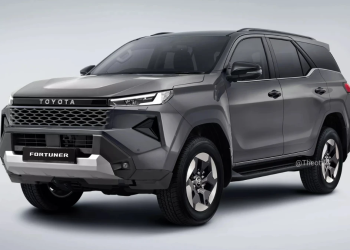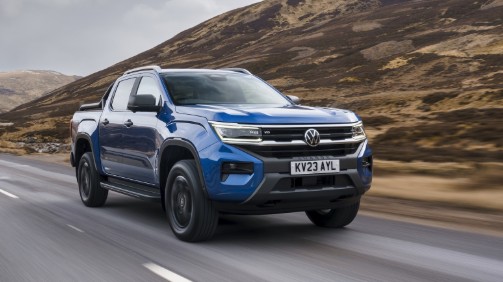
VW’s commercial vehicles boss says a 7-seat Amarok-based SUV is a “long-desired wish.” Here’s what’s confirmed, and why South Africa matters to this story.
Volkswagen’s Long-Rumoured Amarok SUV Just Got a Fresh Reason to Exist
For years, Volkswagen has watched rivals cash in on rugged pickup-based SUVs while offering nothing of its own to compete with the Ford Everest or Toyota Land Cruiser Prado. Now, with a new-generation Amarok already greenlit, VW’s own commercial vehicles chief has confirmed the idea of a genuine Amarok-based SUV hasn’t gone away — and there’s a real case for South Africa to matter in how this plays out.
A Quick Note Before We Go Further
There’s no confirmed product here yet — this is executive commentary about a possible future model, not an announced vehicle. What follows is an honest look at what’s actually been said, rather than speculation dressed up as fact.
What Was Actually Said, and By Whom
Speaking to Australian publication GoAuto, Volkswagen Commercial Vehicles CEO Stefan Mecha described a seven-seat, ladder-frame SUV built on Amarok underpinnings as a genuinely “long-desired wish” for the brand. More tellingly, Mecha revealed that Volkswagen had already built a one-off prototype of exactly this concept during the lifecycle of the first-generation Amarok — a vehicle that reportedly still exists somewhere in the company’s archives, never approved for production.
Mecha was candid about why it never happened: the economics simply didn’t work for a single market, and VW couldn’t secure the global scale needed to justify the investment.
Why South Africa Is More Than a Footnote in This Story
This is where the local angle gets genuinely interesting. The current, second-generation Amarok is built by Ford in Silverton, South Africa, alongside the closely related Ranger — a partnership that’s been running since 2022 as part of VW’s decades-long manufacturing presence in this country. Ford already builds its own Ranger-based SUV rival, the Thailand-sourced Everest, but Mecha confirmed the VW-Ford agreement specifically excludes an Everest equivalent for Volkswagen.
That’s a meaningful detail: if a production Amarok SUV does eventually happen, and VW continues its relationship with Ford for the third-generation truck, there’s a plausible path for South Africa’s existing manufacturing footprint to play a role — the same way it already does for the current Amarok and Ranger.
When Could This Actually Happen?
Not soon. Mecha has confirmed the third-generation Amarok is already approved, with VW committing to diesel, plug-in hybrid, and fully electric powertrain options for that next generation, expected to arrive around 2029 to 2030. Any SUV derivative would realistically only follow once that new platform and its manufacturing partnership are finalised — Mecha himself described talks around an SUV variant as having “nothing concrete, nothing tangible” at this stage.
For context, the market gap VW would be chasing has only grown more crowded. Chinese-built rivals like the GWM Tank 500 and Denza B5 have moved into the same segment sitting between affordable ute-based wagons and premium ladder-frame SUVs like the Land Cruiser Prado — exactly the space Volkswagen’s own executives have acknowledged an Amarok SUV could occupy.
Should You Wait for It?
If you’re shopping for a rugged, ladder-frame SUV right now, don’t hold your breath for a Volkswagen badge on one any time soon — this remains, by VW’s own admission, an unconfirmed concept tied to a platform still several years away. The current Ford Everest, Isuzu MU-X, and their Chinese-built rivals remain your realistic options in this segment today.
If a used version of any of those is more within reach right now, auto24.co.za is a solid place to compare pricing across that segment. And with VW already committing to electrified powertrains for the next-generation Amarok, EV24.africa is worth bookmarking for updates as that side of the story develops. For the latest confirmed details as this idea moves closer to reality, keep checking imotonews.co.za.