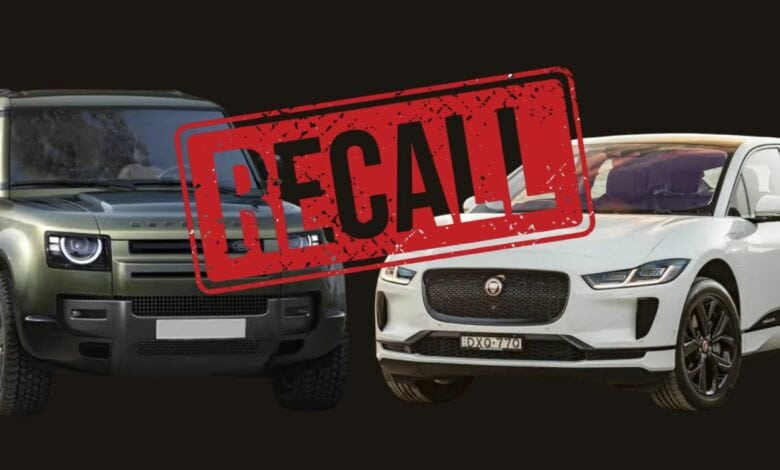
If it feels like you have been hearing about more car recalls than ever before, you are not imagining it. Headlines about Toyota, Volkswagen, Ford, and Lexus recalling vehicles have become a regular feature of South African automotive news. But before you start questioning whether new cars are becoming less reliable, it is worth understanding what a “recall” actually means in 2026 — because the word covers a surprisingly wide range of situations, and not all of them are cause for alarm.
The Numbers Are Real — But the Story Is More Complicated
Statistically, there are more recalls today than there were in the early 2000s. That much is true. But two things have changed dramatically in the same period: the amount of electronic and software content in modern vehicles, and the regulatory frameworks that require manufacturers to report and act on known issues.
The question worth asking is not just “why are there more recalls?” but “what kind of recalls are they?” The answer matters more than the headline number.
Your Car Is Now a Computer on Wheels
Walk into any dealership today and look at the infotainment screen in an entry-level hatchback — a Suzuki Swift or Hyundai i10, for example. The software capability in that screen exceeds what was available in a top-of-the-range Mercedes-Benz S-Class from the early 2010s. Modern vehicles are, in every meaningful sense, software-defined machines.
Every new car now ships with smartphone connectivity, over-the-air (OTA) update capability, advanced driver assistance systems, and deeply integrated electronic control units (ECUs) managing everything from fuel injection to transmission behaviour to parking brake engagement. More electronics mean more potential for software issues — and more need for regular updates, just like your phone or laptop.
The critical difference is perception. When your phone downloads an update overnight, you barely notice. When a car manufacturer issues a software correction, it is legally classified in many jurisdictions as a recall — and that word carries weight it does not always deserve.
For the latest news on how connected and software-defined vehicles are reshaping the South African market, imotonews.co.za covers these developments in depth, alongside practical buying guides and driving tips for local consumers.
Not All Recalls Are Equal: Understanding the Difference
This is the most important distinction to understand as a South African car buyer.
Critical or safety recalls involve real mechanical or structural concerns: a faulty weld on a chassis, an airbag that may not deploy correctly, a braking system that can fail, or a transmission that might lock up at speed. These require physical intervention — a dealer visit, component inspection, and often part replacement. They are serious, and they matter.
Software or assembly recalls are a different category entirely. They may involve an infotainment system that lags or crashes, a software parameter in an ECU that needs recalibration, or a minor assembly variation that does not affect safety but falls outside specification. In many cases, these can now be resolved through an OTA update — delivered remotely without the owner ever visiting a dealership.
Traditional car manufacturers have historically struggled to match the seamless digital experience that newer, technology-first brands deliver. Chinese automakers in particular have built a reputation for polished infotainment interfaces and rapid software iteration — an area where legacy European and Japanese brands are still catching up.
Most non-digital recalls, in the experience of engineers and manufacturers, stem from assembly-line communication issues: misunderstandings between component suppliers and manufacturers, or inconsistent batch specifications for parts. These are quality control problems, not fundamental engineering failures.
Practical tip: If you receive a recall notice for your vehicle, check the description carefully before panicking. A recall involving a software update, sensor recalibration, or minor assembly correction is a very different matter from one involving safety systems, steering, or brakes. Contact your dealer for clarity — they are obligated to explain the nature and urgency of any recall.
What Is Actually Being Recalled in South Africa Right Now?
Toyota and the Takata Airbag Issue
Toyota is South Africa’s dominant automotive brand — holding roughly double the market share of its nearest competitor, with the Hilux maintaining decades of consecutive leadership as the country’s best-selling light commercial vehicle. When Toyota is involved in a recall, it makes news. But context is essential.
The most widespread ongoing recall affecting Toyota’s South African range — and many other Japanese brands simultaneously — is not of Toyota’s making. Japanese supplier Takata, which manufactured airbag inflators for numerous global automakers, has acknowledged faults in specific production batches. This is a supplier issue affecting the broader industry, not a reflection of Toyota’s engineering standards.
More recently, Toyota’s ultra-premium Land Cruiser 300 and its Lexus LX sibling were subject to a recall relating to the ECU software managing their 10-speed Aisin automatic transmissions. The recall affected approximately 1 846 vehicles sold between January 2025 and January 2026. This is a software and control unit correction — not a mechanical failure — and precisely the kind of issue that OTA updates will increasingly resolve without the inconvenience of a dealer visit.
Ford Ranger: EGR Valve Concerns
Ford’s Ranger — a perennial fixture in South Africa’s best-selling vehicle charts — has not escaped scrutiny either. Ford recalled 438 Ranger XLT and Wildtrak models from 2025, citing failing exhaust gas recirculation (EGR) valves. The fault can limit engine power at low speeds and, in some cases, cause engine start-up failures.
This is a genuine mechanical concern rather than a software issue, and one that Ford has acted on proactively. EGR valves play a key role in diesel emissions management, and their failure is particularly relevant in the South African context (more on this below).
Volkswagen Polo Vivo: A Parking Brake Problem
Volkswagen’s Polo Vivo is one of South Africa’s most beloved and best-selling passenger cars — a reliable, affordable workhorse for millions of families across the country. The recall affecting Vivo models purchased new between February 2025 and February 2026 involves a rivet height issue in the handbrake mechanism that could, in certain circumstances, cause the parking brake to disengage unexpectedly when the vehicle is parked.
This is a legitimate safety concern. Interestingly, it is also the kind of issue that would simply not exist if the Vivo featured an electronic parking brake — a technology that is increasingly standard in new passenger vehicles. Mechanical parking brakes, while simple and proven, carry a category of failure risk that electronic systems eliminate. It is a reminder that sometimes simpler is not always better.
Practical tip: If you own a Polo Vivo and are unsure whether your vehicle is affected by this recall, contact your nearest Volkswagen dealership with your vehicle identification number (VIN). Recall rectification is always free of charge to the registered owner.
The South African Diesel Engine Challenge
One factor unique to South Africa’s automotive landscape deserves specific attention: the dominance of turbodiesel engines in the country’s most popular vehicle categories.
For buyers of double cabs and mid-size SUVs — South Africa’s two most popular vehicle segments — the overwhelming majority still choose diesel power. It makes practical sense: diesel engines are more fuel-efficient at highway speeds, produce strong torque for towing and off-road use, and have historically offered strong long-term durability.
The problem is how diesel emissions systems interact with the South African driving environment. Diesel particulate filters (DPFs) and EGR valves — the emissions control components required to meet modern standards — need the engine to reach a specific operating temperature to perform a self-cleaning process that purges carbon deposits and soot.
In stop-start Johannesburg or Cape Town rush-hour traffic, engines frequently never reach that temperature during a commute. Over time, this causes carbon accumulation in the DPF and EGR system, degrading performance and eventually leading to component failure — sometimes resulting in costly repairs that feel like reliability problems but are actually the result of driving patterns the technology was not designed for.
Practical tip: If you drive a turbodiesel vehicle primarily in urban traffic, plan a monthly highway run of at least 30–40 km at consistent speeds above 100 km/h. This allows the DPF to complete its regeneration cycle properly and significantly extends the life of your emissions system. Ignoring this is one of the most common causes of premature diesel engine wear in South Africa.
Will Recalls Decrease in Future?
There is good historical precedent for optimism. Corrosion was once one of the primary concerns for South African vehicle owners — the country’s combination of coastal humidity in some regions and dust and heat in others was brutal on body panels. The automotive industry solved that problem systematically through improved coatings, primers, and galvanisation. Rust on a new vehicle is now essentially unheard of.
Software-defined vehicles will likely follow a similar trajectory. As OTA update capability becomes universal and manufacturers develop more robust testing environments for their software, many of today’s minor “recalls” will simply become invisible background updates — exactly as they are on your smartphone today.
The more complex challenge is physical: engineering diesel engines to meet ever-stricter emissions standards, in a market where driving conditions are genuinely demanding and infrastructure limitations are real.
Thinking About Your Next Vehicle?
Whether you are in the market for a new vehicle or considering a quality pre-owned option, it is worth factoring recall history into your research. A vehicle with a resolved recall — particularly a software update — is not necessarily a red flag. A vehicle with unresolved safety-related recalls is a different matter entirely.
For South Africans exploring the used car market, auto24.co.za offers a wide selection of quality second-hand vehicles, including popular models like the Toyota Hilux, Volkswagen Polo, and Ford Ranger. It is a practical starting point for buyers who want the value of a pre-owned vehicle with the reassurance of a verified listing.
And for drivers who are thinking about stepping away from the recall conversation entirely by exploring electric mobility — where software updates are genuinely invisible and mechanical complexity is dramatically reduced — EV24.africa offers electric vehicle import options for South African buyers, opening up access to a growing range of EVs that represent the most software-defined driving experience available today.
Final Thoughts: Context Is Everything
The rise in car recalls is real, but the story it tells is more nuanced than the headlines suggest. More electronics mean more updates. Better consumer protection laws mean more transparency. And a more connected, accountable automotive industry means manufacturers are acting on known issues faster than they ever did before.
What matters for South African buyers is understanding the difference between a recall that demands urgent attention and one that represents a manufacturer keeping their product current. Stay informed, keep your service history up to date, and respond promptly to any recall notice — especially those involving safety-critical systems.
The cars on sale today are, in most measurable respects, safer and more capable than anything available twenty years ago. The recall statistics, read in context, are evidence of that accountability — not a sign that the industry is in decline.